Review · COOKING CLASSES
Ethiopian cooking class
The heart of this Addis Ababa experience is simple: you do the cooking yourself. Local cooks explain Ethiopian flavors and ingredients, demonstrate the techniques, and then hand the work over to you. You taste the food as it comes together, eat the finished meal, and end with a traditional coffee ceremony.
I like the direct contact with local cooks, and I like that the price includes transportation, ingredients, coffee, water, entrance, and tax. The main consideration is that the experience gives no stated duration, menu, group size, or dish list, so you should ask for those details before booking if they matter to you.
Key points to know before booking
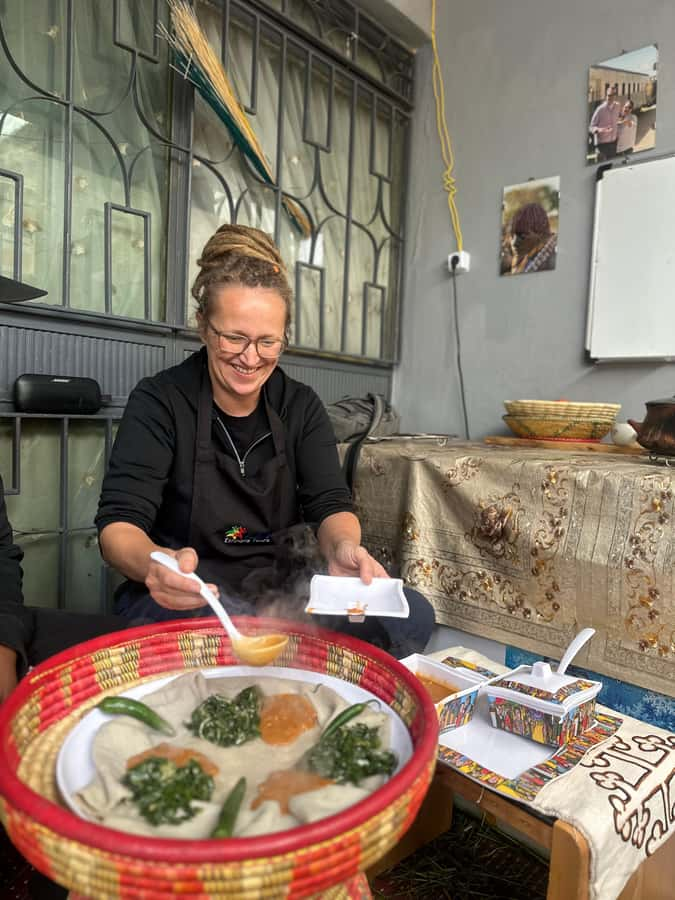
- Cook your own Ethiopian meal: You do not simply watch a demonstration. You prepare the food yourself after the local cooks show you how.
- Taste as you work: Sampling along the way helps you understand how Ethiopian flavors develop before the final meal.
- Finish with coffee: A traditional Ethiopian coffee ceremony follows the cooking and meal.
- Transport is included: Pickup and transportation from the airport and hotel are covered.
- Take home a certificate: You receive a certificate at the end of the class.
- Book with flexibility: The price is $68 per person, payment can be made later, and cancellation is free up to 24 hours before the experience.
Starting in Addis Ababa with a hands-on lesson
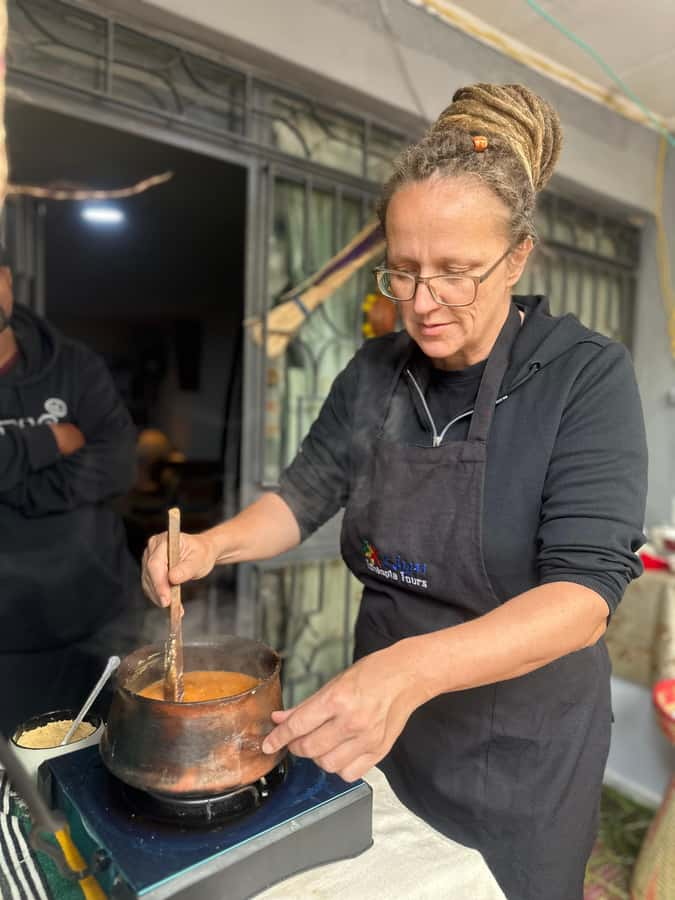
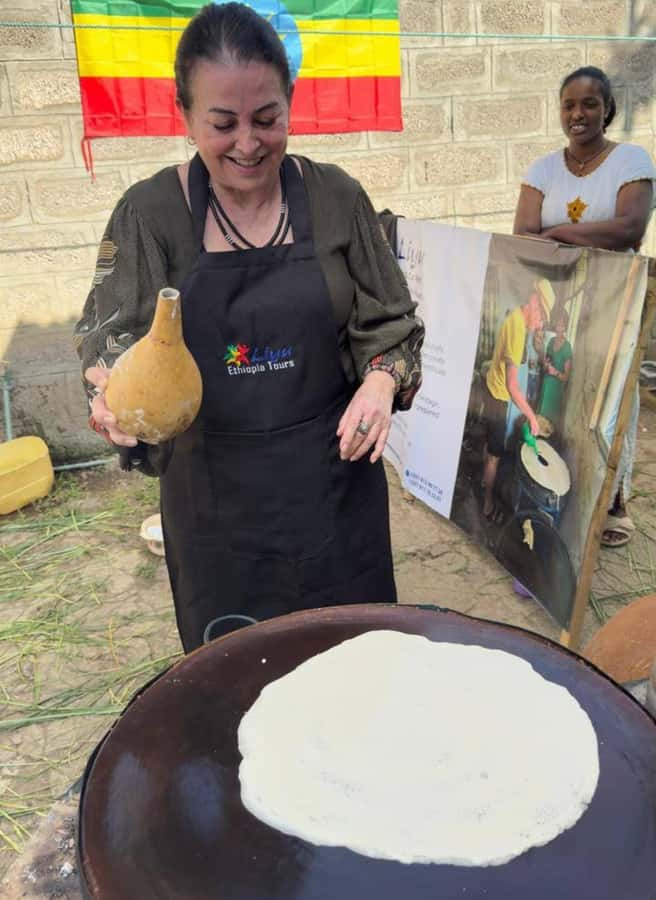
This is a cooking class first, not a food tasting with a short demonstration added on. The local cooks introduce you to the ingredients, flavors, and methods used in Ethiopian food, then show you how to prepare the dishes. After that, it is your turn to cook.
I like this format because it gives you something useful to take home besides a full stomach. You can watch a cook prepare Ethiopian food in front of you, but the lesson becomes more memorable when you handle the ingredients and follow the steps yourself.
The class is offered in the Addis Ababa metropolitan area by Liyu Ethiopia Tour and Travel. English is the stated language, so you can expect the instruction to be delivered in English. No individual cook or guide names are provided, and the menu is not specified in advance. If you have a particular Ethiopian dish in mind, ask if it will be part of your lesson before you reserve.
The lack of a published dish list cuts both ways. It may allow the kitchen to focus on traditional food that works well that day, but you cannot plan around a favorite dish from the information available. I would also ask how much of the session is demonstration and how much is your own preparation. The description clearly promises hands-on cooking, but it does not give a timetable.
More Cooking Classes in the world:
- Half-Day Thai Cooking Class at Organic Farm in Chiang Mai
★ 5.0 · 19,087 reviews - Florence: Pasta Cooking Class with Unlimited Wine
★ 4.9 · 10,285 reviews - 3 in 1 Cooking Class near Navona: Fettuccine, Ravioli & Tiramisu
★ 5.0 · 7,376 reviews
Learning Ethiopian flavors from local cooks
The best reason to book is the chance to learn from cooks who use these ingredients and techniques in a local setting. You are not being handed a generic international recipe adapted for a foreign audience. The class is built around traditional Ethiopian dishes and the flavors that make the food distinct.
A good cooking lesson teaches more than a list of steps. It shows you what an ingredient contributes, how the cooks combine flavors, and how to tell when food is ready. This class specifically includes explanations of Ethiopian ingredients, flavors, and cooking techniques, so pay attention to those small choices.
You will also taste the food as you go. That matters. Tasting at different points lets you notice how the dish changes during preparation and gives you a better feel for seasoning and texture. If you enjoy learning through your senses rather than taking notes, this part should be especially useful.
I would bring a small notebook or use your phone for notes if the cooks allow it. Write down ingredient names, cooking order, and any instruction that seems easy to forget. A certificate is included, but the recipes and techniques are the more practical souvenir.
The experience is also a good fit for people who want an activity with real participation. You are not expected to remain on the sidelines. The cooks demonstrate first, then you prepare your own Ethiopian food. That arrangement makes the class suitable for beginners who want guidance, as well as home cooks looking for new ideas.
Preparing, tasting, and eating the food you make
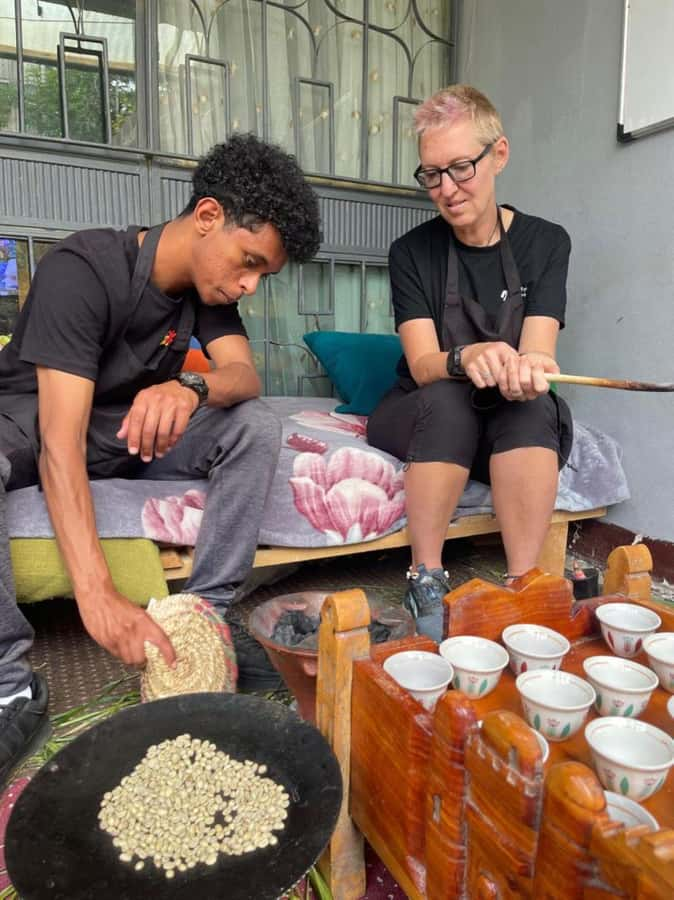
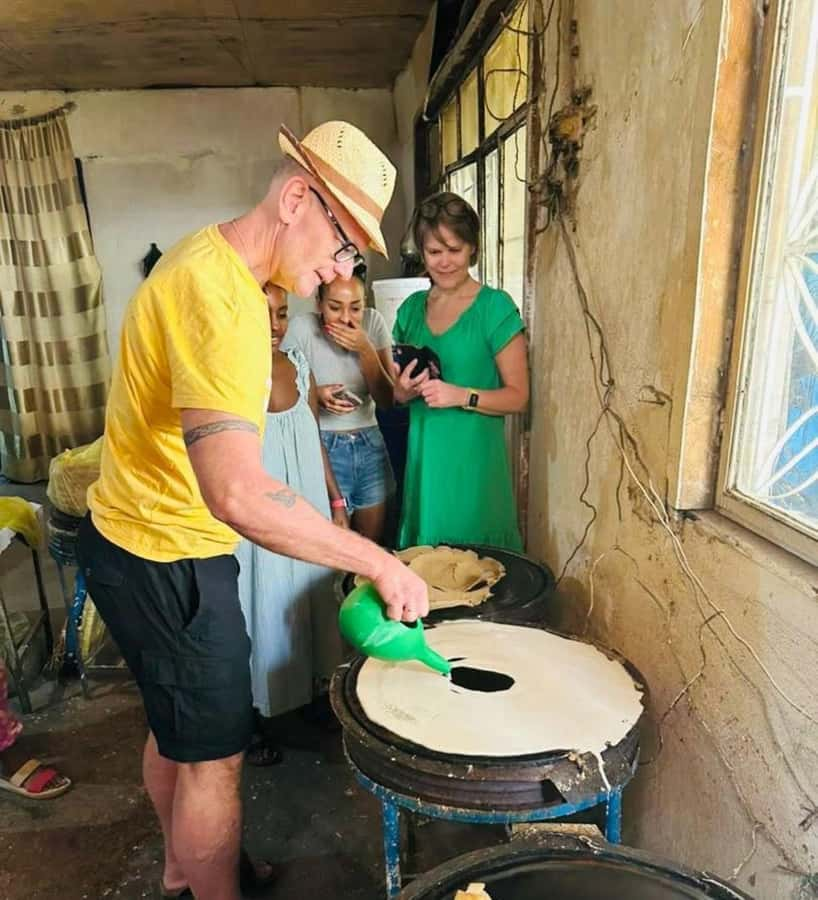
The cooking portion follows a clear pattern. First, the local cooks demonstrate how to prepare the traditional dishes. Next, you repeat the process yourself. Finally, you eat the meal prepared during the lesson.
That sequence gives the experience a satisfying shape. You begin by watching, move into practice, and finish by seeing the result on your plate. The description also says you taste the food as you go, so the meal is not the only point at which you engage with the cooking.
I like the fact that the final meal is part of the class rather than a separate restaurant stop. You get to eat what you have prepared, which gives the meal a personal connection. It also helps you judge the success of your work while the instructions are still fresh.
At the same time, keep your expectations specific. The available information does not name the dishes, list dietary options, or explain how much food is served. If you have allergies, avoid certain ingredients, or follow a vegetarian or other special diet, contact the provider before paying. The class includes all food ingredients, but that does not automatically confirm that every dietary request can be met.
There is also no stated duration. That makes it hard to fit the class precisely into a busy Addis Ababa schedule. Ask about the start time, expected finish, and time needed for hotel or airport pickup. Transportation is included, but the length of the drive and the timing of the activity are not given.
The traditional coffee ceremony at the end
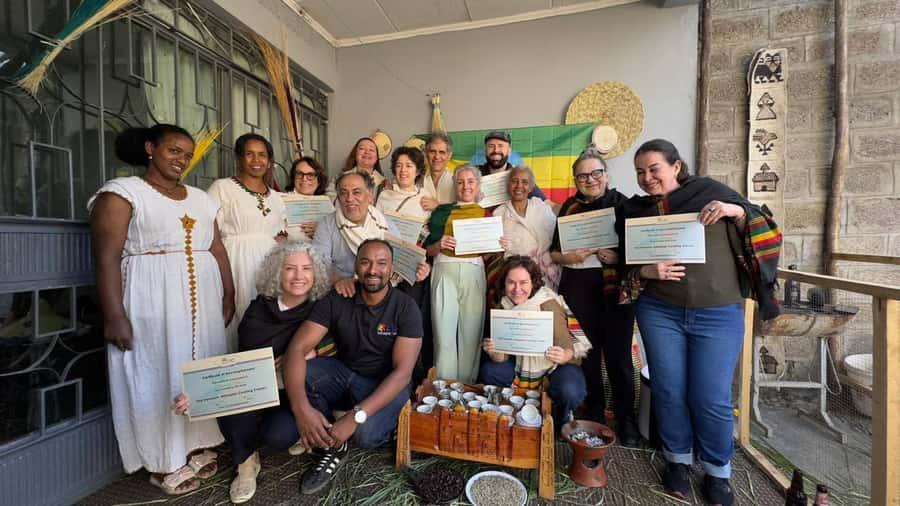
The class ends with a traditional Ethiopian coffee ceremony. This is more than a final drink added to the package. It gives the experience a cultural closing after the practical work of preparing food.
The coffee ceremony creates a natural pause. After handling ingredients and cooking your meal, you can sit with your coffee and reflect on what you learned. It also adds a part of Ethiopian hospitality that a standard cooking lesson might leave out.
Coffee and water are included, so you do not need to budget separately for those during the activity. The information does not describe the ceremony’s exact steps or how long it lasts. You should expect it to follow the cooking and meal, but ask the provider if you need a detailed schedule.
I would consider the coffee ceremony one of the strongest parts for anyone who wants more than a recipe lesson. Cooking teaches you what to do. The coffee ceremony gives the experience a social and cultural finish.
Same region, a different dish to learn:
- Florence: Pasta & Tiramisu Cooking Class with Unlimited Wine
★ 4.9 · 6,708 reviews - Florence: Pasta Cooking Class with Unlimited Wine
★ 5.0 · 6,413 reviews - Hanoi Cooking Class: Culture, Local Market & Meaning CSR Impact
★ 5.0 · 5,147 reviews - 5 Traditional Dishes Hanoi Cooking Class with Market Trip
★ 5.0 · 4,890 reviews
Transportation from your hotel or airport
Transportation is included from the airport and hotel, along with all transportation connected to the experience. That is a useful benefit in Addis Ababa, especially if you are arranging the class around an arrival or departure.
Airport pickup can make the activity convenient for a short visit, but you should confirm the timing before booking a cooking session close to your flight. No transfer time is provided, and no schedule is stated. Leave a sensible buffer rather than assuming the class will fit neatly between landing and takeoff.
Hotel transportation is also included, which removes one common travel chore. You do not need to arrange a separate taxi to reach the kitchen if the provider confirms your pickup details. Make sure you provide the correct hotel information when booking and clarify the pickup time.
The word all transportation suggests that the listed transfers are covered, but the description does not explain the exact vehicle, route, or number of transfers. Those details may not matter to most people, but they are worth confirming if you have luggage, a tight itinerary, or a mobility concern.
What the $68 price includes
At $68 per person, the experience is easier to assess because several costs are bundled together. You receive the cooking class, all food ingredients, coffee, water, entrance, tax, and transportation from the airport and hotel.
That package can offer solid value if you need transport. A lower advertised class price might not be cheaper after adding a taxi, ingredients, drinks, entrance fees, and tax. Here, those items are already included, which makes the final cost more predictable.
The value is also tied to the hands-on format. You are paying for instruction, participation, and a meal you prepare, not only for food served to you. The certificate adds a small keepsake, though I would treat it as a nice extra rather than the reason to book.
The price is less compelling if you only want to eat Ethiopian food or watch someone cook. A restaurant meal would likely require less time and effort, though it would not teach you the same techniques or let you prepare the food yourself. This class makes the most sense if you value participation and cultural context.
Because the duration, group size, and menu are not stated, I would ask a few questions before deciding if $68 fits your budget. Find out how long you will cook, how many people will share the lesson, and which dishes you will make. Those answers help you judge the value more accurately.
A good choice for curious home cooks
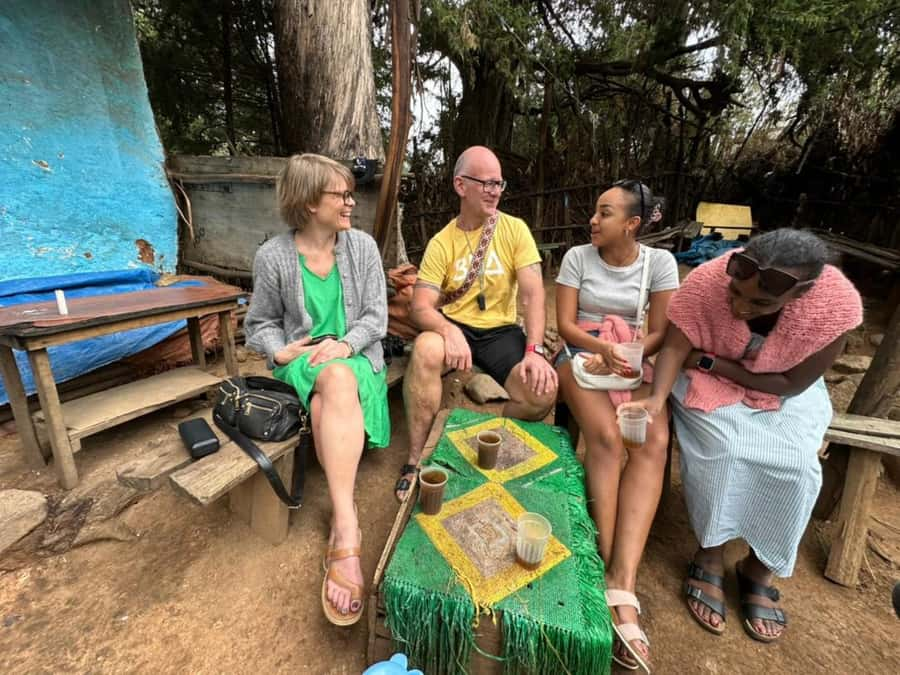
I would recommend this class to someone who wants to learn by doing. It suits beginners, home cooks, and visitors who want an activity connected to Ethiopian food rather than another sightseeing stop.
It should also work well for people who enjoy food and conversation. The local cooks are central to the experience, and the traditional coffee ceremony adds a social element after the meal. The strongest praise focuses on the hosts, the fun atmosphere, and the food, so friendly instruction appears to be a major part of the appeal.
Families and mixed-experience groups may also find the format approachable because the cooks demonstrate before you try. Still, the lack of information about group size and age requirements means you should confirm those points if you are booking for children or a large party.
I would be more cautious if you need a tightly timed activity, a guaranteed menu, or detailed dietary assurances. None of those details is provided. Ask first rather than relying on assumptions.
Booking details and cancellation flexibility
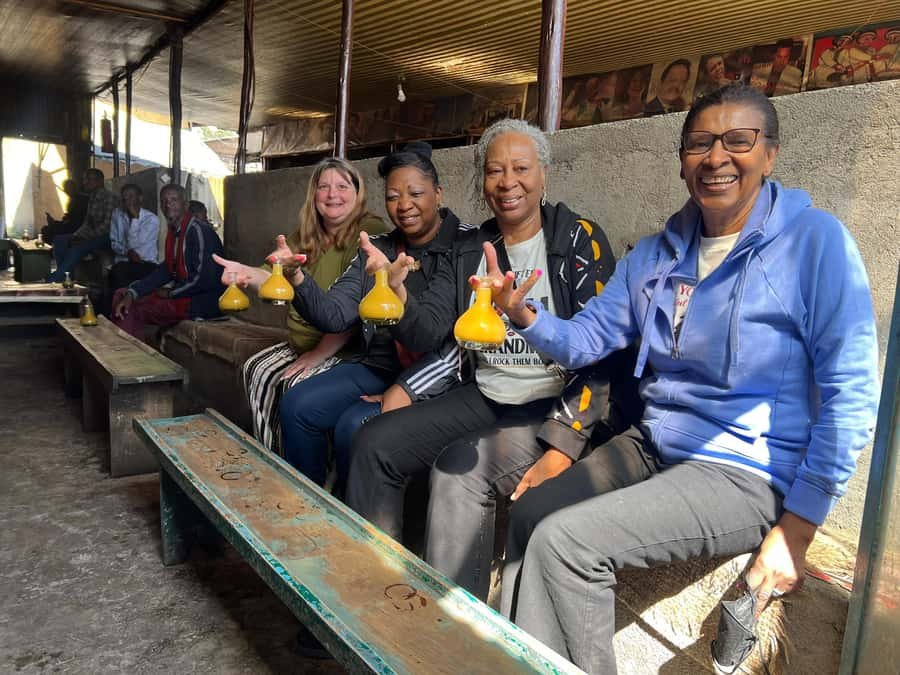
The experience is offered in English. You can reserve a place and pay later, which helps if you are still arranging your Addis Ababa plans. Cancellation is allowed up to 24 hours in advance for a full refund.
That flexibility is useful when your schedule may change, but it does not replace the need to confirm the pickup time. Transportation is part of the package, and the class location is in the Addis Ababa metropolitan area, but the exact meeting arrangements are not given here.
A certificate is provided at the end. It is a pleasant memento and may be useful if you enjoy collecting evidence of cooking classes, but the real takeaway is the ability to repeat the preparation at home.
Should you book the Ethiopian cooking class?
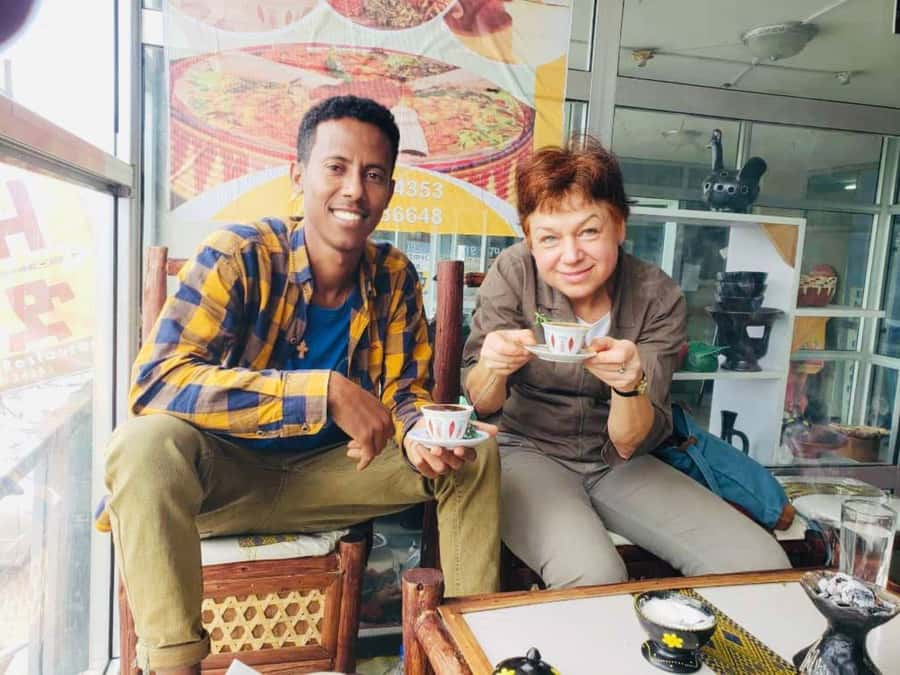
I would book this experience if you want to cook traditional Ethiopian food yourself, learn from local cooks, and finish with a coffee ceremony. The included transportation and ingredients make the $68 price easier to justify, especially if you are staying in Addis Ababa or arriving through the airport.
Before booking, ask about the menu, class length, group size, pickup time, and dietary needs. If those answers suit your plans, this is a practical and enjoyable way to connect with Ethiopian food. If you only want a quick meal or need a precise schedule, choose a simpler dining experience instead.
FAQ
Where does the Ethiopian cooking class take place?
The class takes place in the Addis Ababa metropolitan area of Ethiopia.
How much does the cooking class cost?
The price is $68 per person.
Is transportation included?
Yes. Transportation from the airport and hotel is included, along with all transportation connected with the experience.
What food is included?
All food ingredients are included in the price. The specific dishes are not stated, so ask the provider about the menu before booking.
Is coffee included?
Yes. Coffee and water are included.
Does the experience include a coffee ceremony?
Yes. A traditional Ethiopian coffee ceremony follows the cooking and meal.
What language is the class conducted in?
English is the stated language for the experience.
Do I prepare the food myself?
Yes. Local cooks demonstrate the preparation, and then you prepare your own Ethiopian food.
Do I receive anything at the end of the class?
Yes. You receive a certificate at the end of the experience.
Can I cancel for a full refund?
Yes. You can cancel up to 24 hours in advance for a full refund. You can also reserve your place and pay later.
Newest classes around the world
- Aroidee’s Farm-Fresh Thai Cooking Experience★ 5.0 · 8 reviews
- Authentic Thai Cooking Class and Farm Visit in Chiang Mai★ 5.0 · 66 reviews
- Signature Thai Cooking Course★ 5.0 · 79 reviews
- Half Day Guided Thai Cooking Class in Chiang Mai★ 5.0 · 13 reviews
- Yummy Tasty Thai Cooking School in Chiang Mai★ 5.0 · 2 reviews
- Online Thai and Akha Cooking Class★ 5.0 · 70 reviews
- Northern Thai Cooking Class in Chiang Mai in a Countryside Home★ 5.0 · 2 reviews
- Private Half-Day Thai Cooking Class in Chiang Mai★ 5.0 · 4 reviews
Cooking Classes, compared.
Half-Day Thai Cooking Class at Organic Farm in Chiang Mai
Read our review →

3 in 1 Cooking Class near Navona: Fettuccine, Ravioli & Tiramisu
Read our review →
Pasta & Tiramisu Cooking Class with Unlimited Wine
Read our review →
Hanoi Cooking Class: Culture, Local Market & Meaning CSR Impact
Read our review →
5 Traditional Dishes Hanoi Cooking Class with Market Trip
Read our review →