
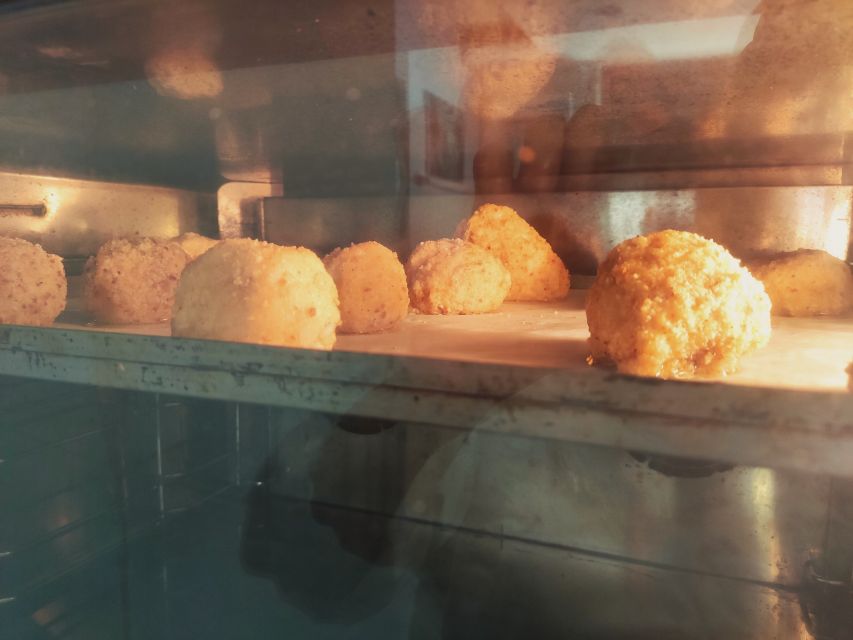
Review · CATANIA COOKING CLASSES
Cooking Class Arancini in Catania
Catania’s arancino is more than a snack. It is a small, crisp package of rice, filling, and Sicilian know-how, and this class lets you make one from the inside out. You will also prepare almond paste, a second local specialty that gives the lesson a sweet finish. I especially like the small maximum of six people and the chance to make several fillings, including vegetarian options. The chef-led format keeps the class practical rather than showy.
I also like that you eat what you make with Sicilian wine, coffee, and a recipe booklet to take home. The main caution is the written material: one participant found the recipes incomplete and said the rice instructions and quantities were missing. Pay close attention during the lesson and write down anything the booklet does not explain.
Key points to know
- Make several kinds of arancini: Learn the rice, fillings, shaping, and crunchy coating rather than simply watching a demonstration.
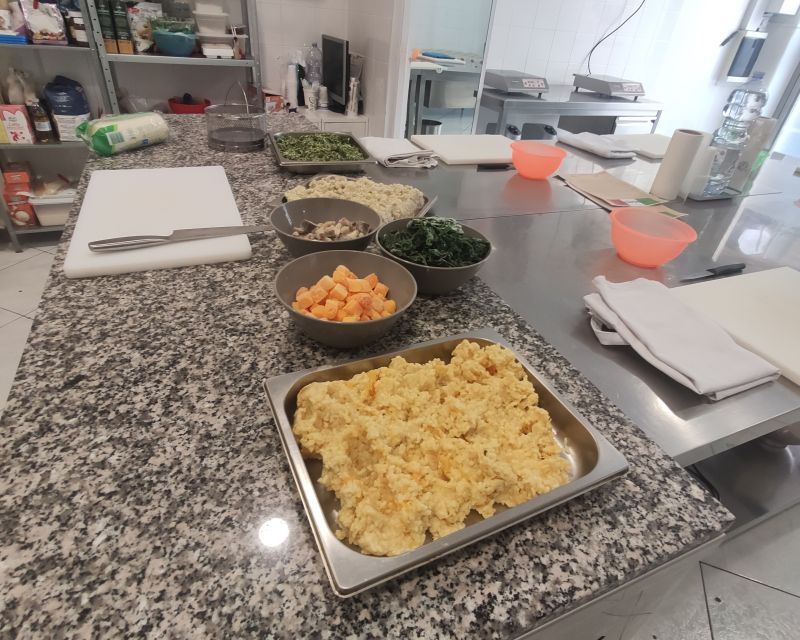
- Work in a real cooking laboratory: The meeting point is a dedicated Laboratorio di cucina in Catania.
- A genuinely small class: Only six places are available, and some sessions may be much smaller.
- Vegetarian fillings are possible: Tell the instructor your preference at the start so the filling choices can be planned.
- Finish with almond paste: The class covers both a savory Sicilian symbol and a traditional sweet.
- Eat, drink, and take the lesson home: Tasting, Sicilian-style wine, water, coffee, and recipes are included.
Why this Catania class is about technique, not just lunch
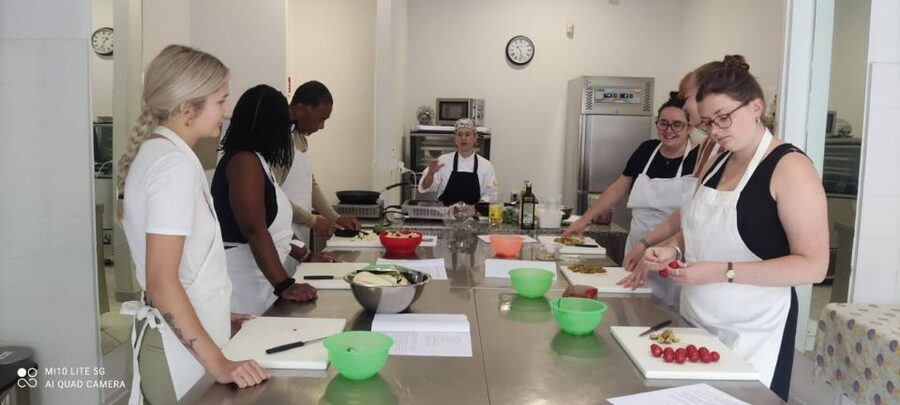
Many food activities give you a plate and a story. This one gives you the stages that create the plate. You learn how the rice is cooked, how fillings are prepared, how the rice is shaped around them, and how the outside becomes crisp and golden.
That order matters. A good arancino can look simple, but the rice must hold together without turning heavy, the filling needs enough flavor to carry through the rice, and the breading has to form a firm shell. You will see these jobs handled one by one instead of trying to guess the process later in your own kitchen.
The lesson also covers Sicilian almond paste. That gives the three hours a useful balance. You are not spending the entire class on one savory preparation, and you get a sweet recipe that may be easier to repeat at home than deep-fried rice.
The experience takes place in a cooking laboratory in Catania, at the meeting point listed as 37.51484298706055, 15.102240562438965. Use the supplied map pin carefully, since the name Laboratorio di cucina is more useful than a broad city-center landmark when you are finding the door.
More Cooking Classes in Catania:
- Catania: Pistachio Ravioli, Pasta Home Cooking Class w/ Wine
★ 4.7 · 204 reviews - Cooking lesson in Catania with lunch or dinner
★ 5.0 · 154 reviews - Catania: Market Tour and Cooking Class with Chef Riccardo
★ 5.0 · 40 reviews
Cooking the rice for the arancino
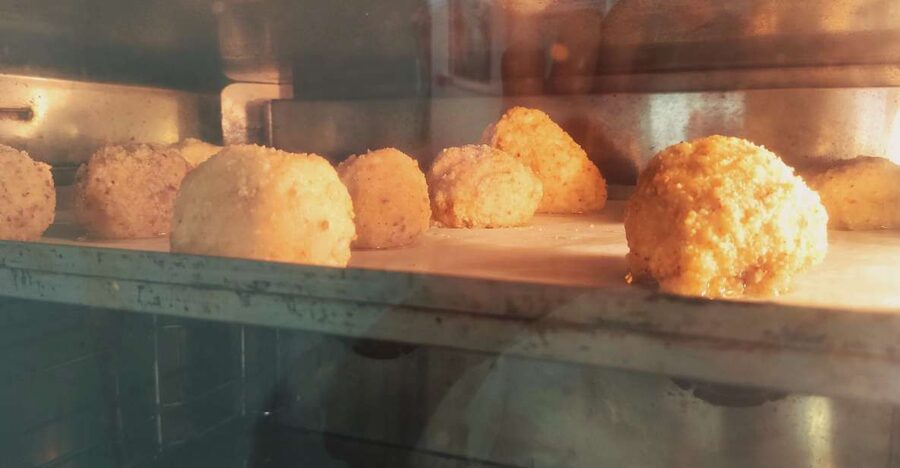
The class begins with the rice that forms the shell of the arancino. This is one of the most useful parts of the lesson because the rice is not just a side dish. It must become a workable covering for the filling.
You can expect an explanation of how the rice is cooked and seasoned before it is shaped. One participant later found the written recipe did not explain this step well, so I would listen closely here. If the instructor gives quantities for cheese, butter, saffron, or any other seasoning, record them in your phone or notebook.
That small bit of preparation can make the difference between remembering the idea and reproducing the dish. A recipe that says only cheese, butter, and saffron does not tell you how much rice to use, how wet the mixture should be, or when each ingredient goes in. Ask direct questions while the pot and rice are in front of you.
This is also where the class can help you understand why arancini vary. The rice is the common base, but the filling changes the character of each one. You are not learning a single rigid formula.
Building fillings, including vegetarian choices
Once the rice is ready, you move on to fillings. The class includes different types, with vegetarian fillings possible. That is useful for mixed groups, since one person can work with a meat filling while another uses a vegetable-based option.
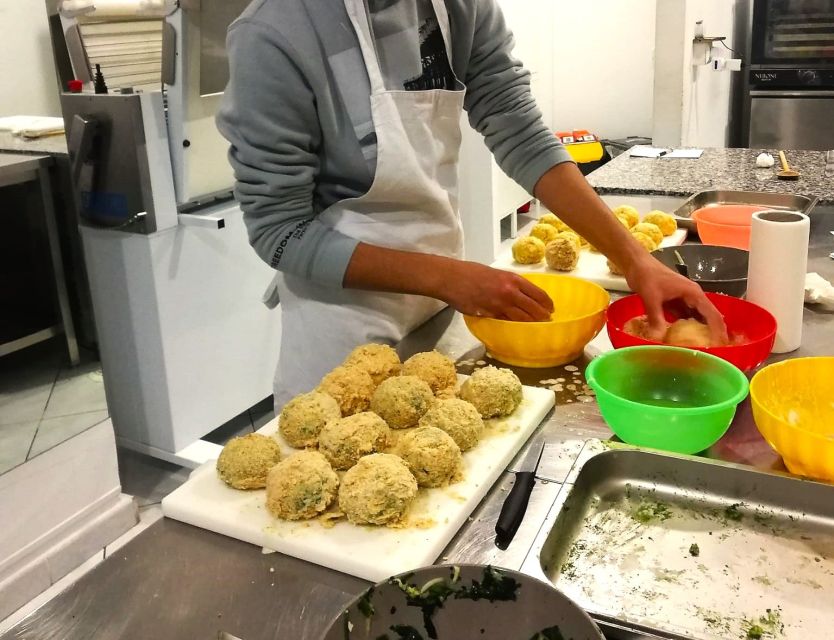
The important thing is the relationship between filling and rice. You need enough filling to taste it, but not so much that the rice cannot close around it. The instructor shows you how the rice is stuffed and shaped, turning a loose mixture into a compact piece that can be coated.
This hands-on work is where the small group earns its keep. With no more than six participants, you have a better chance to ask about texture, size, and shaping. One session had just two people, creating a particularly personal class. Group size can vary, but the cap is low enough to keep the lesson from feeling like a production line.
I would also tell the instructor about dietary needs at the beginning. The supplied information confirms vegetarian possibilities, but it does not promise a full range of allergy substitutions. Do not assume every filling can be changed without asking.
The crisp breading and the moment of truth
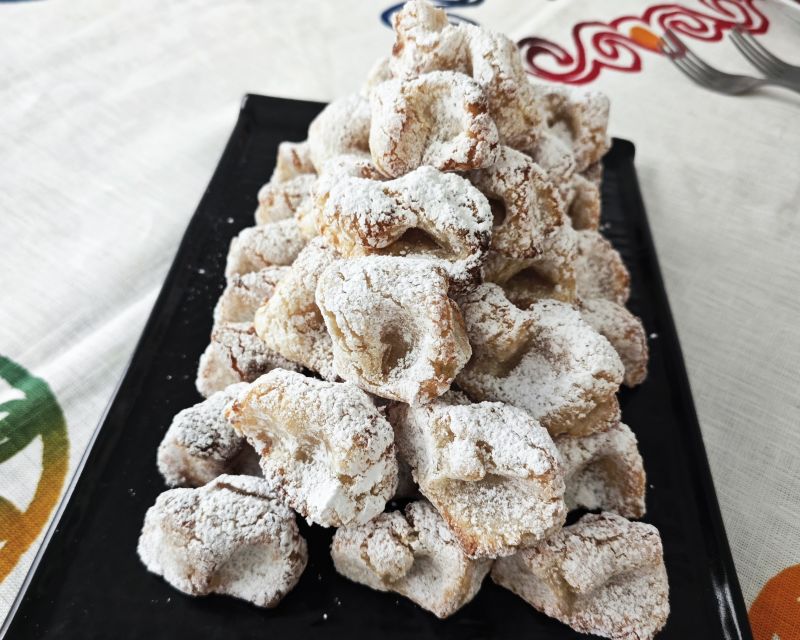
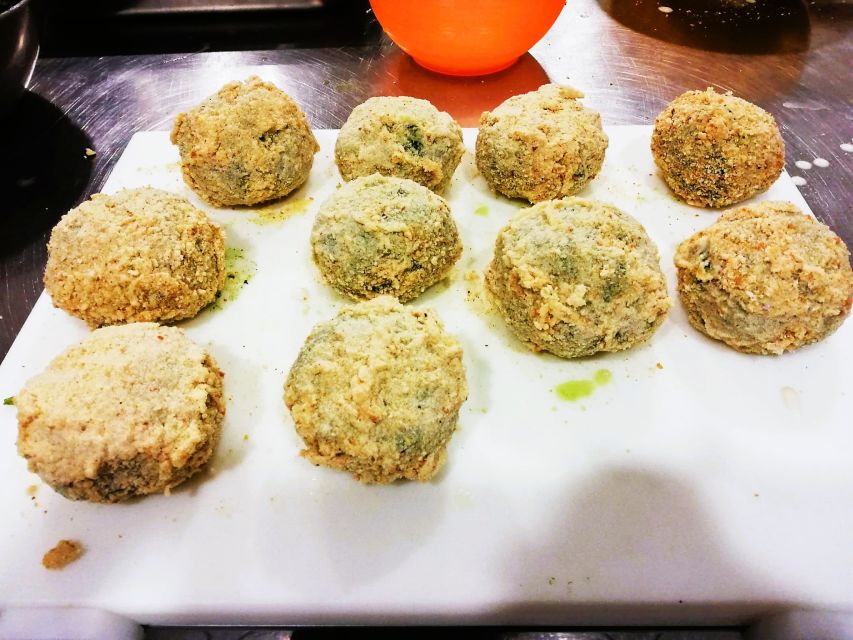
Arancini need their crunchy outside. After the rice is filled and shaped, the class teaches you how to make the breading that protects the center and gives the finished snack its texture.
This is the stage where the lesson moves from home-style assembly to a more exact kitchen skill. You learn how the coating is applied, then prepare the arancini for cooking. The attraction here is not just eating a fried Sicilian specialty. It is learning how the shell is built so that the rice and filling stay together.
The finished arancini are served for tasting, and you may have several types to try. One useful practical detail from a recent session is that there can be plenty of food, with leftovers available to take home. That is not something I would treat as guaranteed for every class, but it is a pleasant possibility, especially if you schedule the lesson as your main meal.
The class is a good fit on a hot Catania day, too. You spend time indoors and have a clear task rather than walking through the afternoon sun. Just remember that cooking can still involve heat and standing, so this is not a passive food tasting.
Same region, a different dish to learn:
- Catania: Pasta & Tiramisu Cooking Class at a Local’s Home
★ 4.8 · 39 reviews - Catania: Pizza Cooking Class
★ 4.9 · 18 reviews - Cooking class fresh pasta
★ 4.8 · 17 reviews - Cesarine: Home Cooking Class & Meal with a Local in Catania
★ 4.5 · 10 reviews
Almond paste adds a sweet Sicilian finish
The second recipe is Sicilian almond paste, often prepared in sweet forms such as almond cookies. The exact shape and decoration are not specified, so you should expect the core preparation rather than assume a particular pastry design.
This part broadens the lesson beyond the better-known arancino. Almond paste is tied to Sicily’s love of almond-based sweets, and it gives you a recipe with a different texture and set of techniques. After working with rice, fillings, and breading, the change of pace is welcome.
You will taste the almond paste along with the arancini at the end. For me, this makes the class feel like a small meal with a dessert course, not just a technical workshop. Wine, water, and coffee are also offered, with Sicilian-style wine adding a local touch to the final table.
If you are choosing among Catania cooking classes, check what you want to learn. A pasta class will suit someone focused on dough and sauces. This one is better for someone who wants a street-food staple and a Sicilian sweet in the same session.
A chef-led class with room for questions
Instruction is available in English and Italian. That matters because shaping and cooking techniques are easier to follow when you can ask about them as they happen. The class is led by a professional chef, and Agata is one instructor specifically praised for being both an excellent chef and teacher.
You should still stay engaged. The class is not a substitute for taking notes, especially if you want to repeat the recipes. Ask for measurements, cooking times, and the desired texture at every stage. If the written recipes are brief, your own notes will fill the gaps.
The mood appears to be friendly and informal. A small group can share what it prepares with people making a different meal, creating a communal meal without turning the class into a formal restaurant service. You will work alongside other participants, but the class remains centered on your own food.
Language should not be a major barrier for English speakers, since English instruction is offered. Italian speakers can take the lesson in Italian. If a technical explanation is important to you, repeat it back in your own words and ask the chef to confirm it. That is a good habit in any cooking class.
What the three hours are worth
The cost is not included in the information provided here, so I cannot call it a bargain or an overpriced outing. I can assess what you receive: three hours of instruction, several arancino fillings, a vegetarian possibility, almond paste, a tasting, wine, water, coffee, and a recipe booklet.
That is a solid bundle if you value active cooking rather than a short demonstration. You are paying for instruction and a meal, with the added benefit of a skill you can use at home. The value improves for a small group, since you have more access to the chef and more room to correct your technique.
The value is weaker if you mainly want to eat arancini. Catania has many ways to buy prepared street food, and this class takes time away from sightseeing. It makes sense when the process is part of what you want.
A reserve-now, pay-later option is available, and cancellation is allowed up to 24 hours before the class for a full refund. Those terms help if your Catania schedule is still shifting. Starting times vary, so check availability before planning another activity around it.
Who should book this experience
I would recommend this class to couples, solo visitors, food-focused families with older children, and small groups of friends. It is especially useful for people who have already tried arancini and want to understand how the dish is made.
It also suits a mixed group. One person can choose vegetarian fillings while another tries different options, and everyone can taste the results together. The almond paste keeps the class interesting for anyone who prefers sweets to savory food.
The age policy needs attention. The activity is listed as not suitable for children under four, with separate notices also excluding babies and children under two or three. If you are booking for a young child, check the current age requirement rather than assuming the child can participate.
I would think twice if you need a fully detailed printed cookbook. The supplied booklet is intended to help you recreate the food, but one participant found two copied recipes incomplete. Treat the booklet as a guide, not your only record of the lesson.
How to get the most from the kitchen time
Arrive ready to participate. This is not a quick tasting where you can stand back and take photographs. You will learn by handling the rice, filling, shaping, and coating.
Keep your phone or a small notebook available for measurements. Write down the rice method first, then note the filling ingredients and the breading sequence. For the almond paste, record the proportions and any texture cues the chef gives you.
Ask about leftovers before the final tasting if you need to plan the rest of the day. Some food may be available to take home, but the amount will depend on the class and what is prepared.
I would schedule this as a central food activity rather than squeezing it between two timed attractions. Three hours is long enough to require a clear block in your day, and you will enjoy it more if you are not watching the clock.
The meeting point is the cooking laboratory, not a general tourist office. Save the map coordinates, 37.51484298706055, 15.102240562438965, and allow enough time to find the entrance. The supplied details do not name a hotel pickup or transport service, so plan to make your own way there.
My verdict on this Catania arancini class
Book it if you want to learn a real Sicilian technique, eat a generous tasting, and leave with the basis for making arancini and almond paste at home. The strongest reasons are the six-person limit, the chef-led instruction, the choice of fillings, and the fact that the class covers both savory and sweet food.
Go in with realistic expectations about the recipe booklet. Listen carefully, ask for missing quantities, and make your own notes. If you do that, the class offers better value than a simple meal because you leave with a method, not just a memory.
Skip it if you want a fast food stop, a fully printed cookbook, or a class built around pasta and sauces. For everyone else, this is a practical Catania activity with enough eating, cooking, and local flavor to justify three hours.
FAQ
How long does the Catania arancini cooking class last?
The class lasts three hours. Starting times vary, so you need to check availability when choosing a session.
Where does the cooking class meet?
It meets at a cooking laboratory in Catania, listed as Laboratorio di cucina. The supplied coordinates are 37.51484298706055, 15.102240562438965.
What will I learn to cook?
You will learn to prepare Sicilian arancini and Sicilian almond paste. The arancini lesson covers rice, different fillings, shaping, and crunchy breading.
Are vegetarian arancini fillings available?
Vegetarian fillings are possible. Tell the instructor about your preference at the beginning of the class.
What languages are offered?
Instruction is available in English and Italian. Agata is one named instructor associated with the class.
What is included after the cooking lesson?
You will taste the arancini and almond paste, and Sicilian-style wine, water, and coffee are offered. A booklet with recipes is also provided, although you should take notes during the lesson for any missing quantities or steps.
Newest classes around Catania
- Cesarine: Market Tour & Home Cooking Class in Catania★ 4.0 · 6 reviews
- Cesarine: Home Cooking Class & Meal with a Local in Catania★ 4.5 · 10 reviews
- Cooking Class in Taormina with Lunch Included★ 5.0 · 2 reviews
- Join us for a Sicilian cooking class in a professional kitchen on Etna, using fresh ingredients from our organic garden★ 4.2 · 4 reviews
- Cooking Class with lunch or dinner★ 4.9 · 7 reviews
- Cooking class, visit to the Catania market and light lunch★ 5.0 · 7 reviews
- Catania: Pizza Cooking Class★ 4.9 · 18 reviews
- Cooking class fresh pasta★ 4.8 · 17 reviews
Catania Cooking Classes, compared.
Pistachio Ravioli, Pasta Home Cooking Class w/ Wine
Read our review →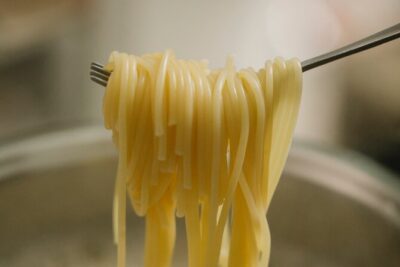
Cooking lesson in Catania with lunch or dinner
Read our review →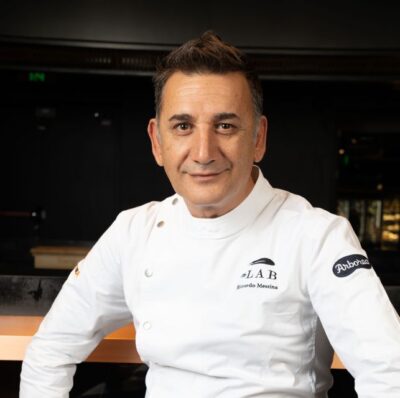
Market Tour and Cooking Class with Chef Riccardo
Read our review →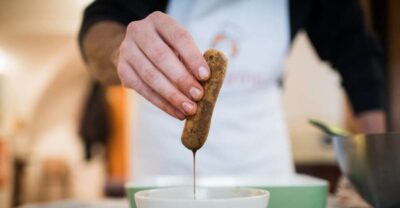
Pasta & Tiramisu Cooking Class at a Local’s Home
Read our review →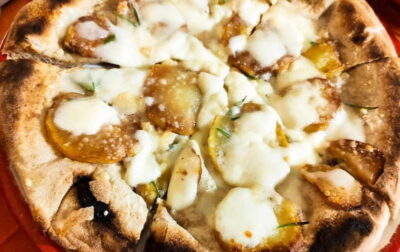
Cesarine: Home Cooking Class & Meal with a Local in Catania
Read our review →
Browse the lists this tour appears in