Review · ITALY COOKING CLASSES
Cinque Terre: Pesto Cooking Class at a Local’s Home
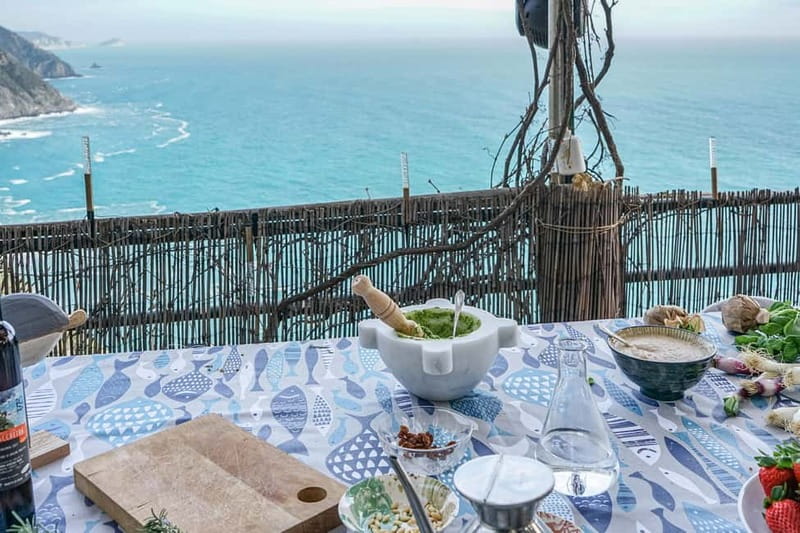
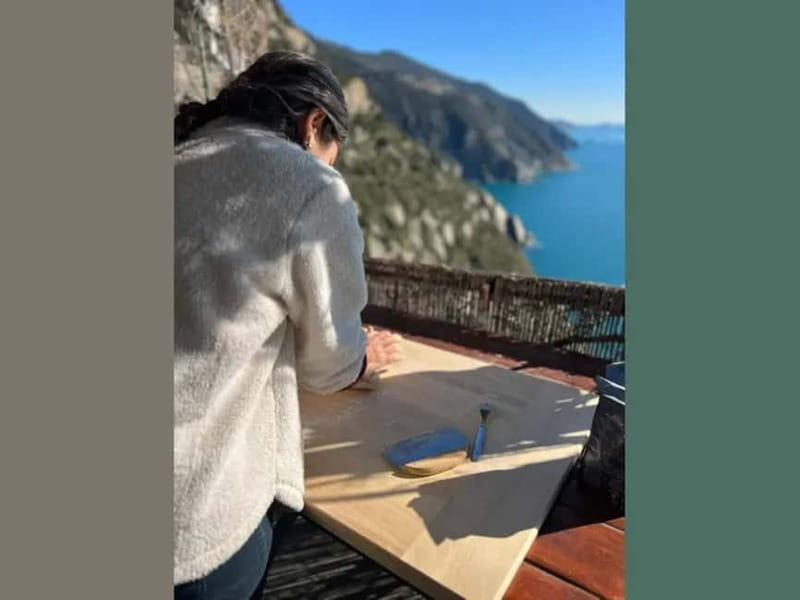
The best part of this two-hour pesto class is its setting: a local home reached by a short uphill walk, with a vineyard view over the sea. You learn pesto from Cesarina, not from a cooking-school kitchen built for crowds, and the class keeps its focus on one famous Ligurian recipe.
I like the choice between mortar and pestle or electric blender, since you learn both the old way and the practical home-kitchen way. I also like the useful storage advice and the chance to take your pesto with you, plus a glass of local Possa wine from Liguria.
The main drawback is the approach. From the meeting point, you walk about 200 meters uphill, then follow terraced steps and a path to the house. Allow extra time, wear sensible shoes, and remember that the climb is part of the experience rather than a quick stop beside the road.
Key Points
- A vineyard setting above the sea: The class takes place at a local home reached by a short uphill walk and terraced path.
- Two ways to make pesto: Learn the traditional mortar and pestle method, then compare it with an electric blender.
- Useful storage advice: Cesarina explains how to keep your pesto fresh for as long as possible.
- A take-home result: You package the pesto you make, so the lesson continues after the class.
- Local wine included: Enjoy one glass of Possa wine from Liguria, along with water.
- Small group format: The class is limited to 10 people and is offered in English or Italian.
Why This Pesto Class Works So Well in Liguria
Pesto makes sense here. It is one of Liguria’s best-known foods, and this class gives you a clear look at how the dish depends on good ingredients and careful handling. You are not simply watching someone stir a sauce. You are learning why basil selection matters, how the ingredients are treated, and how two different tools change the process.
The class begins with the story of pesto from the La Spezia area. Cesarina explains the traditional approach, including the selection of the best basil plants and other high-quality ingredients. That introduction gives the recipe a local frame without turning the class into a long lecture.
I appreciate the narrow focus. In two hours, you are not trying to make a full Italian meal, rush through several recipes, or sit through a broad food talk. You spend the time on one preparation that you can repeat at home.
That makes this a good choice if you want a cooking activity with a practical payoff. You leave with a better sense of how pesto is made and a portion to enjoy later. The experience is less useful if you are looking for a full lunch, a multi-course lesson, or a long market visit.
More Cooking Classes in Italy:
- Florence: Pasta Cooking Class with Unlimited Wine
★ 4.9 · 10,285 reviews - 3 in 1 Cooking Class near Navona: Fettuccine, Ravioli & Tiramisu
★ 5.0 · 7,376 reviews - Florence: Pasta & Tiramisu Cooking Class with Unlimited Wine
★ 4.9 · 6,708 reviews
Reaching Cesarina’s Home Above the Meeting Point
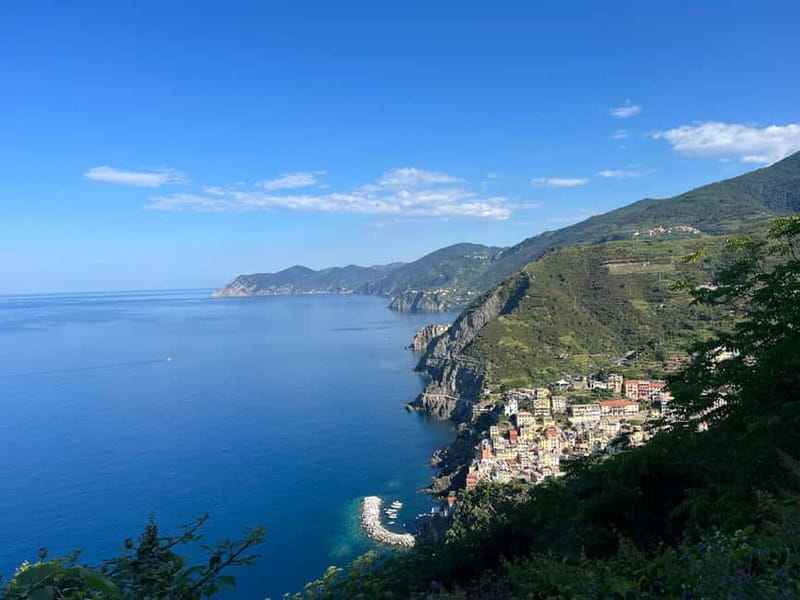
The meeting point is not the final stop. From there, you walk about 200 meters uphill to Cesarina’s house. The route includes terraced steps, a turn at a sign for I Foresti Farm, and a path leading to the home.
That distance may sound minor, but the uphill section matters. One person who enjoyed the class still advised allowing time to arrive because the walk takes some effort. I would not arrive at the last minute, especially if you are carrying a bag or trying to find the route for the first time.
The walk also explains part of the appeal. You are heading to a home and vineyard rather than a central commercial venue. The setting feels tied to the hills around Liguria, and the sea view becomes part of the class instead of something you try to squeeze in before or after it.
Wear shoes with a firm grip. The supplied information does not give an accessibility assessment, so you should contact the organizer if steps, an uphill walk, or uneven paths could be difficult for you. The activity finishes back at the meeting point, after you return from the house.
The Vineyard View Sets the Pace
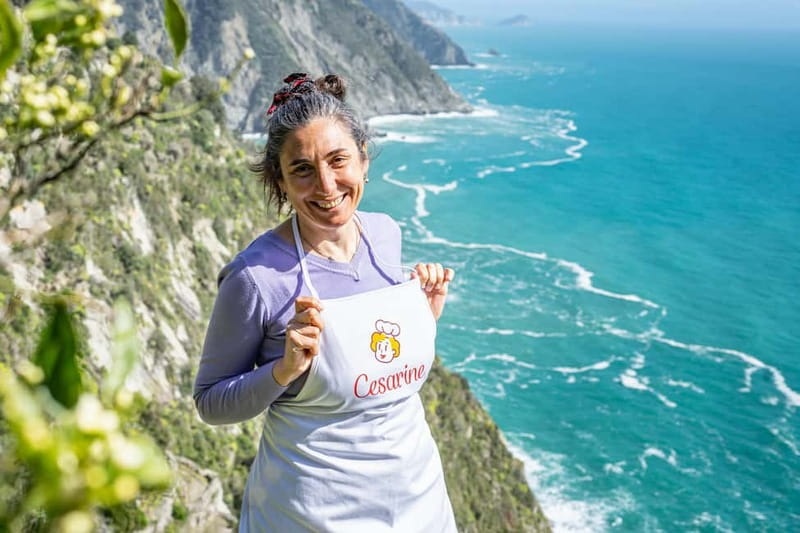
Once you reach the property, the view is one of the main reasons to choose this class. You take in the sea from the vineyard while the lesson begins. The setting gives the class a slower, more personal feel than a standard indoor demonstration.
The view is not just decoration. It helps connect the food to its place. You are learning a Ligurian recipe while looking across the area where the class is held, with the vineyard and sea forming the backdrop.
Still, keep your priorities clear. The experience information does not promise a separate sightseeing stop, a long vineyard tour, or a guided walk through the property. The vineyard is the setting for the class, and the cooking remains the main event.
You also get one glass of local Possa wine from Liguria and water. The wine adds a regional touch without turning the activity into a tasting session. If you want several wines or a full winery visit, this is not designed for that. If you want a modest drink with your food lesson, it fits well.
Learning the Story Behind Ligurian Pesto
Cesarina starts by explaining the history of pesto from La Spezia. You then hear about choosing the best basil plants and selecting quality ingredients for the strongest flavor.
That information matters because pesto is a short recipe with little room to hide mistakes. When there are only a few main ingredients, the quality and handling of each one count. The lesson helps you see that the result is not just a matter of putting everything in a machine and pressing a button.
I like that the instruction covers both tradition and daily practicality. You get the cultural background, but the class quickly turns toward what you can actually do in your own kitchen.
The class is offered in English or Italian. The provided information does not name an individual instructor beyond Cesarina, so you should expect the host at the local home to lead the session rather than a large teaching team.
Same region, a different dish to learn:
- Florence: Pasta Cooking Class with Unlimited Wine
★ 5.0 · 6,413 reviews - Cooking Class and Lunch at a Tuscan Farmhouse with Local Market Tour from Florence
★ 5.0 · 4,831 reviews - Rome: Pasta Making Class with Wine, Limoncello, and Dessert
★ 4.9 · 3,177 reviews - Pastamania – Florence Pasta Making Class
★ 5.0 · 3,050 reviews
Mortar and Pestle Versus Electric Blender
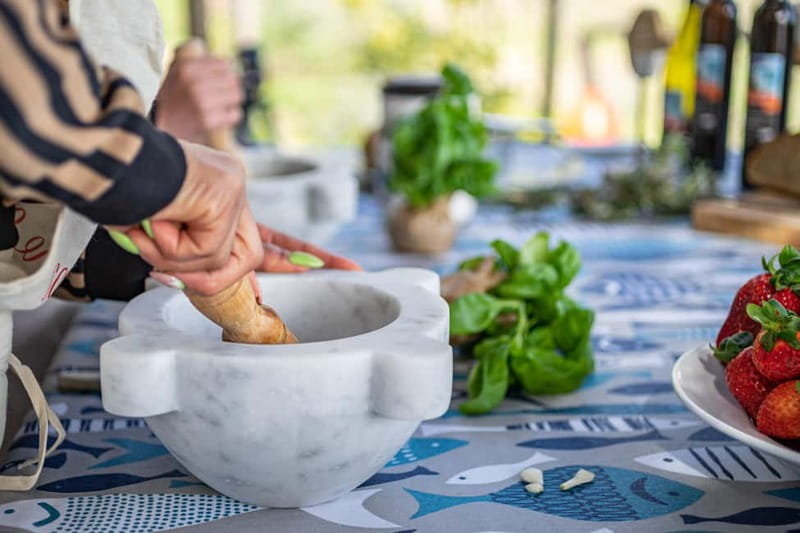
The most useful part of the lesson is the comparison between two methods. First, you learn the traditional method with a mortar and pestle. Then you learn how to prepare pesto with an electric blender.
The mortar and pestle method gives you a feel for the older preparation style. It is slower and more hands-on, but it shows how the ingredients are worked together without relying on a motor. The class teaches the method, so you can understand the technique even if you later choose the faster option at home.
The blender method is more practical for many home cooks. It takes less physical effort and can make the recipe easier to repeat. Learning both methods lets you decide what suits your kitchen, your time, and the texture you prefer.
The experience does not claim to provide a full kitchen skills course, and it does not list a detailed ingredient schedule. Its value comes from concentrating on pesto and showing you two preparation systems in the same session.
That comparison also makes the class suitable for different cooking interests. A food lover may enjoy the traditional tool, while a busy home cook may focus on the blender. You do not have to choose between tradition and convenience before you understand both.
Storage Advice You Can Use at Home
After making the pesto, Cesarina explains how to store it so it stays fresh for as long as possible. This is a small detail, but it is one of the most useful parts of the class.
A cooking demonstration can be enjoyable and still fade from memory once you leave. Storage advice gives you a better chance of using what you learned later. You can return home with a clearer idea of how to handle the pesto rather than treating it as a same-day souvenir.
You then package the pesto to take with you. The activity says you can enjoy the fruits of your work after returning home or on a rocky cliff overlooking the sea. That choice gives the class a pleasant finish, especially if you plan to continue your day nearby.
The information does not specify the container, the exact shelf life, or any transport restrictions. Ask Cesarina for the precise storage instructions during the class, and follow those directions rather than relying on general kitchen advice.
What the Two Hours Actually Include
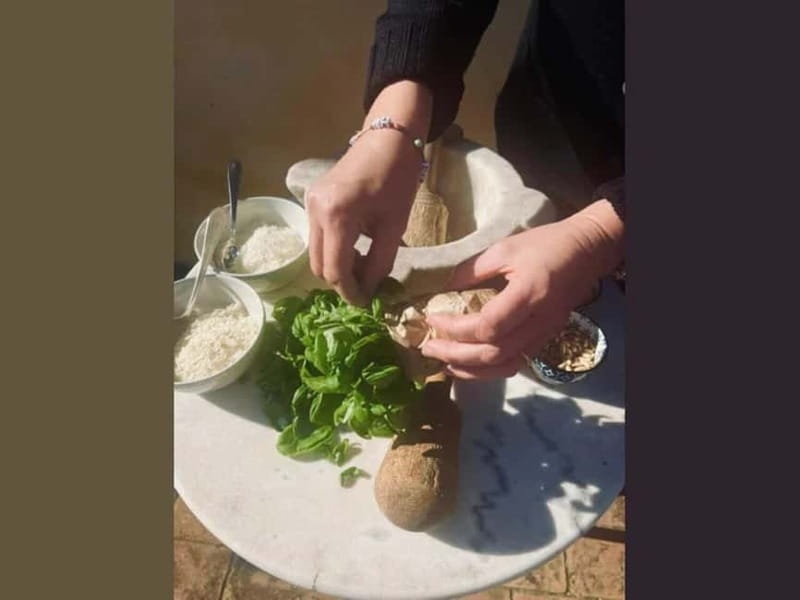
The advertised duration is two hours, with starting times available on selected dates. The session includes the pesto express cooking class, the explanation of the two preparation methods, storage tips, packaging, one glass of local Possa wine, and water.
The word express is worth noting. You get a focused lesson, not an all-day cooking program. The short format works well if you are fitting the class between other plans in Liguria, but it also means the class will not cover a long list of regional dishes.
The exact order and pace can vary at the local home. The stated flow begins with the sea and vineyard view, moves into the history and ingredient discussion, then covers the mortar and pestle and blender methods before the pesto is packaged.
A two-hour slot also gives you enough time to ask questions without committing a full day. Since the group is limited to 10 people, the format should feel more manageable than a large demonstration, although the actual group size can be smaller or reach that limit.
Group Size, Language, and Atmosphere
The class is limited to 10 participants and is available in English or Italian. That small-group limit is important because the activity takes place in a local home rather than a large teaching facility.
A group of 10 is not private, but it is compact enough for a hands-on lesson to remain focused. You should still expect to share the working area and the host’s attention. If you want a private cooking session, the supplied details do not promise one.
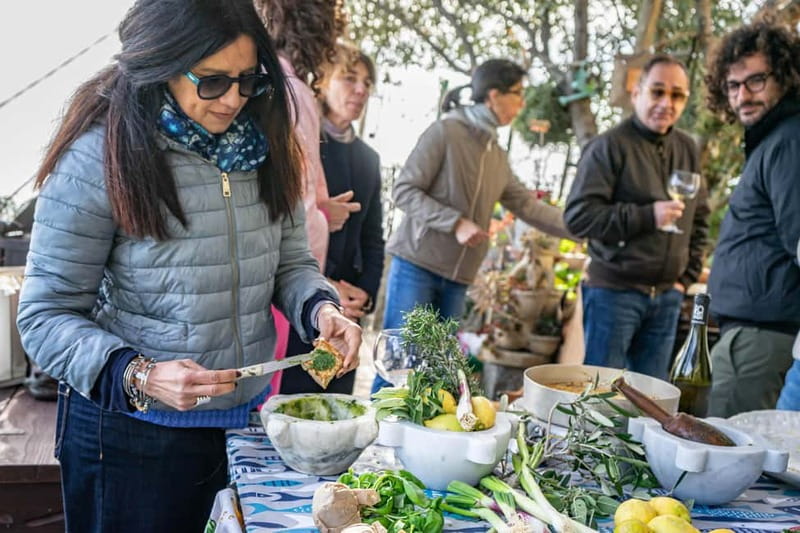
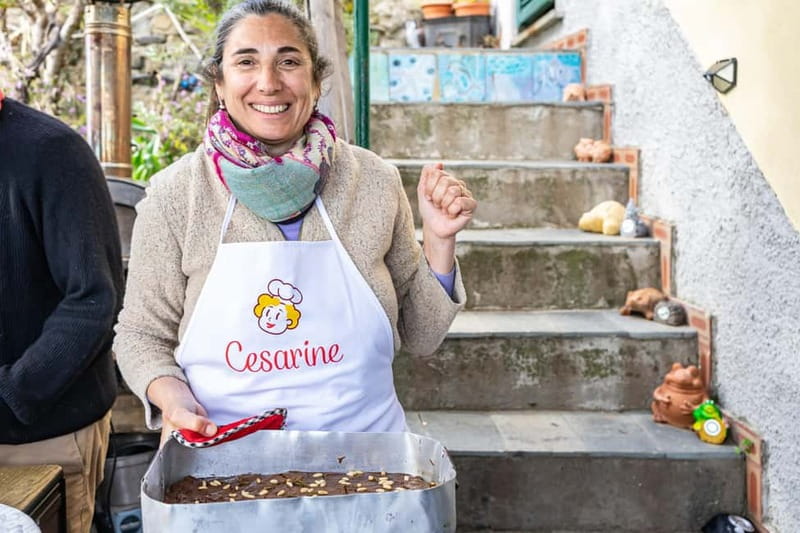
The home setting also shapes the tone. You are visiting Cesarina’s house, learning a local recipe, and talking with the host in a personal setting. One especially positive part of the experience is the chance to talk with the hosts, not just watch the food preparation.
That makes this a natural fit for people who like food, conversation, and local settings. It may suit couples, families, and small groups of friends who want a relaxed activity with a clear result. It is less suitable if you prefer a tightly timed class in a central studio with no uphill approach.
Is the Experience Worth the Cost?
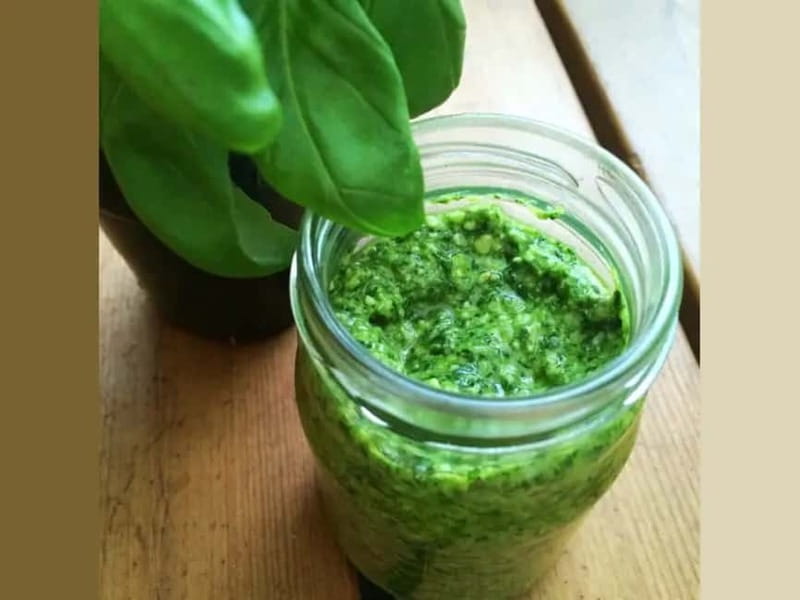
No tour price is provided here, so I cannot judge the exact value in euros. I can still explain what you are paying for: a two-hour class in a local home, the host’s instruction, two pesto methods, storage guidance, packaged pesto to take away, a sea view from the vineyard, and one glass of local Possa wine.
That is a good package if you value setting and personal instruction as much as the recipe itself. The class gives you more than a dish to taste. You get a method you can repeat, a comparison between traditional and modern tools, and advice that helps you use the pesto later.
The value is weaker if you only want a cheap food sample or a full meal. The included wine is one glass, and the activity is centered on pesto rather than a broad lunch or wine tasting. Check the current price against your plans and decide if the local-home setting justifies the spend for you.
Free cancellation up to 24 hours before the activity and the option to reserve now and pay later make planning easier. Those terms are useful in an area where weather, transport, or changing day plans can affect your schedule, but always confirm the conditions when booking.
Who Should Book This Class?
I would choose this experience if you want a short, hands-on food activity with a strong sense of place. It is especially appealing if you are curious about Ligurian cooking and want to bring home something you helped prepare.
You should also choose it if a sea view matters to you. The vineyard setting is a major part of the appeal, and the chance to enjoy the pesto on a rocky cliff overlooking the sea gives you a memorable option after the lesson.
This class suits:
- People who want to learn one recipe well instead of racing through several.
- Home cooks interested in both traditional tools and modern appliances.
- Couples or small groups who enjoy a local-home setting.
- Visitors who want a two-hour activity rather than a full-day food program.
- Anyone who appreciates practical storage advice and a take-home result.
You may want another option if you have difficulty with uphill paths and terraced steps, need a fully accessible venue, or want a substantial meal included. The available details do not promise those features.
The Main Strengths and Limits
The strongest part is the combination of local setting and practical instruction. The sea view and vineyard make the class feel tied to Liguria, while the two preparation methods give you something useful to take home.
The second strength is the host interaction. You are not only following a recipe. You are hearing about basil, ingredients, and the local background of pesto from Cesarina in her home.
The main limit is the short, focused format. Two hours is enough for pesto, but not for a full survey of Ligurian cooking. The walk to the home is another consideration, and you should plan for it instead of treating it as a flat, quick transfer.
Should You Book It?
Book this pesto class if you want a personal food experience with a view, a small group, and a recipe you can repeat. The mortar and pestle lesson, blender comparison, storage advice, and packaged pesto give the activity real value beyond a pleasant afternoon.
Skip it if you need a central, step-free meeting point, a full meal, or a broad cooking course. For everyone else, the combination of Cesarina’s local home, the vineyard above the sea, and one glass of Possa wine makes this a well-focused way to spend two hours in Liguria.
FAQ
How long does the pesto cooking class last?
The class lasts two hours. Starting times vary, so check availability for the date you want.
Where does the class take place?
The class takes place at Cesarina’s local home in Liguria, in a vineyard setting with a sea view. The exact address is shared after reservation.
How do I reach Cesarina’s house?
From the meeting point, walk about 200 meters uphill. Follow the terraced steps, turn right at the sign for I Foresti Farm, and continue along the path to Cesarina’s house.
What cooking methods will I learn?
You learn two methods for preparing pesto: the traditional mortar and pestle method and a method using an electric blender.
Will I learn how to store the pesto?
Yes. Cesarina explains how to store the pesto so it stays fresh for as long as possible.
Can I take the pesto home?
Yes. After making the pesto, you package it to take with you and enjoy later.
Is wine included?
Yes. The experience includes one glass of local Possa wine from Liguria, as well as water.
What languages are available, and how large is the group?
The class is available in English and Italian. The group is limited to 10 participants.
Newest classes around Italy
- Cooking Class in a Sicilian countryhouse★ 5.0 · 5 reviews
- Cesarine: Market Tour & Home Cooking Class in Catania★ 4.0 · 6 reviews
- Cesarine: Home Cooking Class & Meal with a Local in Catania★ 4.5 · 10 reviews
- Cooking Class in Taormina with Lunch Included★ 5.0 · 2 reviews
- Cooking class in Capri for small groups★ 4.0 · 4 reviews
- Cooking Class and Wine Pairing in Capri★ 5.0 · 57 reviews
- Lezione di Cucina : Pasta Fresca★ 5.0 · 12 reviews
- Private Cooking Class Experience in Reggio Calabria★ 5.0 · 5 reviews
Italy Cooking Classes, compared.

3 in 1 Cooking Class near Navona: Fettuccine, Ravioli & Tiramisu
Read our review →
Pasta & Tiramisu Cooking Class with Unlimited Wine
Read our review →
Cooking Class and Lunch at a Tuscan Farmhouse with Local Market Tour from Florence
Read our review →
Pasta Making Class with Wine, Limoncello, and Dessert
Read our review →