Review · CHIANG MAI COOKING CLASSES
Chiang Mai: Half Day Cooking Class at Organic Farm
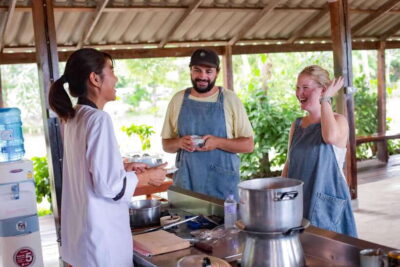
The best part of this Chiang Mai cooking class happens before the first pan gets hot: you visit a local market, see the ingredients up close, and then use them at your own cooking station. I like the small groups of up to 10 and the choice of city garden, city yard, or farm setting. I also like that you can control the heat, swap in vegetarian or vegan ingredients, and take home a recipe book.
The main thing to watch is the booking option you select. The farm course is outside the city and may not be available at short notice, while the city alternatives are easier to arrange. Pickup is included within 3 kilometers of Chiang Mai Old City in some arrangements, but a no-transfer meeting point at Burger King is also listed, so confirm your transport details before you set out.
Key points to know before booking
- You visit a local market first: Learn what Thai herbs, vegetables, curry ingredients, and sauces look like before cooking.
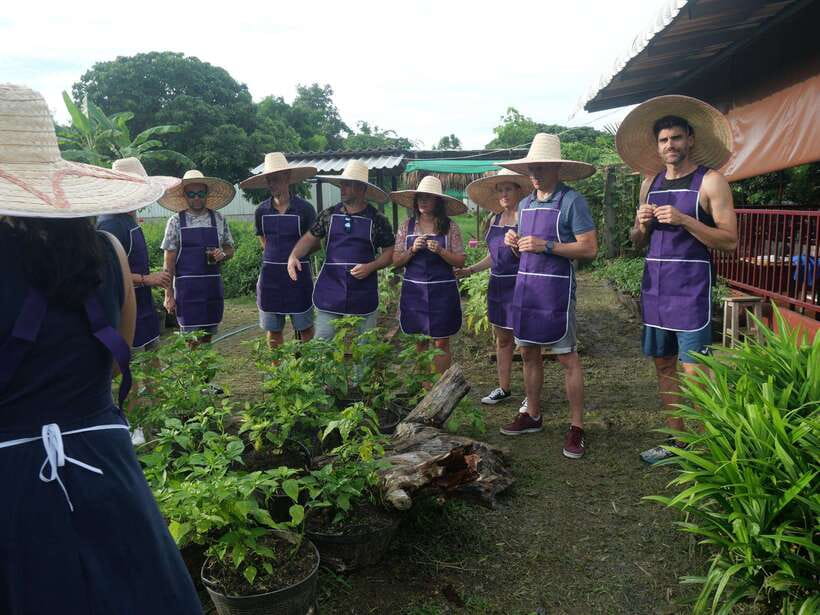
- You choose your own setting: Pick a city class with an organic garden, a city yard garden, or a farm garden outside Chiang Mai.
- You cook several dishes yourself: The class covers curry paste, curry, stir-fried food, soup, spring rolls, and sometimes dessert.
- You control the spice level: Ask for mild or hot food, with vegetarian and vegan choices available.
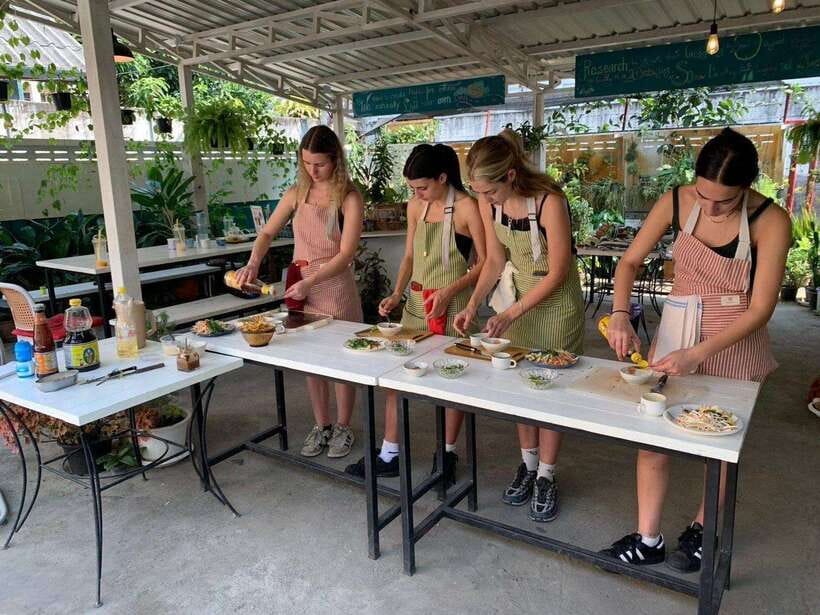
- You get more than a demonstration: Each person has an individual cooking station and prepares their own food.
- You receive recipes for home: A PDF recipe book helps you repeat the dishes after returning home.
A market visit that gives the cooking real context
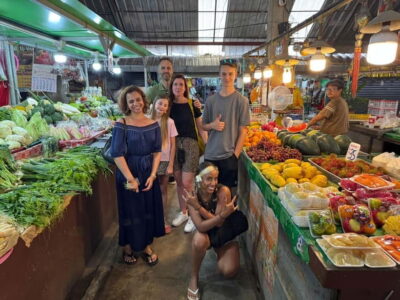
The class begins with a short visit to a local market. This is not just a quick shopping stop. It helps you connect the dishes on your menu with the raw ingredients used in northern Thai cooking.
You may see the herbs, vegetables, chilies, curry ingredients, and other products that later appear at your cooking station. That matters because Thai recipes often rely on fresh aromatics that can look unfamiliar when you first encounter them. Seeing them whole makes the later chopping, pounding, and seasoning easier to understand.
I particularly like this part for first-time Thai cooks. A recipe can tell you to use a certain herb, but a market visit shows you its color, shape, and smell. It also gives your instructor a chance to explain how ingredients are used and which products are common in local kitchens.
Allow yourself a little flexibility here. The market visit is described as part of the class, but one participant wanted more time there. The focus is still cooking, not a long market tour, so think of this as a useful introduction rather than a full food-market excursion.
More Farm Cooking Classes in Chiang Mai
- Half-Day Thai Cooking Class at Organic Farm in Chiang Mai
★ 5.0 · 19,087 reviews - Chiang Mai: Authentic Cooking Class with Market & Farm Visit
★ 4.9 · 4,546 reviews - Chiang Mai: Cooking Class with Organic Farm at Mama Noi
★ 4.9 · 1,151 reviews
Three locations, three different moods
You have three settings to choose from, and this choice can shape the feel of your morning or evening.
The city organic garden option is the most convenient if you want to stay near Chiang Mai’s central sights. It gives you the garden element without the longer journey outside town. The city yard garden offers another urban setting, and may suit you if convenience matters more than a farm visit.
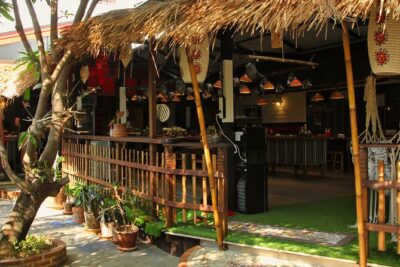
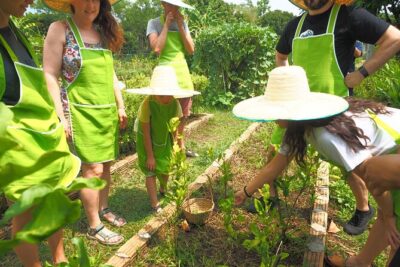
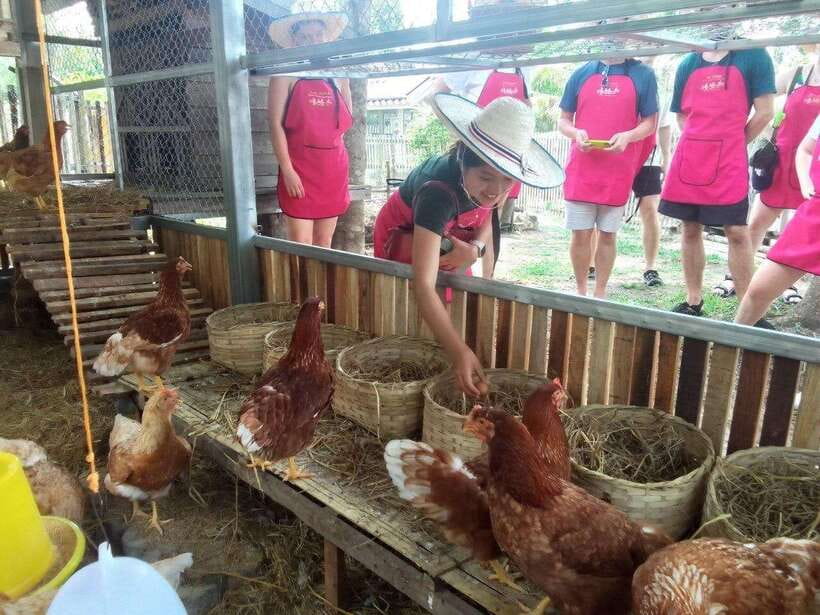
The farm garden outside the city is the choice for a more rural setting. It includes a guided tour of an organic farm and access to ingredients grown in the garden. This option may appeal to you if the growing side of Thai food is as interesting as the cooking itself.
Read the option names closely when booking. One participant booked the farm option on the day of the class and was later moved to the city course because the farm was full. The city replacement worked well, but this is a useful warning: if the farm setting is important to you, arrange it ahead of time and confirm that it is operating.
The garden tour also helps explain the word organic in practical terms. You can taste herbs from the garden and see how some ingredients connect directly to the dishes you prepare. This makes the setting more than a pretty backdrop.
Cooking five to six types of Thai food
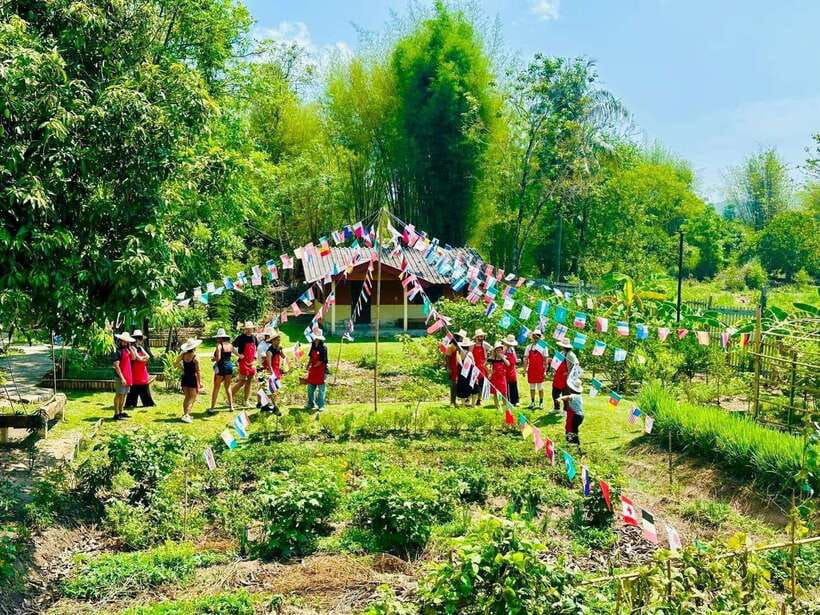
The course is built around several major parts of Thai cooking. The stated categories include curry paste, curry, stir-fried dishes, soup, and spring rolls. A dessert may also be included, with mango sticky rice appearing in one class arrangement.
The exact number of dishes can vary. Some sessions have included three dishes per person, while other combinations have produced four, five, or even six separate dishes. The menu is selected during the class, and the available choices can include:
- Pad Thai or chicken fried rice
- Fried chicken with cashew nuts
- Pad Kra Pao
- Spring rolls
- A soup chosen from several options
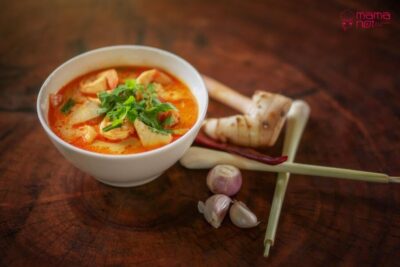
- Red, green, Phanaeng, Massaman, or Khao Soi curry
- Mango sticky rice in some course formats
This variety is one of the strongest reasons to book. You are not simply watching an instructor cook one signature dish. You get a practical look at several cooking methods, from preparing a curry paste to stir-frying and making soup.
You also have room to make the menu your own. For curry, you may select the paste that interests you most. If you are cooking with a partner, choosing different dishes can give you a wider sample of Thai food without requiring each person to repeat the same recipe.
The class is suitable for beginners. The instructor guides you through each stage, and you cook with your own ingredients at your own station. That setup gives you a better chance to understand the process than a class where one large wok is shared by everyone.
Individual stations make the lesson practical
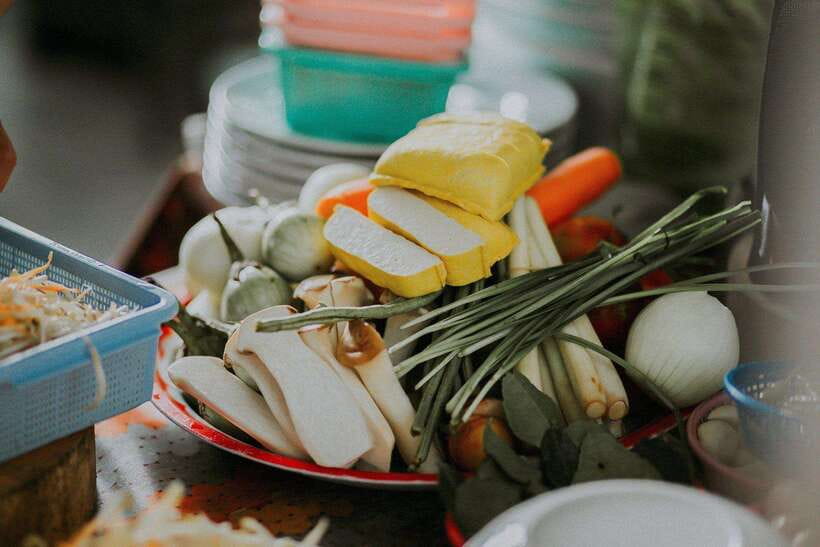
An individual cooking station is an important detail. You are not standing at the back of a room while someone else handles the knife and wok. You prepare your own ingredients, follow the instructor, and adjust the food to your taste.
That does not mean the class is completely private. The group can include up to 10 people, which keeps the session small enough for questions and personal help. Several instructors have been praised for being funny, patient, and attentive, including Wave, Anya, Toy, Balloon, Thai, Poppy, and Jade.
The teaching style can vary by instructor, but the common strength is personal guidance. If you are unsure about curry paste, unfamiliar herbs, or the right amount of chili, ask as you go. The class is designed for interaction, not silent copying.
You should also tell the instructor about dietary needs at the start. Vegetarian and vegan food is available, and the heat level can be adjusted. If you are vegan, mention it in advance rather than waiting until the cooking begins. That gives the team time to prepare the correct ingredients.
More Farm Cooking Classes in Thailand
- Full Day Thai Cooking at Farm (Chiang Mai)
★ 5.0 · 1,127 reviews - Chiang Mai: HALF-DAY COOKING COURSE at a Thai Cooking Farm
★ 4.9 · 705 reviews - Cooking Class with Organic Farm in Chiang Mai at Mama Noi
★ 5.0 · 502 reviews - Evening Cooking Class in Organic Farm with Local Market Tour
★ 5.0 · 394 reviews
Thai food that suits your own heat limit
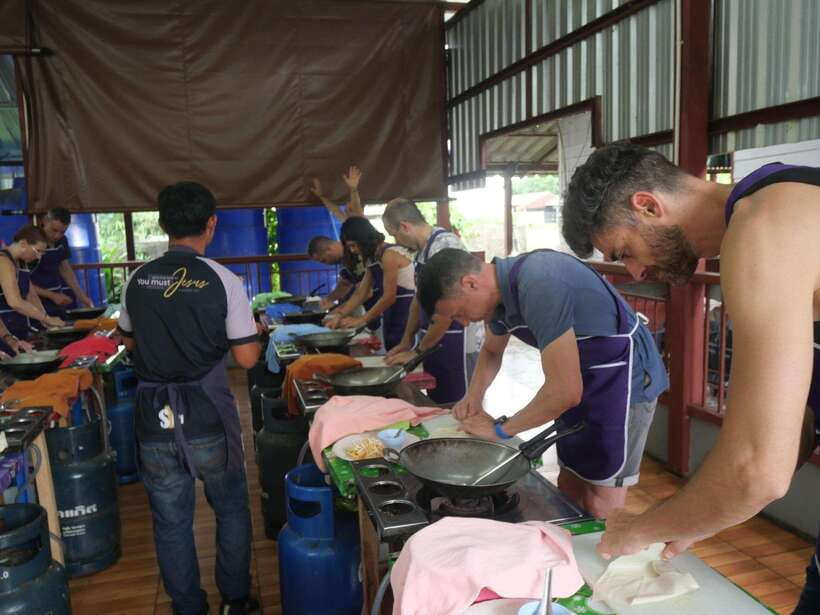
Thai food has a reputation for serious chili, but you are not locked into a fiery meal here. You can request mild dishes or choose to make them spicy. This is useful for families and for anyone who enjoys Thai flavors but does not want every dish to set off an alarm in the mouth.
The instructor can also help you understand the balance behind Thai food. Curry paste, coconut-based curry, soup, and stir-fried dishes each use seasoning in a different way. Even if you cook with less chili, you can still work with herbs, sauces, aromatics, and fresh ingredients.
For a first class, I would avoid trying to order the entire menu at maximum heat. You are making several dishes, and the food is served after cooking. A moderate spice level lets you taste the differences between the dishes and gives you a better chance of enjoying the meal you worked to prepare.
The class is also a good fit for mixed groups. One person can choose a vegetarian dish while another cooks meat, and a couple can select different curry styles. The main point is to state your preferences clearly before the ingredients are portioned.
Eating what you have made
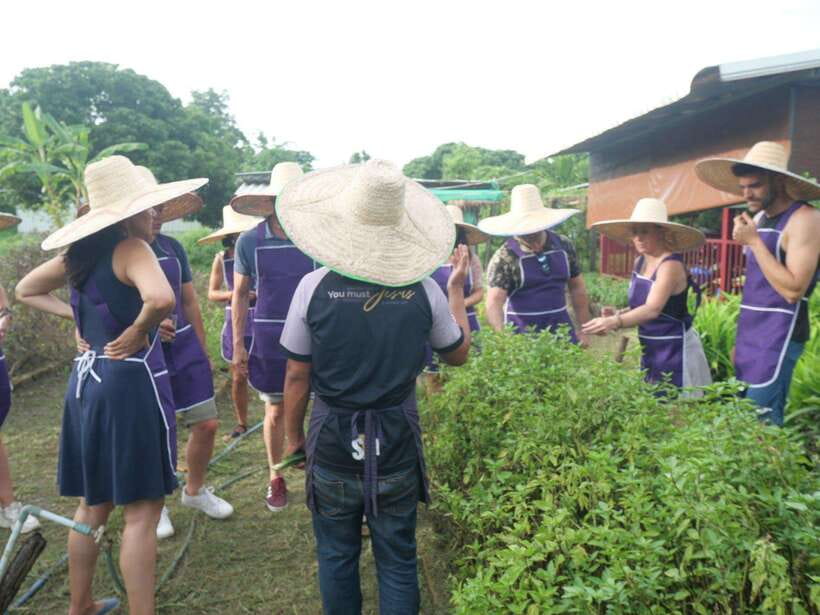
After cooking, you sit down and eat your own dishes in the kitchen garden or class setting. This is the satisfying payoff. You can see exactly what went into the meal and compare the finished dishes with the techniques you just practiced.
The portions may be generous. One participant specifically advised arriving hungry because each person can prepare several dishes. You also may be allowed to take away the food you cook, which is useful if you cannot finish everything during the meal.
The class includes drinking water, a welcome snack, and seasonal fruit. These are small extras, but they matter during a five-hour activity, particularly in Chiang Mai’s warm weather. Alcohol is not part of the included program, though evening visitors may find beer for sale at the school or can buy drinks at the market.
The meal is served in a traditional Thai style within the cooking environment rather than as a separate restaurant lunch. That keeps the experience connected to the work you have just done.
Recipe support after you return home
The PDF recipe book is one of the most useful inclusions. Cooking a dish once in Chiang Mai is enjoyable, but the real value comes later, when you can repeat it at home.
The recipes are designed to be easy to follow step by step. You can use the book to recreate curry, stir-fried dishes, soup, spring rolls, and other menu choices from the course. The precise options available to you will depend on the session, so keep track of the dishes you select.
The recipe support also makes the class a better buy than a simple meal. At $31 per person, you are paying for a five-hour activity, a market visit, ingredients, instruction, multiple dishes, a meal, and recipes. That is strong value if you plan to cook Thai food again.
The class will be less useful if you only want a quick lunch or a short demonstration. Five hours is a large part of a day, and you should book it because you want to learn as well as eat.
Transport, timing, and the practical details
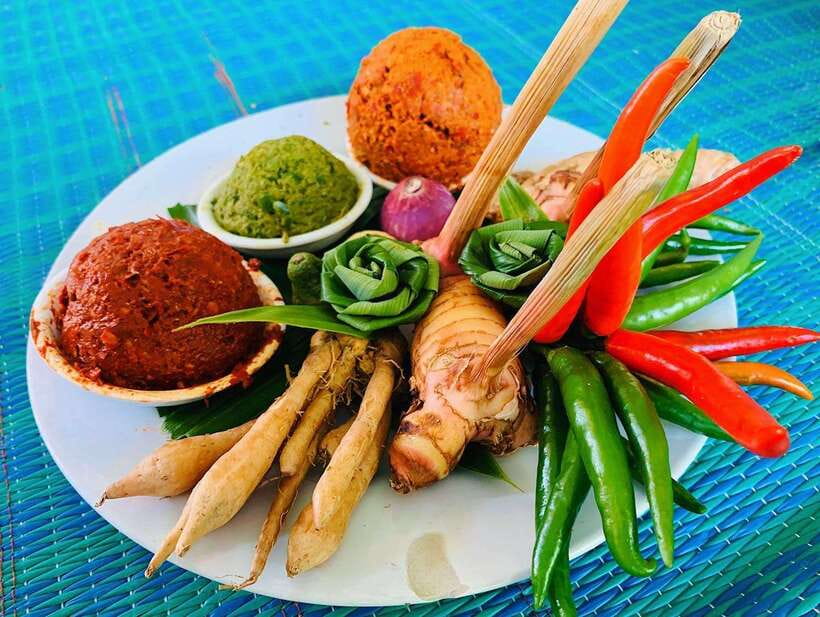
The course lasts five hours and is offered in both morning and evening formats. Check the available start time when choosing your date, since the best option depends on your wider Chiang Mai plans.
Hotel pickup and drop-off are available within a 3-kilometer radius of Chiang Mai Old City, and the operator can also arrange transport from a hotel or meeting point. At the same time, the activity information lists Burger King as the meeting point when no hotel transfer is selected. Be ready there 10 minutes before the start time if that applies to your booking.
The transport score is strong, but you should not assume every booking includes the same arrangement. The farm location may involve different timing from the city locations. Confirm the selected venue, pickup status, and meeting instructions before the class day.
The class is not suitable for wheelchair users, and the activity lists a maximum age of 95. Pets, alcohol, and drugs are not allowed. You can cancel up to 24 hours ahead for a full refund, and the reserve-now, pay-later option keeps your plans flexible.
Who will get the most from this class
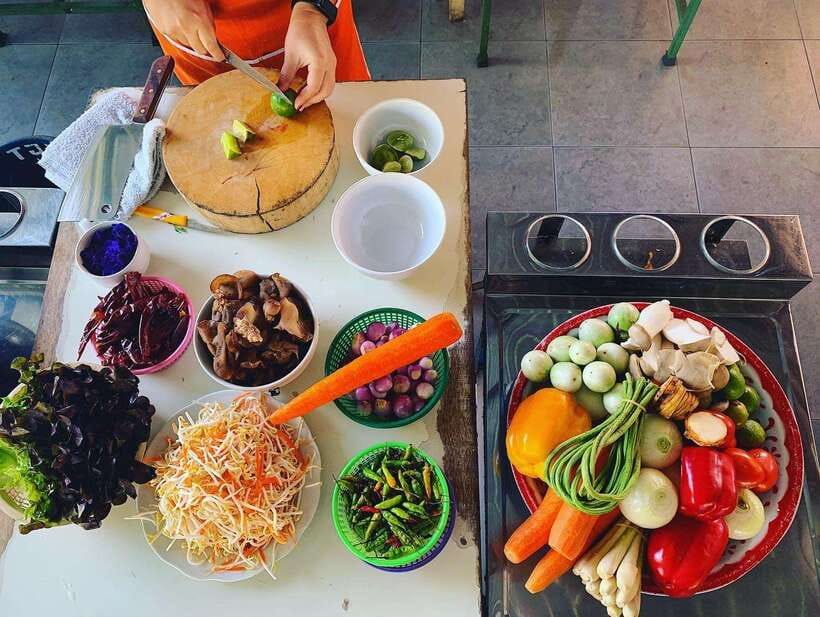
I would recommend this class to first-time visitors who want a friendly introduction to Thai food without spending a full day on a large tour. The market stop, garden visit, and hands-on cooking cover several parts of local food culture in one outing.
It also suits families. The menu offers enough choice to keep different tastes happy, and the shared cooking creates a clear activity rather than another restaurant meal. Several family groups have enjoyed the class together.
Vegetarians and vegans can join, but tell the operator early. People who dislike spicy food are also welcome, provided they request mild dishes. Couples and solo visitors can benefit from the small group, especially if they enjoy meeting people while cooking.
I would choose another activity if you want a long market tour, a dedicated farm excursion, or a quiet private lesson guaranteed in advance. The group is limited to 10, but it is still a group course, and the organization can occasionally feel a little loose. One participant found the class slightly less organized than expected, though the food and overall experience remained strong.
Should you book the Chiang Mai cooking class?
Yes, if you want to learn by doing and you value food you can recreate at home. The strongest features are the market introduction, individual cooking stations, several dishes per person, flexible spice levels, and patient instructors such as Wave, Anya, Toy, and Balloon.
Choose the city option for easier logistics, or select the farm option early if the rural garden setting matters to you. Confirm whether pickup is included, tell the team about vegan or vegetarian needs, and arrive hungry.
At $31, this is especially good value for anyone who wants more than a meal. You leave with a full stomach, a set of recipes, and a better understanding of how Thai ingredients work together. For most visitors interested in Thai food, it earns a place on the Chiang Mai schedule.
FAQ
How long does the Chiang Mai cooking class last?
The class lasts five hours and is available in morning and evening formats, subject to the start times offered for your date.
What locations can I choose?
You can choose a city class with an organic garden, a city class with a yard garden, or a farm garden outside Chiang Mai. Check the selected option carefully before booking.
Does the class include a local market visit?
Yes. The course includes a visit to a local market where the ingredients are introduced before you begin cooking.
How many dishes will I cook?
The class covers five to six food categories, including curry paste, curry, stir-fried food, soup, and spring rolls. The exact number of dishes can vary, and some sessions also include dessert.
Can I choose mild or spicy food?
Yes. You can prepare the food to suit your taste and request mild or spicy dishes.
Are vegetarian and vegan options available?
Yes. Vegetarian and vegan dishes are available. If you are vegan, tell the operator in advance so the ingredients can be prepared correctly.
Is hotel pickup included?
Pickup and drop-off are available within 3 kilometers of Chiang Mai Old City. If you do not use hotel transfer, the meeting point is Burger King, where you should wait 10 minutes before the activity begins.
What is included in the price?
The $31 price includes the cooking class, local market visit, ingredients, individual cooking station, English-speaking instructor, drinking water, and a PDF recipe book. A welcome snack and seasonal fruit are also included.
Can I cancel the booking?
Yes. You can cancel up to 24 hours in advance for a full refund. A reserve-now, pay-later option is also available.
Newest classes around Chiang Mai
- Aroidee’s Farm-Fresh Thai Cooking Experience★ 5.0 · 8 reviews
- Authentic Thai Cooking Class and Farm Visit in Chiang Mai★ 5.0 · 66 reviews
- Signature Thai Cooking Course★ 5.0 · 79 reviews
- Half Day Guided Thai Cooking Class in Chiang Mai★ 5.0 · 13 reviews
- Yummy Tasty Thai Cooking School in Chiang Mai★ 5.0 · 2 reviews
- Online Thai and Akha Cooking Class★ 5.0 · 70 reviews
- Northern Thai Cooking Class in Chiang Mai in a Countryside Home★ 5.0 · 2 reviews
- Private Half-Day Thai Cooking Class in Chiang Mai★ 5.0 · 4 reviews
Chiang Mai Cooking Classes, compared.
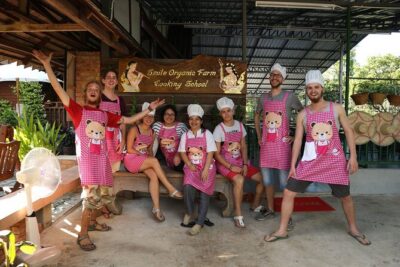
Half-Day Thai Cooking Class at Organic Farm in Chiang Mai
Read our review →
Cooking Class, Market & Thai Herbs Garden Tour
Read our review →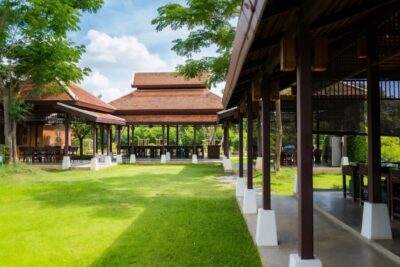
Authentic Cooking Class with Market & Farm Visit
Read our review →