
Review · HANOI COOKING CLASSES
Hanoi Cooking Class in Haven of Tranquility – Thom culinary
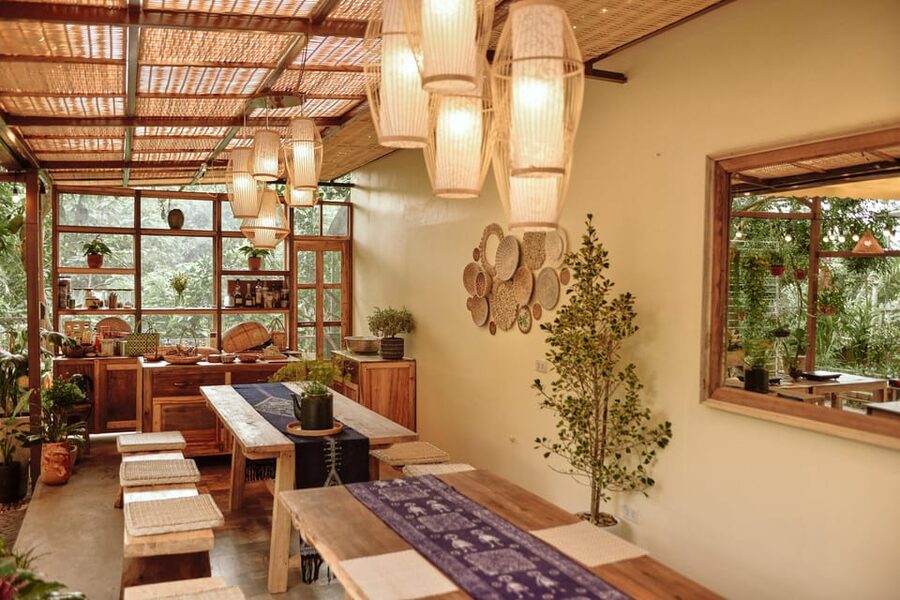
Hanoi’s best food experiences often begin away from a restaurant table. This one starts with a cyclo ride through the Old Quarter to Dong Xuan Market, then moves to Thơm Culinary, a quiet garden house in Dong Bac where herbs, fruit, family traditions, and cooking all meet. I like the market visit because you see how ingredients are chosen, and I like the garden because it gives you a calmer look at Hanoi beyond its traffic and shopfronts.
The small group, limited to eight people, makes hands-on cooking more practical than a large demonstration class. The main consideration is the price: at $65, this is not a budget market tour, though the fee covers transport, food tastings, four cooked dishes, dessert, drinks, and a half-day of instruction. Also check the accessibility details carefully, since the information describes the activity as wheelchair accessible in one place but later says it is not suitable for wheelchair users.
Key points to know before booking
- Cyclo ride to Dong Xuan Market: Begin with a distinctive way to reach one of Hanoi’s major traditional markets, then continue to Cau Dong and Thanh Ha markets.
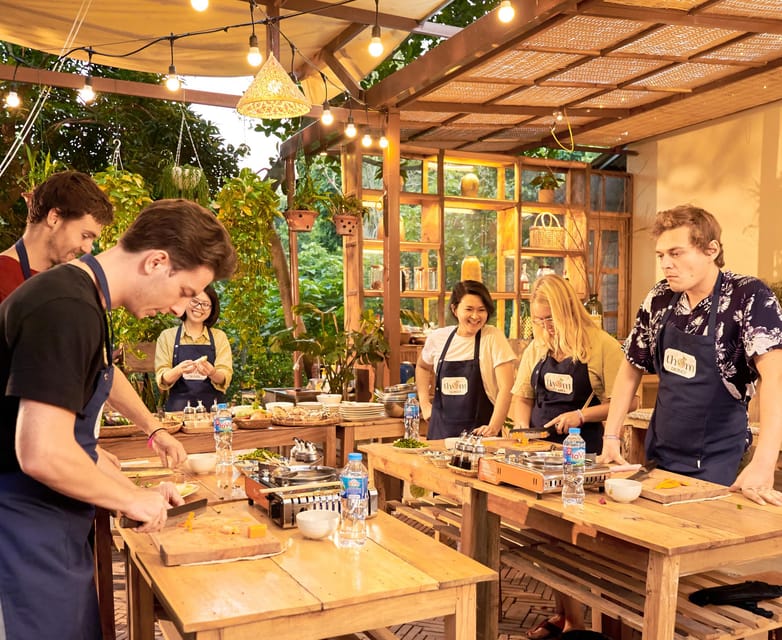
- Four dishes cooked from scratch: Chop, season, sauté, and plate food with guidance from Trang, also referred to as Mango by one participant.
- Garden-to-table ingredients: Pick fresh herbs and see tropical fruit growing around the family garden house.
- More than a cooking lesson: Visit a family worship hall and fish pond, and learn how Vietnamese homes connect food, plants, and tradition.
- Plenty included in the $65 price: Market tastings, round-trip transport, dessert, sweet treats, herbal drinks, homemade rice wine, and exotic fruit are all part of the experience.
- Small-group format: With no more than eight participants, you should have room to ask questions and take part at the stove.
Starting with a cyclo through Hanoi’s markets
The experience begins with pickup anywhere in Hanoi’s Old Quarter area. From there, you ride by cyclo toward Dong Xuan Market, a useful first stop because it puts Vietnamese food in its everyday setting rather than presenting it as a polished restaurant production.
A cyclo ride is part transport and part sightseeing. You sit close to the street, moving at a slower pace than a car and getting a more direct sense of Hanoi’s lanes, shops, and traffic. It is not the most efficient way to cross the city, but efficiency is not really the point here. The ride helps connect the cooking lesson to the markets where ingredients are bought.
At Dong Xuan, the host helps you look at produce, herbs, spices, and other cooking ingredients. You can ask about freshness and ripeness, and you may taste street food specialties that you might otherwise pass by. That guidance matters because a market in Hanoi can feel confusing at first. Labels may not help, and familiar ingredients may look different from what you know at home.
The route also includes Cau Dong and Thanh Ha markets. These extra stops give the morning more local texture, though the amount of time at each market can vary. If you are mainly interested in cooking, the market visits supply context. If you want a long, detailed food crawl, keep your expectations in check: this is a market introduction connected to a cooking class, not a full day devoted only to street food.
More Cooking Classes in Hanoi:
- Hanoi Cooking Class: Culture, Local Market & Meaning CSR Impact
★ 5.0 · 5,147 reviews - 5 Traditional Dishes Hanoi Cooking Class with Market Trip
★ 5.0 · 4,890 reviews - Vietnamese Food Cooking Class in Hanoi with Market Experience
★ 5.0 · 778 reviews
From city noise to a family garden house
After the market visits, you head to Thơm Culinary in Dong Bac. The change of mood is central to the experience. Hanoi is noisy and fast, while the cooking site is described as a peaceful garden house surrounded by herbs and tropical fruit.
The garden is not just scenery. You are invited to harvest herbs and inspect plants used in Vietnamese cooking. This helps explain why herbs matter so much in local food. They can add freshness, fragrance, heat, bitterness, or a sharp contrast to richer ingredients. Instead of treating herbs as a garnish added at the end, the class presents them as part of the structure of the dish.
You also visit a family worship hall and fish pond. These details broaden the lesson beyond recipes. The cooking class becomes a short look at how food, family space, plants, and daily customs can sit together in a Vietnamese home.
Do not expect a formal culinary school with polished commercial equipment. The appeal is the personal setting and the chance to see a home-style approach. That can feel more genuine, but it also means the pace and setup may be less standardized than in a large cooking studio.
Learning the balance behind Vietnamese flavors
The host explains Vietnamese culinary traditions, including the role of herbs and spices and the need to balance flavors. The lesson focuses on simplicity, but simple does not mean bland. A small change in seasoning or a different herb can shift the whole dish.
This is one of the better reasons to choose a class rather than simply booking a meal. You do not just eat the finished food. You get to see how ingredients are handled, how seasoning decisions are made, and how a dish comes together from separate parts.
The class is taught in English. The host is identified as Trang, while one participant refers to her as Mango, so you may hear either name used. She guides the group through the cooking rather than leaving you to copy a recipe from a distance.
You should expect to chop, sauté, season, and plate. The hands-on format is especially useful if you want to recreate the dishes at home. One participant noted that the group prepared three dishes directly and received substantial guidance for a chicken soup, while the advertised format includes four authentic cooked dishes. That suggests the soup may involve more demonstration and instruction than independent preparation.
Cooking four dishes in a small group
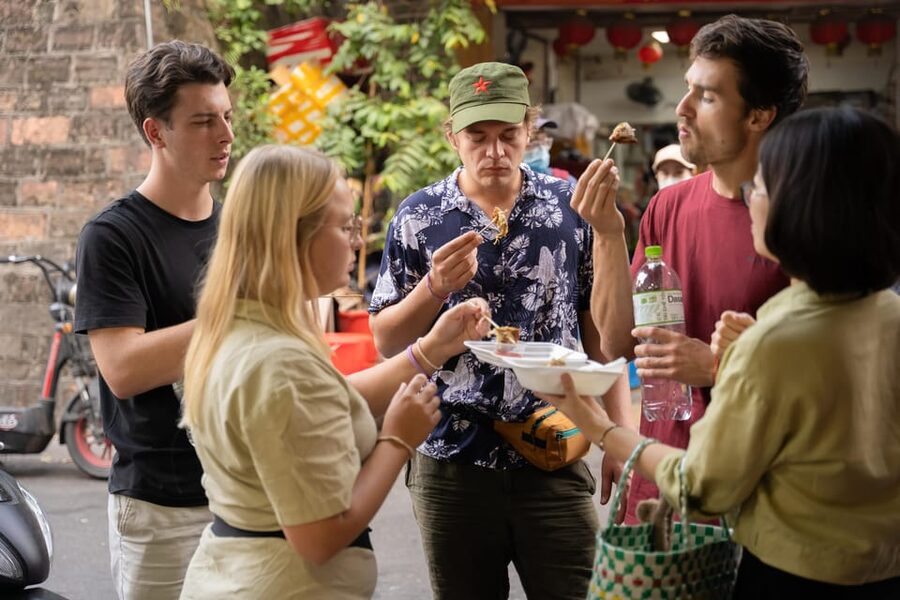
The group limit of eight is a real advantage. Cooking lessons can lose their charm when twenty people crowd around one work surface, waiting for a turn with the knife or pan. Here, you should have a better chance to ask about ingredients, compare techniques, and receive help as you work.
The four-dish format also gives the session a useful range. You move through several stages of Vietnamese cooking instead of spending the entire class on one recipe. Chopping teaches preparation, sautéing shows how heat changes ingredients, seasoning explains balance, and plating gives you a chance to see how the final dish is presented.
The class is designed for participation, so wear comfortable clothes and shoes. You may also want to avoid loose clothing that could get in the way while cooking. The supplied advice includes bringing water, a sun hat, a camera, and insect repellent. Those items make sense because part of the experience takes place outdoors in the garden and during the market visit.
Food allergies are a serious limitation. The activity is listed as unsuitable for people with food allergies, so do not assume the kitchen can provide safe substitutions. Ask before paying if you have dietary restrictions that could affect your ability to eat or handle the ingredients.
Same region, a different dish to learn:
- Hanoi: 5 Local Dishes Cooking Class with Meal & Market Visit
★ 5.0 · 420 reviews - Hanoi Cooking Class and Market Tour in Ancient House
★ 5.0 · 379 reviews - Rose Kitchen Hanoi: Market, Cooking & Culture Tour + Free PickUp
★ 5.0 · 342 reviews - Hanoi: Cooking Class in a Local Villa with Market Tour
★ 4.9 · 320 reviews
Dessert, fruit, herbal drinks, and rice wine
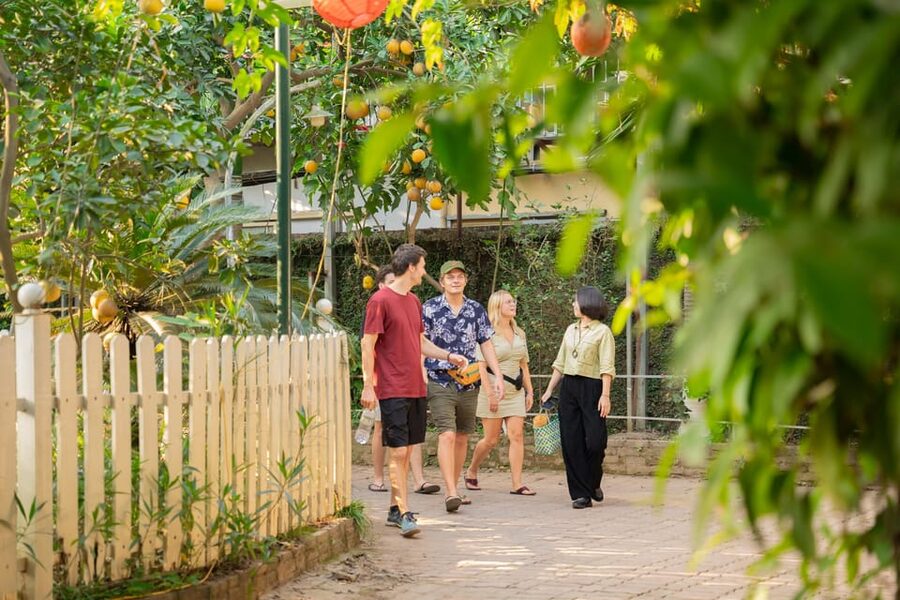
The food continues after the cooking. A homemade dessert and traditional sweet treat are included, along with exotic fruit. The dessert is described as an unexpected part of the meal, which makes it a useful reminder that Vietnamese sweets may not match the desserts you know from Western restaurants.
Drinks are generous. You receive bottomless herbal drinks, plus homemade rice wine. This adds to the relaxed, social side of the session, but use common sense with the rice wine, especially if you are driving later or have a low tolerance for alcohol.
The fruit and garden herbs connect the meal back to the setting. You are not simply eating dishes prepared in advance. You see where some ingredients grow, taste local produce, and then use the cooking lesson to understand how those ingredients fit into a larger meal.
The exact menu is not specified in the available information. That is worth knowing if you are booking because of one particular Vietnamese dish. The experience promises four authentic dishes, but you should not assume it includes pho, spring rolls, or any other specific favorite unless the host confirms the menu.
What the $65 price really covers
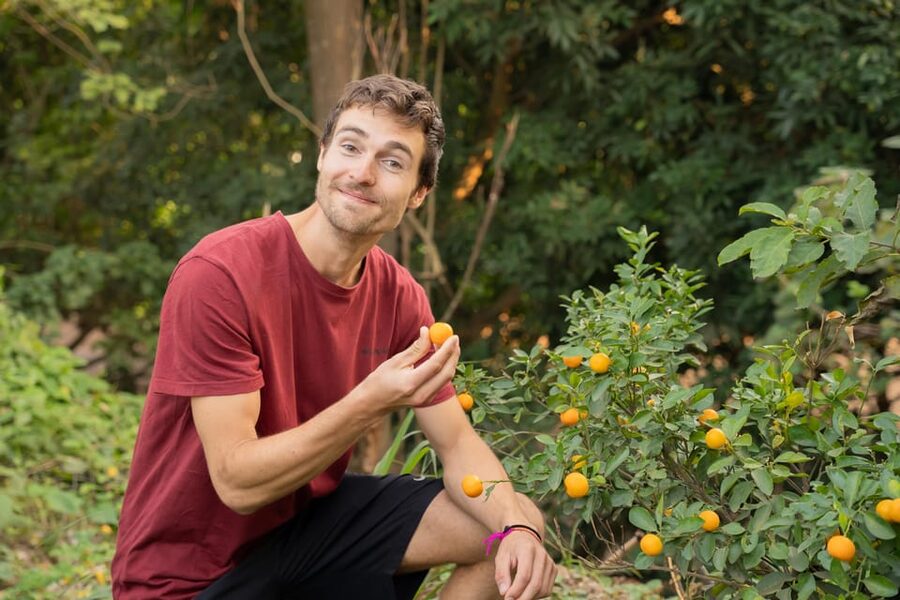
At $65 per person, this is a midrange half-day activity rather than a cheap cooking class. The price makes more sense when you count the separate pieces: Old Quarter pickup, cyclo transport, market visits, street food tastings, a garden tour, herb harvesting, four cooked dishes, dessert, fruit, herbal drinks, rice wine, and a small group capped at eight.
You are also paying for access to a private-feeling family setting and for a host who explains the ingredients as you shop and cook. That personal guidance is the main value. If you only want a recipe card and a quick meal, you can likely find less expensive options. If you want food, markets, transport, and cultural context in one morning or afternoon, the price is easier to justify.
Personal expenses and anything not listed are excluded. Bring some cash if you want to make separate purchases at the markets, though no extra shopping is promised as part of the activity.
The duration is 4.5 hours, and starting times depend on availability. That is long enough for the market, transport, garden visit, cooking, and meal without taking your entire day. It also means you should avoid booking another tightly timed activity immediately afterward.
Who will enjoy this Hanoi cooking class
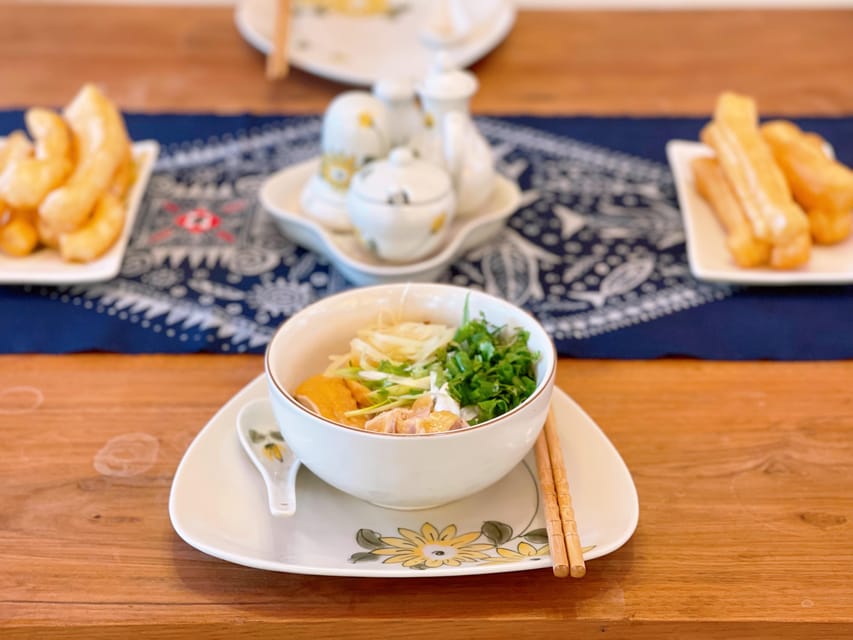
I would recommend this experience to you if you want active participation rather than a passive food tour. It suits curious eaters who like asking questions, trying unfamiliar market specialties, and learning why Vietnamese cooks use particular herbs and seasonings.
It is also a good choice if you want a quieter side of Hanoi. The garden house, worship hall, fish pond, and home cooking offer a useful break from the Old Quarter’s crowded streets. Families with children should note the minimum age of nine. Younger children are not accepted.
The class is less suitable if you dislike outdoor settings, cannot handle unfamiliar foods, or need strict control over ingredients. Smoking, pets, littering, and touching plants are not allowed, which is reasonable in a family garden but worth knowing in advance.
Accessibility requires extra care. The activity details say wheelchair accessible, yet the additional information says it is not suitable for wheelchair users. Since the route includes a cyclo, markets, garden areas, and a family home, contact the provider before booking if access is important to you.
Practical tips for getting the most from the morning
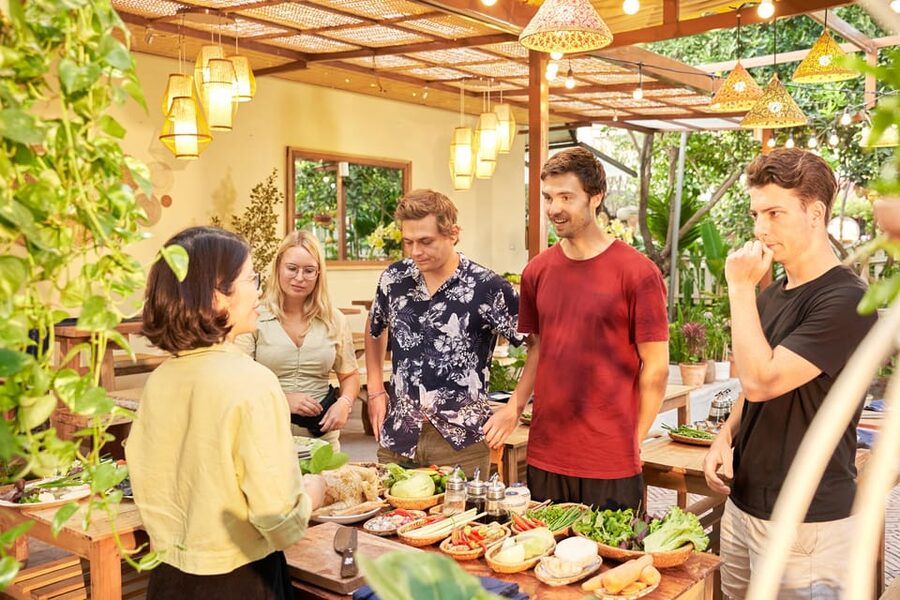
Wear clothes you can cook in and shoes that are comfortable for the market portion. Hanoi’s weather can be hot, and the garden may expose you to insects, so a hat, water, and insect repellent are sensible additions.
Arrive ready to taste. Market food is part of the experience, and the host may offer specialties you would not choose on your own. If you have allergies or strong dietary limits, raise the issue before booking rather than trying to manage it at the table.
Bring a camera, but follow the garden rules. You can photograph the setting and food, but do not touch plants unless the host invites you to harvest them. The garden is part of the working environment, not just a photo stop.
Finally, leave room in your schedule. The class lasts 4.5 hours, and the relaxed pace is part of its appeal. Rushing from the meal to another appointment would undercut the very calm that makes the garden setting worthwhile.
Should you book Thơm Culinary?
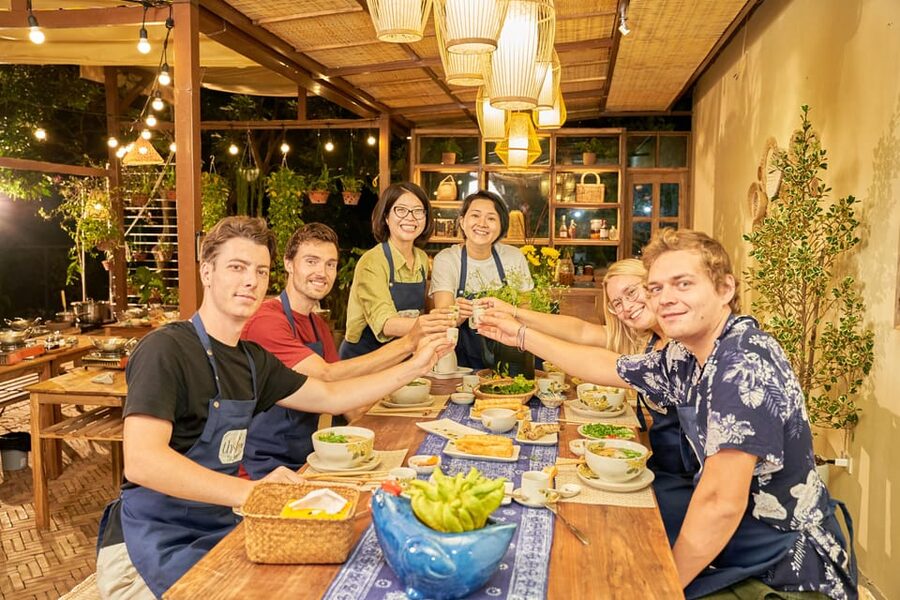
Book it if you want a small-group, hands-on food experience that links Hanoi markets with a family garden and a proper shared meal. The strongest parts are the cyclo arrival, the chance to choose and taste ingredients at local markets, the herb garden, and the direct cooking instruction from Trang or Mango.
Skip it if your priority is a cheap class, a fixed menu, a long street food crawl, or highly controlled dietary preparation. At $65, the value comes from the complete package and the personal setting, not from the number of recipes alone.
For most food-focused visitors who have half a day free, this is a thoughtful way to see how Vietnamese cooking grows from markets, gardens, family spaces, and careful balance at the stove.
FAQ
How long does the Hanoi cooking class last?
The activity lasts 4.5 hours. Starting times depend on availability.
What is included in the $65 price?
The price includes pickup and round-trip transportation, a cyclo ride, market food tastings, visits to Dong Xuan, Cau Dong, and Thanh Ha markets, four hands-on Vietnamese dishes, dessert, a traditional sweet treat, herbal drinks, homemade rice wine, exotic fruit, and visits to the garden, family worship hall, and fish pond.
Where does pickup take place?
Pickup is included anywhere in Hanoi’s Old Quarter area.
Is the cooking class taught in English?
Yes. English is the listed language for the instructor.
How many people are in each group?
The activity is limited to eight participants.
Can children join the cooking class?
Children under nine are not accepted for this activity.
Is the experience suitable for wheelchair users or people with food allergies?
The information is inconsistent about wheelchair access. One section says the activity is wheelchair accessible, while another says it is not suitable for wheelchair users, so you should confirm directly before booking. The activity is also listed as unsuitable for people with food allergies.
Newest classes around Hanoi
- Hanoi Vegan Cooking Class: A Vietnamese Culinary Adventure★ 4.8 · 5 reviews
- Hanoi: Vietnamese Cooking Class- Market Tour with Local Chef★ 5.0 · 2 reviews
- Hanoi’s Culinary: Authentic Cooking Class and Local Market★ 4.8 · 5 reviews
- Hanoi Food Adventure: Vietnamese Market Tour & Cooking Class★ 4.8 · 5 reviews
- Hanoi: Vegan Vietnamese Cooking Class in a Local Villa★ 5.0 · 42 reviews
- Hanoi: Village Farm Tour and Cooking Class with Lunch★ 5.0 · 7 reviews
- Hanoi Farm Tour and Cooking Class with Local Family★ 4.9 · 14 reviews
- Hanoi Cooking Class: Market Tour, Free Recipe & Beverages★ 5.0 · 10 reviews
Hanoi Cooking Classes, compared.
Hanoi Cooking Class: Culture, Local Market & Meaning CSR Impact
Read our review →
5 Traditional Dishes Hanoi Cooking Class with Market Trip
Read our review →
Vietnamese Food Cooking Class in Hanoi with Market Experience
Read our review →
5 Local Dishes Cooking Class with Meal & Market Visit
Read our review →
Hanoi Cooking Class and Market Tour in Ancient House
Read our review →
Rose Kitchen Hanoi: Market, Cooking & Culture Tour + Free PickUp
Read our review →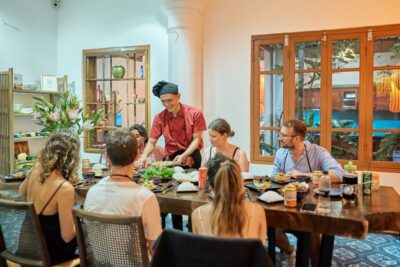
Cooking Class in a Local Villa with Market Tour
Read our review →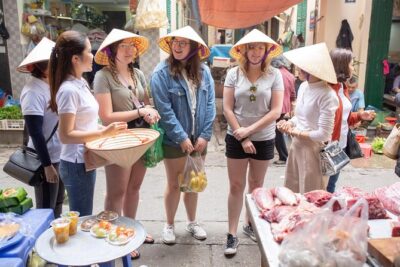
Hanoi Maya Kitchen: Traditional Cooking Class & Market Tour
Read our review →Browse the lists this tour appears in