
Review · DA NANG COOKING CLASSES
Da Nang: Coffee Making And Cooking Class
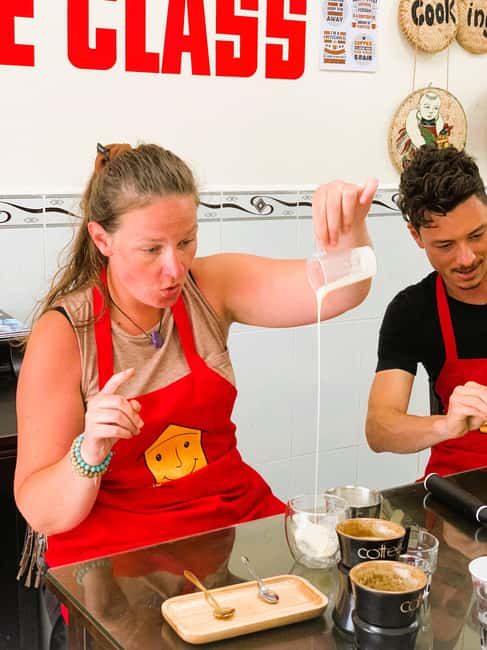
Vietnamese coffee is more than a strong drink here. It is a slow ritual built around dark Robusta beans, a small metal phin filter, and time. At Jolie Cooking Class, you make the coffee yourself, then move on to cooking four traditional Da Nang dishes. I like that the class joins two everyday parts of local life instead of treating coffee as a quick tasting stop.
I also like the small-group format and the warm, patient teaching. Guides named Rosie, Nhan, Hannah, and Kate have led sessions in English, with Rosie earning special praise for her humor and clear explanations. The main drawback is caffeine: you taste several coffees in one morning or afternoon, so eat first and avoid drinking much coffee before class.
Key points to know before booking
- Phin brewing comes first: You learn why the metal filter matters and take part in the slow drip rather than simply watching a demonstration.
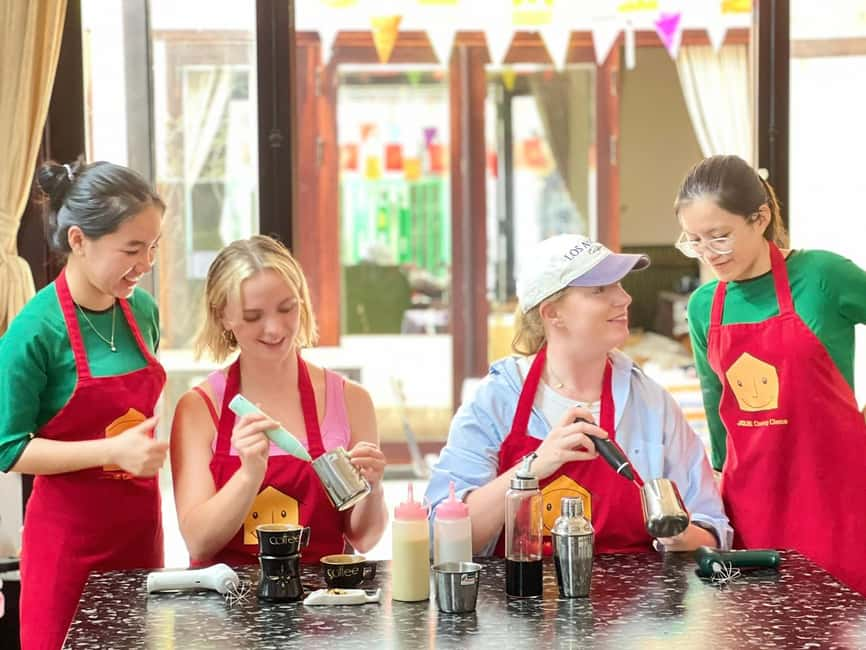
- Three named Vietnamese styles: Egg coffee, salt coffee, and coconut coffee are included, with an additional coffee preparation also mentioned in the class feedback.
- Cooking is properly hands-on: You chop ingredients and prepare four dishes, rather than arriving only for a finished meal.
- Convenient Da Nang location: Jolie Cooking Class is at 14 An Trung Dong 6, near Dragon Bridge.
- A relaxed four-and-a-half hours: The schedule leaves time for coffee tasting, cooking, eating, questions, and even piano or guitar playing if you can play.
- Plan around the caffeine: Anyone with heart problems should not book, and everyone else should arrive with food in their stomach.
Why this class works in Da Nang
Da Nang has no shortage of cafés, but ordering a coffee and learning how it is made are two different experiences. This class gives you the background and the method. You hear about Robusta beans, the phin filter, and the role coffee plays in Vietnamese café culture before making your own drinks.
That context matters. Vietnamese coffee is often associated with its strength, but the class shows that the character also comes from preparation. The phin drips slowly into the cup, asking you to wait rather than rush. It is a simple method, but it changes the pace of the morning or afternoon.
I like the way the experience then turns from drink to food. You are not only tasting local flavors. You are working with herbs, spices, and ingredients, then sitting down to eat the food you helped prepare. That makes the class useful after your holiday, since the coffee methods and recipes can be attempted again at home.
The setting is described as welcoming and home-style, not formal or restaurant-like. If you prefer a polished cooking school with a large production kitchen, this may feel modest. If you want direct help, room to ask questions, and a more personal pace, the small group is a strong point.
More Coffee Stops in Da Nang:
- Da Nang Cooking Class with Coffee Tasting and Market Visit
★ 5.0 · 310 reviews - Da Nang Vegetarian Cooking and coffee Class
★ 4.6 · 11 reviews - Hanoi Cooking Class: Pho/Bun Cha/Banh Xeo…+Free Egg/Salt Coffee
★ 5.0 · 267 reviews
Starting near Dragon Bridge at 8:30 or 2:00
You meet at Jolie Cooking Class, 14 An Trung Dong 6, close to Dragon Bridge. The class runs in two daily patterns: a morning start at 8:30, or an afternoon start at 2:00. The full experience lasts about 4.5 hours.
The location is useful if you are staying in central Da Nang or planning time around Dragon Bridge. You should still allow enough time to find the exact address, since the meeting point is given as a street location rather than a hotel pickup service.
The first part begins with a local snack and an introduction to Vietnamese coffee culture. That small snack is more important than it sounds. By the time you taste several coffee styles, a little food in you will make the session more comfortable.
The morning class is best for people who want to continue sightseeing afterward. The afternoon class may suit you better if you prefer a slower start, though you should remember that the meal comes later in the day. Either start gives you the same basic four-and-a-half-hour format.
Making coffee with the traditional phin
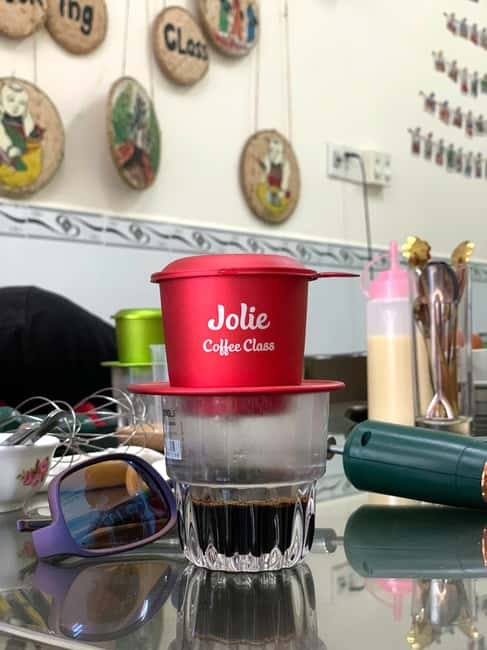
The coffee lesson begins with the phin filter. This small metal brewer sits over your cup and lets the coffee drip through at its own pace. You learn how to use it rather than simply being handed a finished Vietnamese coffee.
The slow brewing is part of the point. In a traditional Vietnamese café, the waiting is built into the experience. Here, you get to see that process from the inside, including the practical steps that make the drink work.
The lesson also explains why Robusta beans are important. That is useful background for anyone who has wondered why Vietnamese coffee tastes so forceful compared with lighter coffee styles. The class connects the bean, the filter, and the local café habit instead of presenting each item as an isolated fact.
The coffee tasting includes egg coffee, salt coffee, and coconut coffee. Each gives you a different way to understand how Vietnamese coffee can be changed without losing its strong base.
Egg coffee is the most famous of the three for many people. The egg element gives the drink a dessert-like character, but the coffee remains central. It is also the preparation most likely to require a little care, so do not worry if your first attempt is not perfect. One participant received another egg after making a mistake, which tells you the teaching is patient rather than strict.
Salt coffee may sound odd if you have not tried it. The point is not to make a salty drink. Salt changes the balance of the coffee and gives it a different finish. This is the kind of preparation that is easier to understand after tasting it than by reading a description.
Coconut coffee adds a cool, sweet coconut element to the strong coffee. It is likely to be the most approachable choice for anyone who usually prefers sweeter drinks, while coffee fans may enjoy comparing it with the more direct phin brew.
The class feedback also refers to making four coffees, although the named styles are egg, salt, and coconut. You should expect the three signature styles plus another coffee preparation, but the supplied details do not identify that fourth drink by name.
From coffee lesson to Da Nang cooking
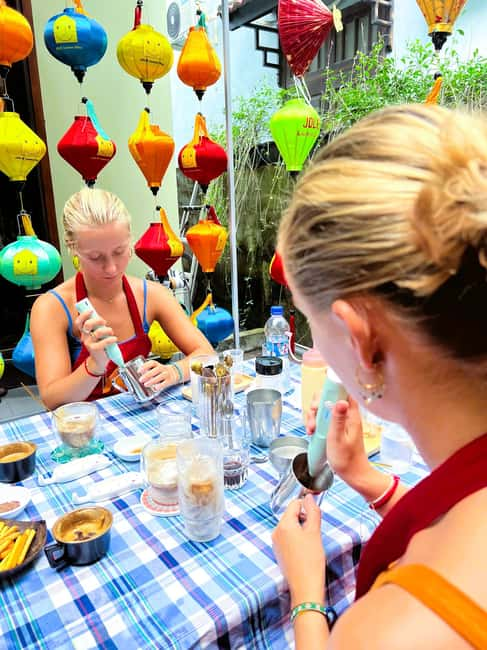
At about 10:30 in the morning session, or 4:00 in the afternoon session, the class shifts to cooking. This change of pace is one of the best reasons to choose the experience over a coffee-only workshop.
You work through four traditional dishes and take part in the preparation from the beginning. That includes chopping ingredients, not just stirring a pot or watching a guide finish the meal. The class also introduces herbs, spices, and traditional techniques that give Vietnamese food its character.
The exact dish list is not provided, so I would not book expecting a particular recipe. What is clear is that the food is connected to Da Nang cooking and that you eat the meal you prepare yourself.
That hands-on approach has practical value. Chopping and seasoning are the parts you need to understand if you want to repeat a dish later. A demonstration can be entertaining, but doing the work gives you a better sense of texture, timing, and balance.
The class is also suitable for children, according to the activity information. Parents should still consider the length of the session and the caffeine tasting. Children can join, but the coffee portion is not the main reason to bring a young child.
More Cooking Classes in Da Nang:
- 5 Dishes Cooking Class with Market Trip in Da Nang
★ 5.0 · 466 reviews - Da Nang Authentic Home Cooking Class
★ 5.0 · 354 reviews - 5 traditional dishes Da Nang cooking class with market trip
★ 5.0 · 331 reviews - Hoi An: Lantern Making, Basket Boat, and Cooking Class
★ 4.9 · 233 reviews
Eating what you made at 1:00 or 6:30
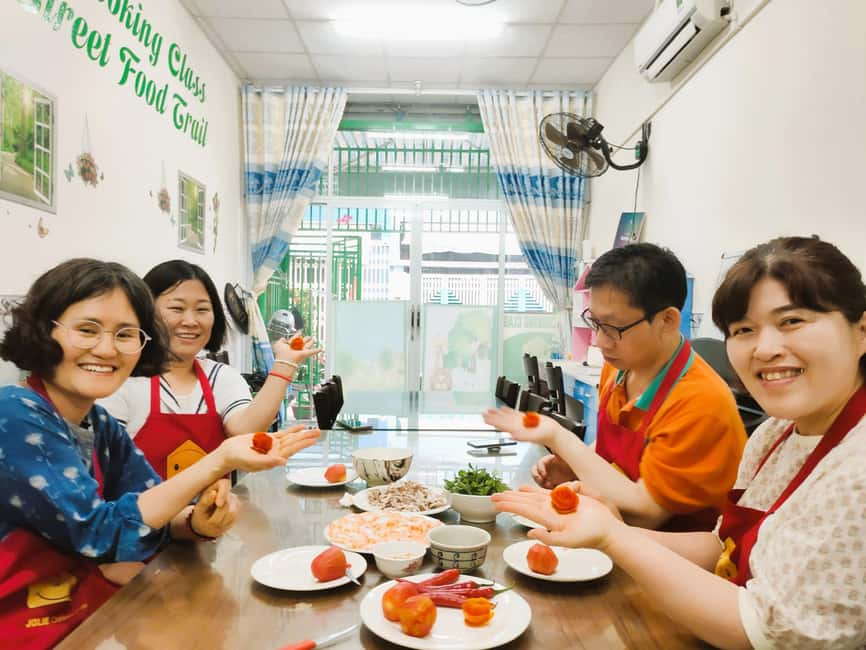
The meal comes at about 1:00 for the morning class and 6:30 for the afternoon class. By then, you have moved from tasting drinks to preparing a full set of dishes, so this is more than a snack stop.
I like that the meal is the natural finish to the cooking session. You can see the result of the chopping and preparation while the instructions are still fresh. It also gives you time to ask questions about what you have just made.
The home-style setting keeps the ending informal. There may also be time to play guitar or piano if you can, which adds a social note without turning the class into a staged show. If you do not play, you can simply enjoy the meal and conversation.
The caffeine is the one practical issue to keep in mind. Several coffee preparations across one session can leave you feeling very awake. Eat breakfast before an 8:30 start, and do not arrive after drinking a large amount of coffee. People with heart problems should not take this class.
Teaching style and group size
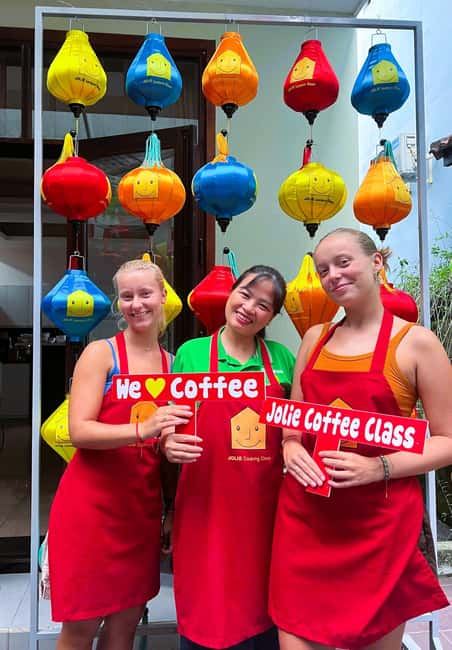
English is the teaching language. The guides named in the activity feedback include Rosie, Nhan, Hannah, and Kate. Rosie is described as enthusiastic, funny, and good at explaining Vietnamese coffee culture, while Nhan and Rosie are also noted for clear English.
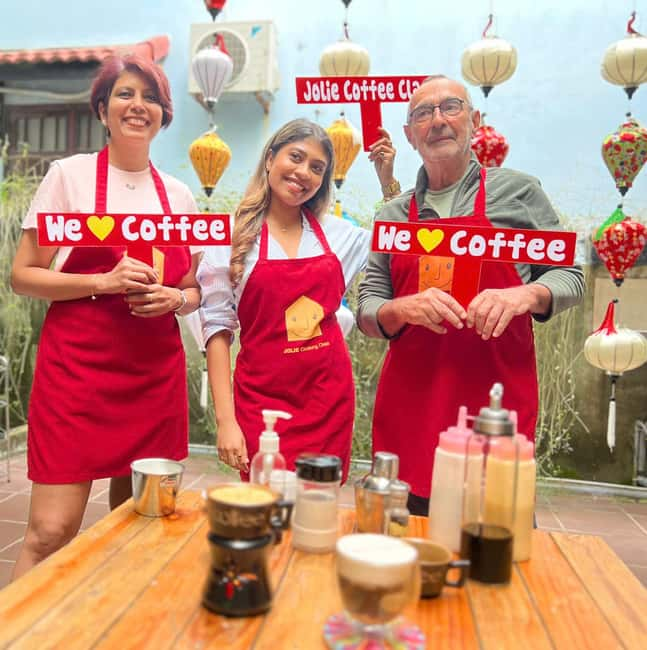
A small group changes the experience. You get more room to handle the ingredients, ask questions, and receive help with the coffee preparations. It is also easier to recover from a mistake, such as an egg coffee that does not come together properly.
This is not a class where you need to arrive as a cook or coffee expert. The instructions are intended for beginners, and the coffee lesson welcomes both people who are new to coffee and those who already enjoy it.
The pace should feel manageable, but remember that four and a half hours is a substantial block of time. You are not dropping in for a 60-minute tasting. The length is a benefit if you want a proper activity, but it may be too long if your Da Nang schedule is already crowded.
Is $50 a fair price?
At $50 per person, this is not the cheapest way to have a Vietnamese coffee or meal. You can buy a coffee in Da Nang for far less. The value comes from the combined instruction, tasting, cooking, meal, and small-group attention.
I consider the price reasonable if you want an activity that occupies half a day and gives you something practical to take home. You are paying for more than the ingredients. You receive an explanation of coffee culture, hands-on brewing, several tastings, cooking instruction, and food that you prepare yourself.
The value is weaker if you mainly want a quick introduction to egg coffee. In that case, a café visit will cost much less and take less time. The class earns its price through participation, not through the quantity of coffee alone.
The four-dish cooking section also makes the cost easier to justify. You are learning two related skills in one booking, and you do not need to arrange a separate coffee tasting and cooking class.
Who should book this experience
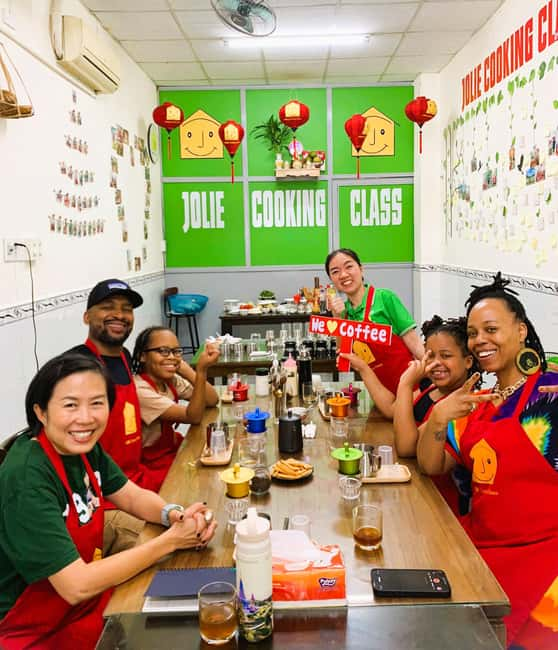
I would recommend this class to you if you want a relaxed cultural activity near central Da Nang, especially one that includes both food and drink. It suits couples, small groups of friends, solo visitors who enjoy meeting people, and families with children who can manage a four-and-a-half-hour session.
It is also a good match for coffee fans. The focus on Robusta beans, the phin filter, and the slow brewing ritual gives the tasting more meaning than a list of sweet drinks would.
Book it if you enjoy learning by doing. You will chop, brew, taste, cook, and eat. If you prefer sightseeing with constant movement, or if you want a tightly timed culinary tour through several locations, this is not the right shape of activity.
Wheelchair access is listed, which may make the class easier to consider for visitors with mobility needs. For any specific access requirement, confirm the details before booking. The meeting point is a fixed address near Dragon Bridge, and no hotel pickup is included in the supplied information.
Cancellation is flexible if your plans change: you can cancel up to 24 hours before the class for a full refund. You can also reserve now and pay later, which is useful when your Da Nang schedule is still moving.
Should you book the Jolie coffee and cooking class?
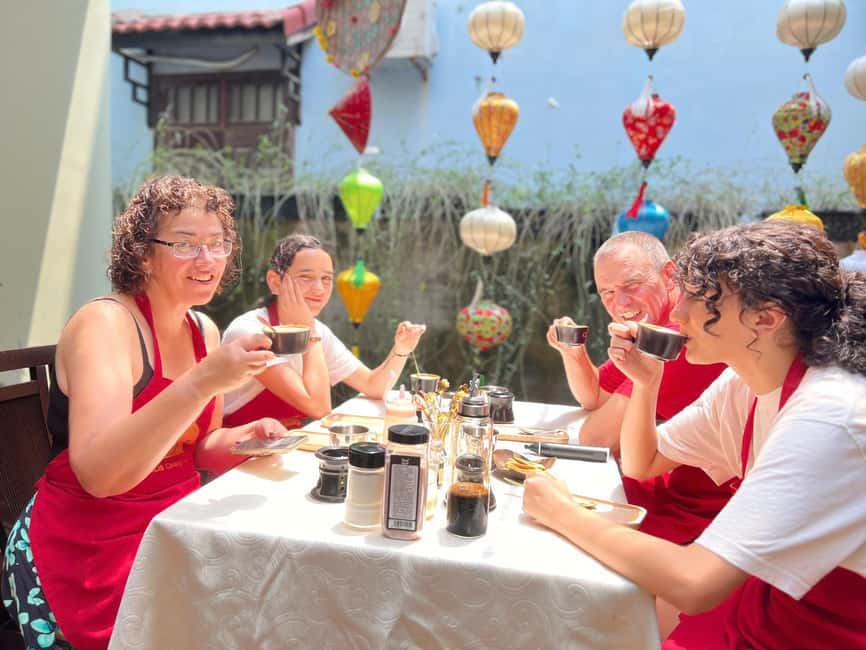
Book it if you want to understand Vietnamese coffee rather than simply photograph it. The phin brewing lesson, egg coffee, salt coffee, and coconut coffee give you a clear introduction, while the cooking section adds a full meal and useful kitchen practice.
The strongest reason to choose it is the combination of patient English instruction and real participation. Rosie, Nhan, Hannah, and Kate are named as guides, and the small group gives you a better chance to ask questions and fix mistakes.
Skip it if caffeine is a health concern, if you dislike sweet coffee drinks, or if four and a half hours is too long for your itinerary. For everyone else, $50 buys a well-filled half-day near Dragon Bridge, with skills you can try again after you leave Da Nang.
FAQ
Where is Jolie Cooking Class located?
Jolie Cooking Class is at 14 An Trung Dong 6 in Da Nang, near Dragon Bridge. The listed coordinates are 16.059999465942383, 108.23539733886719.
How long does the coffee and cooking class last?
The experience lasts 4.5 hours.
What time does the class start?
There is a morning start at 8:30 AM and an afternoon start at 2:00 PM. Availability should be checked for the date you want.
Which Vietnamese coffees will I make?
The class includes egg coffee, salt coffee, and coconut coffee. The supplied class feedback also refers to making four coffees, but it does not name the additional preparation.
How much cooking is involved?
You cook four traditional dishes and take part in the preparation, including chopping ingredients. You then eat the meal you made.
Is the class taught in English?
Yes. English is listed as the teaching language.
Can children or wheelchair users join?
Children are welcome, and the activity is listed as wheelchair accessible. People with heart problems should not take the class because of the coffee tasting.
Newest classes around Da Nang
- Market Tour, Basket Boat Ride & Cooking Class by Hangcoconut★ 4.8 · 95 reviews
- HOI AN Cooking Class and Lantern Workshop★ 4.7 · 6 reviews
- Da Nang Vegetarian Cooking and coffee Class★ 4.6 · 11 reviews
- Da Nang Cooking: Market tour, farming, and cooking class★ 4.8 · 13 reviews
- Da Nang: Cooking Pho & Vietnamese Dishes With Local Chef★ 5.0 · 5 reviews
- Da Nang Family Cooking Class – with Local Family in Da Nang★ 4.3 · 4 reviews
- Da Nang: Cooking Class and tasting Pho with Local Girl★ 5.0 · 6 reviews
- RICE PAPER Noodle Making Experience & Hoi An Cooking Class Class★ 5.0 · 164 reviews
Da Nang Cooking Classes, compared.
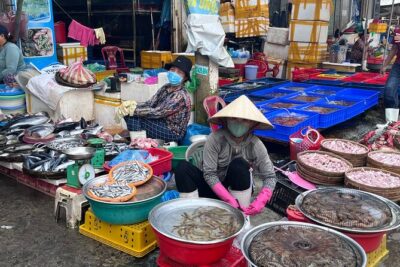
5 Dishes Cooking Class with Market Trip in Da Nang
Read our review →
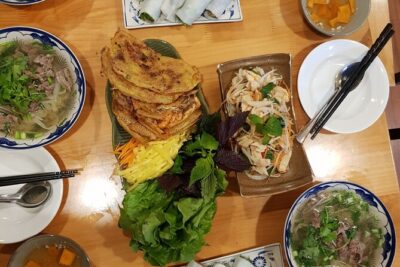
5 traditional dishes Da Nang cooking class with market trip
Read our review →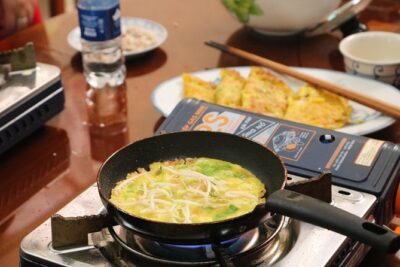
Da Nang Cooking Class with Coffee Tasting and Market Visit
Read our review →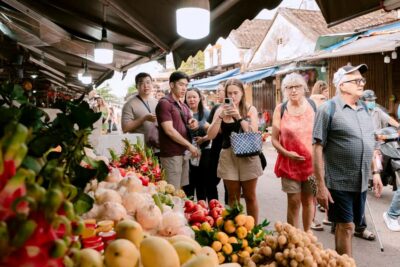
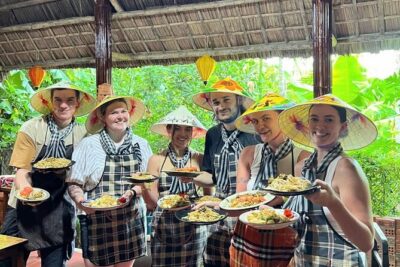
RICE PAPER Noodle Making Experience & Hoi An Cooking Class Class
Read our review →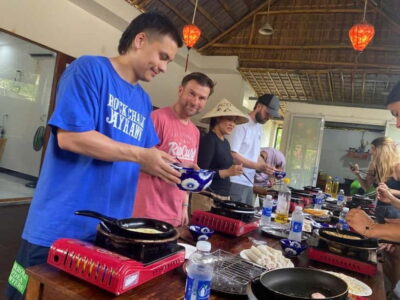
Market Tour, Basket Boat Ride & Cooking Class by Hangcoconut
Read our review →
Da Nang Cooking: Market tour, farming, and cooking class
Read our review →Browse the lists this tour appears in