
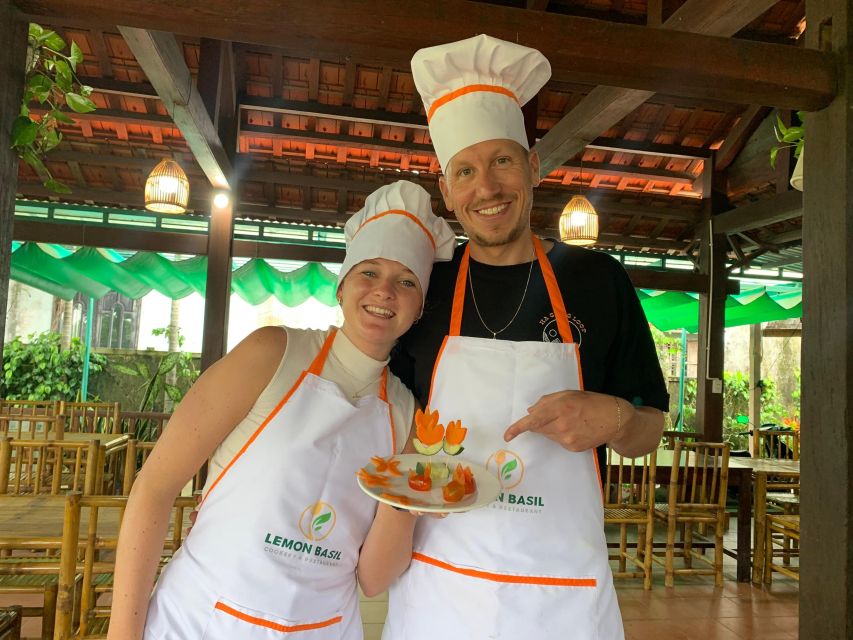
Review · HOI AN COOKING CLASSES
From Hoi An: Cooking Class at Organic Farm
The best part of this Hoi An cooking class happens before the cooking starts. At Lemon Basil, you walk through the family’s organic garden in Tra Que vegetable village, taste herbs, water crops, and may even help plant new greens before heading to the outdoor kitchen. Min and her family turn a standard cooking lesson into a friendly visit to a working farm.
I like the farm connection, which gives meaning to the herbs and vegetables you use later. I also like the small groups, English-speaking instruction, and flexible approach to dietary needs. The main drawback is simple: transportation is not included, so you must reach the restaurant in Tra Que on your own.
Key points at a glance
- A real family farm visit: Meet the people who grow the herbs and vegetables used in the class.
- Four classic dishes: Prepare Tra Que spring rolls, green papaya salad, fish in clay pot, and crispy Vietnamese bánh xèo.
- Min brings the fun: Her teaching style mixes clear instructions with jokes, photos, and plenty of encouragement.
- Small groups matter: The class is limited to 10 people, with some sessions running comfortably below that number.
- Good for different diets: Tell the team about allergies, intolerances, or dietary restrictions ahead of time.
- Plan your own arrival: Lemon Basil is in Tra Que vegetable village, and no hotel pickup is provided.
Why this class feels different from a standard Hoi An cooking lesson
Hoi An has no shortage of cooking classes. Many include a market visit, a boat ride, or a polished demonstration kitchen. Lemon Basil takes a quieter route. The focus here is the connection between the soil, the herbs, the cooking, and the meal you sit down to eat afterward.
That matters because Vietnamese cooking depends heavily on fresh greens, herbs, dipping sauces, and careful balance. A cooking class can hand you a basket of ingredients and call it local. At Lemon Basil, you get to see where some of those ingredients come from, learn about the family garden, and take part in simple farm work.
The atmosphere is also more personal than a large commercial class. Min, Jessica, and other family members appear in the feedback from recent sessions, with Min especially praised for her humor and patient instruction. The names vary because the family helps run the experience, but the pattern is clear: you can expect a warm, informal teaching style rather than a formal chef’s lecture.
You should still keep your expectations realistic. This is a three-hour food experience, not a full farming course or a professional culinary workshop. You will learn practical recipes and techniques, but the greater value lies in the setting, the shared meal, and the chance to see everyday Vietnamese food in a family-run place.
More Farm Cooking Classes in Hoi An
- Cocolocal Farm Cooking Class with market tour and basket boat
★ 5.0 · 231 reviews - Full Experience Tour: Cooking Class & Basket Boat at Eco-Village
★ 5.0 · 187 reviews - Hoi An: Tra Que Herb Village Cooking Class
★ 4.5 · 102 reviews
Starting in Tra Que vegetable village
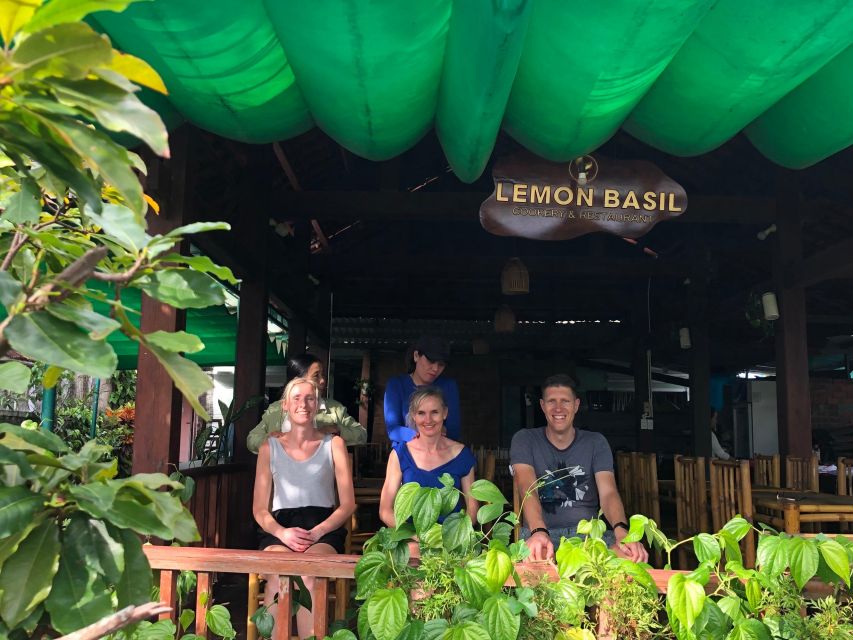
Lemon Basil Cookery and Restaurant sits in the heart of Tra Que vegetable village, a short distance from Hoi An’s central sights. The meeting point is marked by Lemon Basil signage, and you should arrive five to ten minutes before the scheduled start.
Because pickup is not included, you need to arrange your own way there. The activity information does not promise a specific transfer, taxi, or bicycle service, so make your arrival plan before booking. Tra Que is also a pleasant area for combining with a bike ride, a coffee stop, or more time among the gardens, but those extras are not part of the class.
The setting is one of the strongest reasons to choose this experience. Instead of spending the entire session indoors, you begin among growing crops and herbs. That gives you a better sense of place before you start chopping, mixing, and cooking.
The class lasts about three hours, with some information allowing roughly three to three and a half hours. Starting times vary, so check the available schedule when you book. An afternoon or morning session can fit well around other Hoi An plans, but leave enough room for the farm visit and communal meal rather than treating it as a quick one-hour lesson.
Meeting the family and touring the organic garden
The first stage is a walk around the farm. Min or another member of the family introduces you to the crops and herbs being grown there. You may taste some of the herbs, water the plants, help prepare soil, or plant new greens, depending on the day’s work.
That hands-on element is modest but worthwhile. You are not simply looking at a garden from a path. You get a small sense of the labor behind Vietnamese vegetables, and you begin to recognize ingredients that may otherwise seem like anonymous green garnish on your plate.
The garden also helps explain the first recipe, Tra Que spring rolls. The farm visit is not a separate sightseeing stop followed by an unrelated meal. The herbs and produce lead directly into the cooking, which gives the session a clear rhythm.
This part may appeal most to people who want contact with local life rather than a highly polished tourist production. It is also a good fit for families and curious beginners because there is no need to know anything about Vietnamese farming beforehand.
Do not expect a long botanical tour with every crop labeled. The available details point to a personal introduction by the family, with practical demonstrations and a chance to help. If you are mainly interested in advanced cooking technique, the garden section may feel more social than technical. For most people, that is exactly what makes it useful.
Cooking four Vietnamese dishes with Min
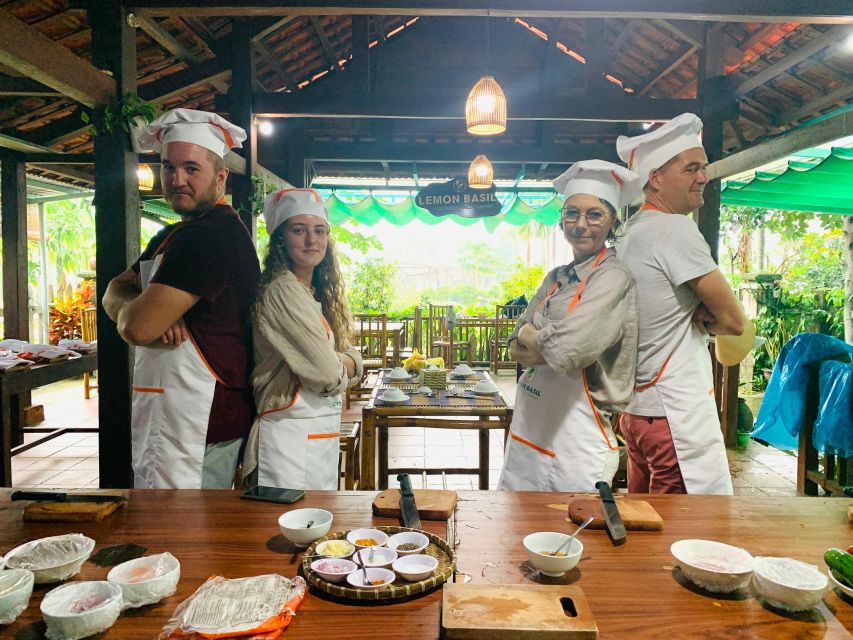
After the farm visit, you move into the cooking area. The class covers four dishes:
- Tra Que spring rolls
- Green papaya salad
- Fish in clay pot
- Vietnamese crispy pancake, or bánh xèo
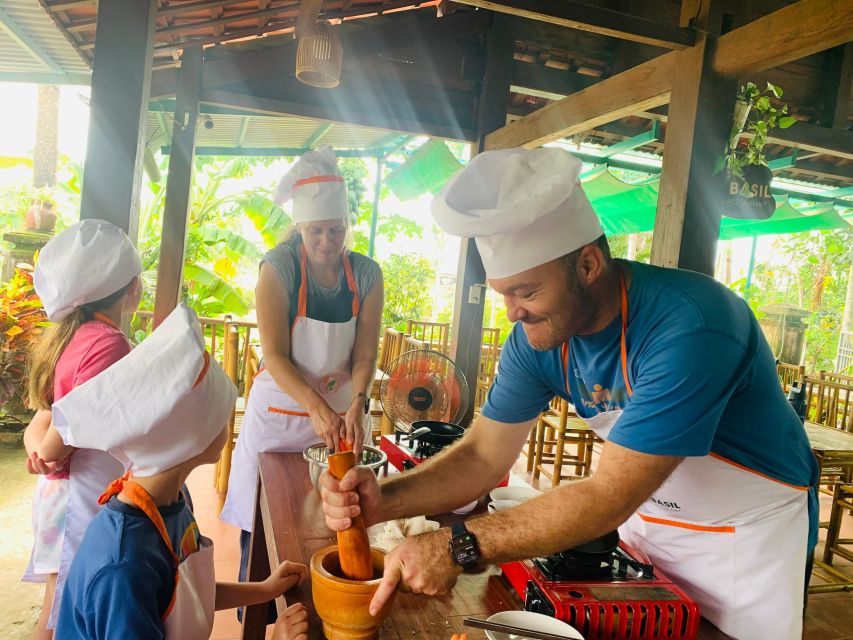
The class is hands-on, so you are not only watching a chef cook. You prepare the dishes with guidance from the instructor, learning how the ingredients are handled and how the flavors come together.
More Farm Cooking Classes in Vietnam
- Hoi An Local Market and Vegetable Village Cooking Class
★ 5.0 · 93 reviews - Rural Cycle, Market Tour, Basket Boat & Organic Farm Cooking
★ 5.0 · 64 reviews - Hoi An countryside biking – Basket Boat – Vegetable village – Local home Cooking
★ 5.0 · 37 reviews - Hoi An : Vegetarian Cooking Class W Optional Coconut Village
★ 4.9 · 28 reviews
Tra Que spring rolls
The spring rolls connect most directly with the farm tour. Fresh herbs and vegetables are not just decoration here. You learn how they fit into the dish and how Vietnamese food often combines crisp texture, herbs, and dipping flavors.
The exact spring roll style can vary in practice, and the activity description uses both Tra Que spring rolls and crispy spring rolls in different places. You should expect a fresh ingredient focus and practical assembly rather than a single rigid format. Ask the instructor if you want clarification on the filling or wrapping method when you arrive.
Green papaya salad
The green papaya salad gives you a lesson in balance. Vietnamese food often brings together salty, sweet, sour, spicy, and fresh flavors, and this salad is a useful example of that mix.
You learn to adjust the ingredients rather than blindly follow a recipe. That is one of the most useful skills to take home because tropical produce can vary in sweetness and acidity. The dish also gives you a break from cooked food and adds crunch to the shared meal.
Fish in clay pot
The fish in clay pot introduces a different style of cooking. It is richer and more savory than the salad, and it shows how a simple main dish can gain flavor through seasoning and slow cooking.
The available information identifies fish as the standard ingredient, while some sessions used basa fillet. If you have an allergy or avoid fish, tell the team before the class. Dietary requests were taken into account in recent sessions, but you should communicate your needs in advance rather than assume a substitution is available.
Vietnamese crispy pancake
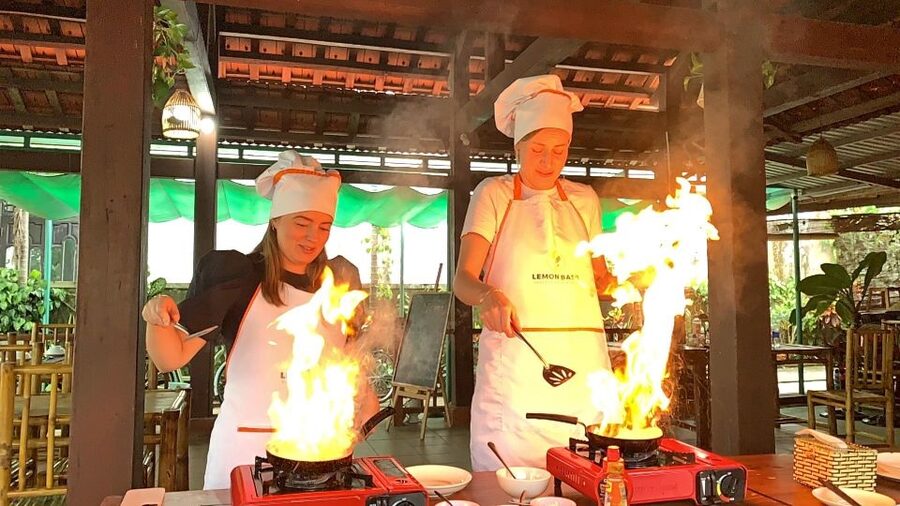
Bánh xèo is often the most playful dish in the lineup. The batter must be handled correctly, and getting the pancake crisp takes some practice. Flipping it can be trickier than it looks, which gives the class a bit of useful kitchen comedy.
This is also a good dish for learning texture. The point is not just to make a pancake, but to create a crisp shell that works with herbs, fillings, and dipping sauce. Min’s lighthearted instruction is helpful here, especially if your first pancake does not look like the one in the demonstration.
The order of cooking can vary. Some sessions prepare two dishes, eat, then cook the remaining two. That pacing prevents the class from becoming a long stretch of standing over a hot stove, and it means you get to taste your work while there is still more cooking ahead.
A class built around shared cooking, not a chef’s show
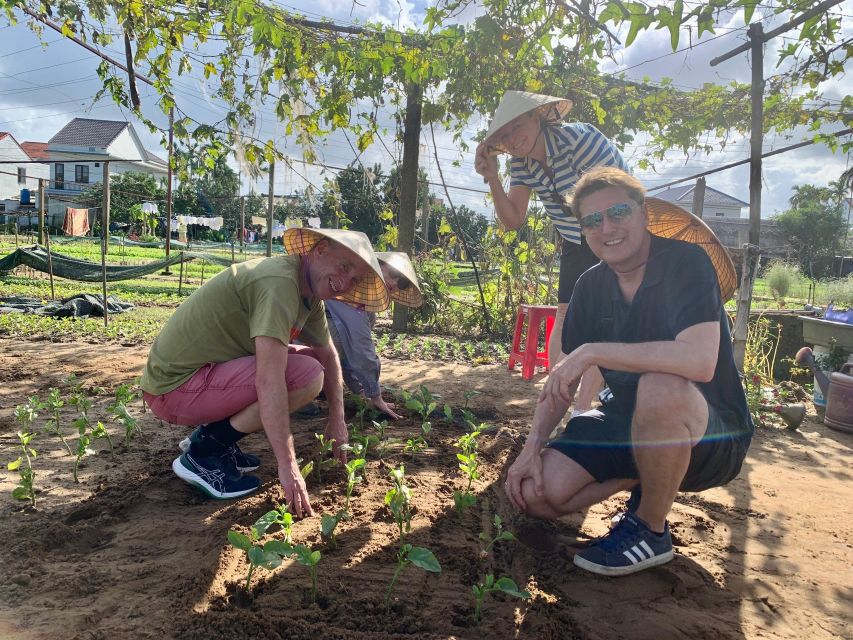
The group size is capped at 10 people. That is small enough for the instructor to watch your technique, answer questions, and help if a pancake folds badly or a recipe needs adjusting.
Some sessions have had only six people, creating an even more relaxed setting. Group size can affect the mood, of course, but the limit of 10 is reassuring if you dislike large demonstrations where you can barely see the work surface.
You will cook alongside other food enthusiasts, then eat together. This communal format is part of the experience. You get to compare results, talk through the dishes, and enjoy the meal as a group instead of leaving with four separate containers of food.
The English-speaking instruction is designed for clear communication, and no previous cooking experience is required. Skilled home cooks can still enjoy the class, but you should not expect restaurant-level knife training or a professional kitchen qualification. The certificate at the end marks your participation rather than an accredited culinary achievement.
Min’s style appears to be a major part of the experience. She is described as funny, welcoming, and attentive, with a habit of adding jokes to the lesson. Photos and videos may also be taken during the class, but this is not listed as a formal inclusion, so do not book solely for that feature.
What you eat at the communal table
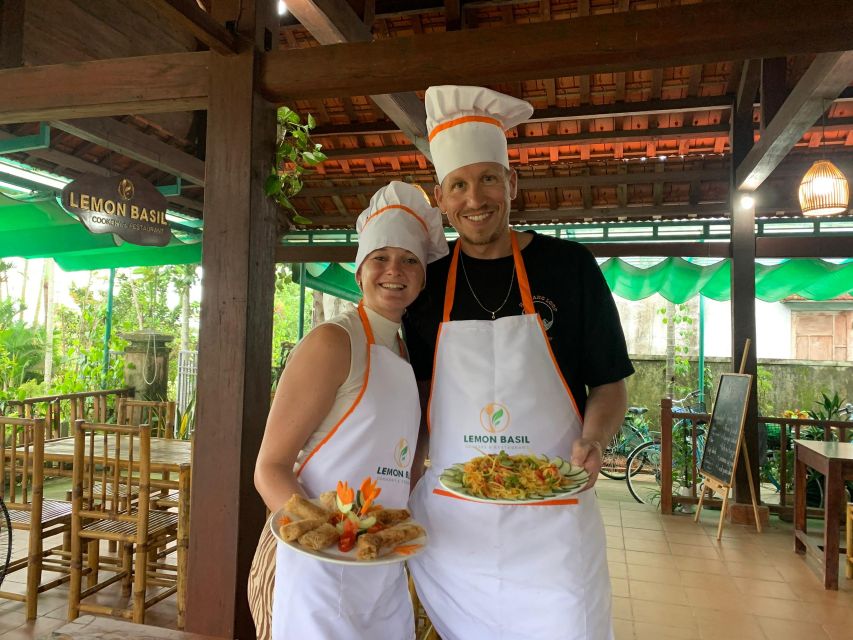
Once the dishes are ready, you sit down and eat what you have made. The meal includes the four prepared recipes, with additional food or drinks outside the listed dishes costing extra if available.
This is where the class earns much of its value. You are not paying just for a recipe card and a demonstration. You are getting a full meal, a farm visit, three hours of instruction, and a social experience in one package.
Some sessions included fresh fruit such as mango, pink jackfruit, and lychees at the end. These extras are not guaranteed in the official inclusions, so treat them as a pleasant possibility rather than part of the promise.
Plan to arrive hungry enough to enjoy the meal. Four dishes can be filling, especially when you are tasting as you cook. At the same time, anyone with strict dietary needs should explain them before the class begins. The team has accommodated requests such as avoiding pork, but the formal advice is to provide restrictions in advance.
The communal meal also makes this a better choice for solo visitors than a private cooking lesson might be. You have a natural chance to meet people, and the shared table keeps the experience from feeling like a one-to-one demonstration.
Is $27 a good value for three hours?
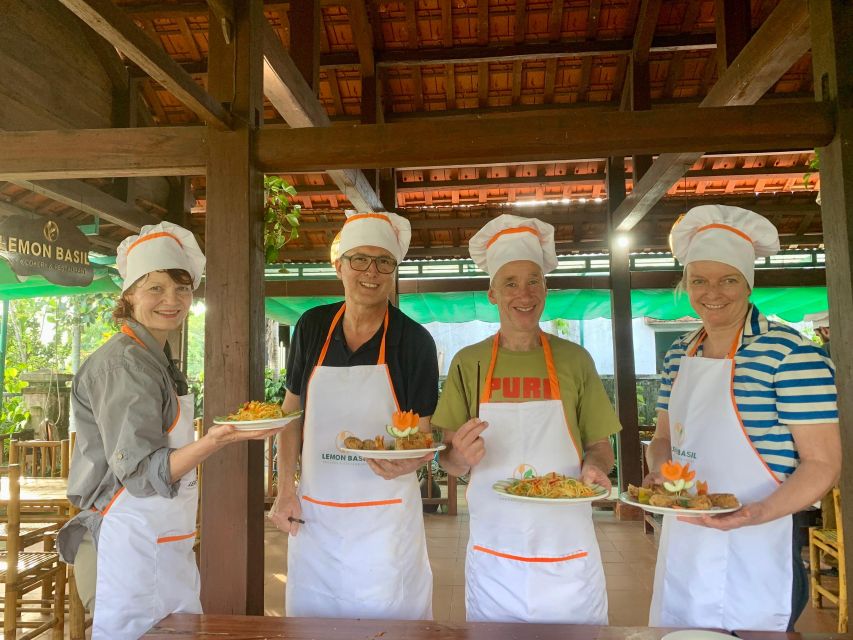
At $27 per person, this class is priced reasonably for Hoi An. The fee includes the farm tour, ingredients for four dishes, English-speaking instruction, hands-on cooking, the communal meal, and a completion certificate.
The value is strongest if you care about the farm setting and the social side of the class. A cheaper cooking demonstration without a meal or garden visit may cost less, but it would not provide the same combination of activities. On the other hand, if you want a private lesson, hotel transfer, or an advanced chef-led workshop, this is not the right comparison.
Transportation is the main extra cost to consider. You must reach Lemon Basil in Tra Que independently, and the class does not include travel to or from the restaurant. That is not a major problem if you are already planning time in Tra Que, but it reduces the value slightly if you need to arrange a separate taxi for a short activity.
The flexible booking terms also help. You can reserve now and pay later, and cancellation is free up to 24 hours before the activity for a full refund. Check the exact conditions at booking, since plans and starting times can change.
Who will enjoy this cooking class most?
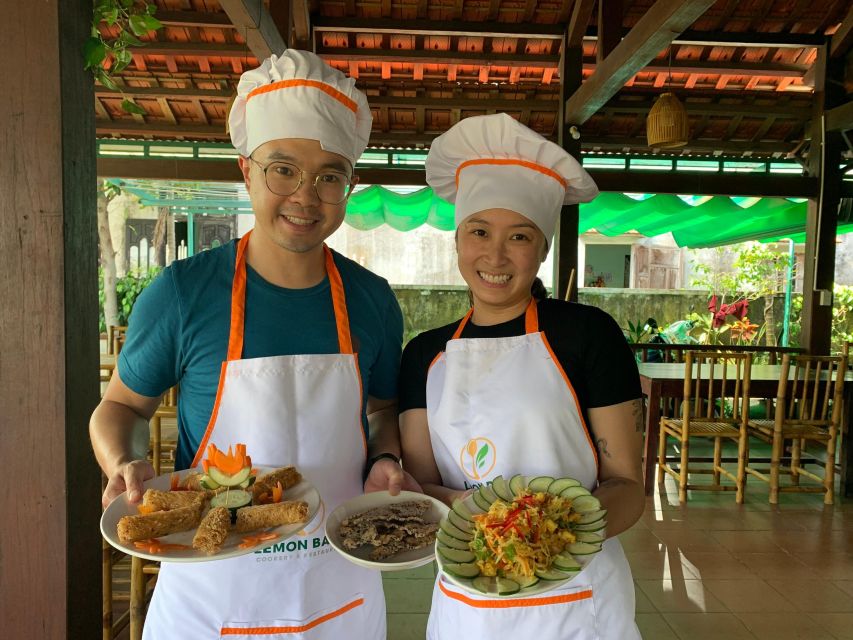
I would recommend Lemon Basil to you if you want a relaxed introduction to Vietnamese food with a strong local setting. It suits:
- First-time visitors who want to connect food with daily life
- Couples and friends looking for a shared activity
- Solo visitors who like small groups and communal meals
- Families who want a practical experience beyond sightseeing
- Beginner cooks who prefer clear guidance and a friendly pace
- People interested in organic gardening and fresh herbs
- Diners who need dietary adjustments and can provide notice
You may want a different class if you prefer a market tour, a boat transfer, a luxury kitchen, or a private session. None of those features is included here.
You should also consider the physical setting. The class includes a farm walk and time in a cooking area, so it is more active than sitting through a demonstration. The supplied information does not provide specific accessibility details, so contact the operator directly if you have mobility concerns.
Practical advice before you book
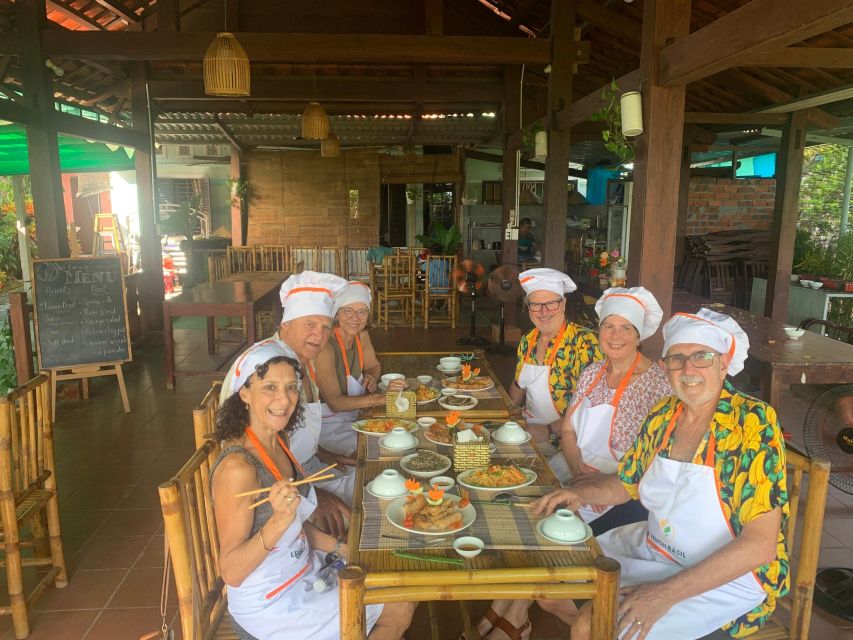
Arrive five to ten minutes early. That gives you time to find Lemon Basil’s signage and begin without cutting into the farm tour.
Tell the team about allergies, intolerances, or dietary restrictions before the class. The cooking is flexible, but early notice gives the instructor the best chance to adjust ingredients.
Wear something comfortable for three hours of walking, chopping, cooking, and eating. The official information does not list a dress code or equipment requirements, so you do not need specialist clothing or prior kitchen experience.
Leave time around the class if you want to explore Tra Que. The village setting works well with a bicycle ride or a coffee stop, but keep those plans separate from the three-hour activity so you are not rushed.
Finally, take the certificate for what it is: a pleasant souvenir of the day. The real takeaway is learning how fresh Vietnamese ingredients work together and gaining a few recipes you can make at home.
Should you book Lemon Basil?
Book this class if you want four Vietnamese dishes, a working farm visit, and a small family-run setting for $27. The strongest features are the organic garden, Min’s cheerful teaching, the hands-on format, and the generous meal at the end.
I would be less enthusiastic if you need hotel pickup or want a private, highly technical cooking course. For everyone else, especially first-time visitors to Hoi An, this is a well-balanced way to spend three hours outside the old town. Plan your own transport, notify the family about dietary needs, and arrive ready to work, laugh, and eat.
FAQ
Where does the cooking class take place?
The class takes place at Lemon Basil Cookery and Restaurant in the heart of Tra Que vegetable village near Hoi An.
Is transportation included?
No. Pickup and transportation to and from the restaurant are not included, so you must arrive at Lemon Basil independently.
How long does the experience last?
The class lasts about three hours, with the full activity sometimes taking roughly three to three and a half hours.
Which dishes will I prepare?
You will prepare Tra Que spring rolls, green papaya salad, fish in clay pot, and Vietnamese crispy pancakes, known as bánh xèo.
Is the class suitable for beginners?
Yes. No previous cooking experience is required, and English-speaking instructors guide you through the recipes.
Can dietary restrictions be accommodated?
Dietary requests can be taken into account. You should inform the team about allergies, intolerances, or other restrictions in advance.
Newest classes around Hoi An
- Rural Cycle, Market Tour, Basket Boat & Organic Farm Cooking★ 5.0 · 64 reviews
- Private cooking class tour with Master Chef★ 5.0 · 5 reviews
- Market Tour – Cooking Class – Coconut Boat Riding★ 4.4 · 43 reviews
- Mad Monkey Hoi An Cooking Class & Bamboo Boats★ 4.5 · 6 reviews
- Hoi An : Lantern Making & Cooking Class With Local Family★ 5.0 · 3 reviews
- Hoi An :Lantern Making – Cooking Class -Coconut Basket Boat★ 4.9 · 17 reviews
- Hoian/Da Nang: Fishing, basket riding and cooking class★ 3.3 · 5 reviews
- Hoi An Villages Biking – Basket Boat- Cooking Class★ 5.0 · 2 reviews
Hoi An Cooking Classes, compared.
Cooking Class Hoi An:Local Market, Basket Boat, Fishing & Cooking
Read our review →
Hoi An Cooking Class(Market,BasketBoat Crabfishing&Cooking Class)
Read our review →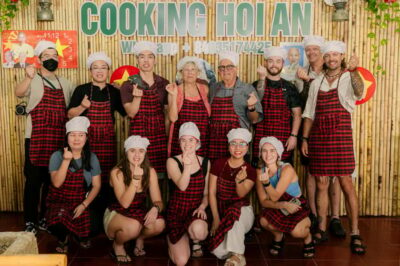
Market Tour, Basket Boat Ride and Cooking Class
Read our review →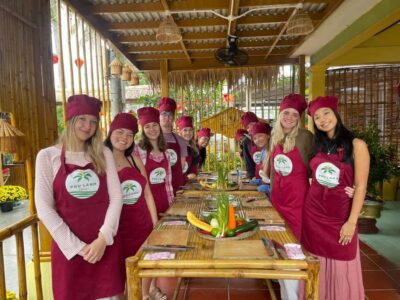
Basket Boat with Lantern-Making & Cooking Class Tour
Read our review →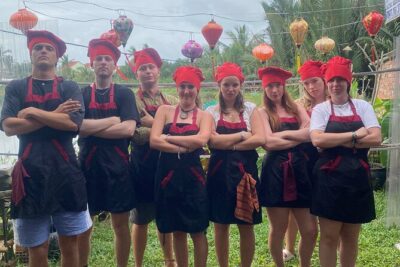
Hoi An Cooking Class(Local market,Basket Boat,Fishing & Cooking)
Read our review →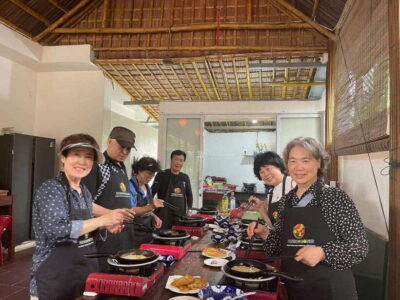
Hoi An Eco Tour Cooking Class & Fishing (Local market,basket boat,learn cooking)
Read our review →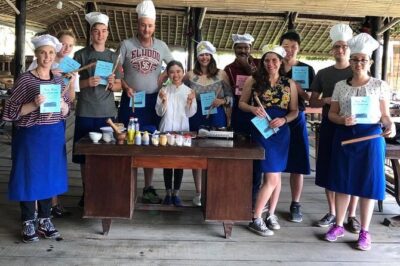
Browse the lists this tour appears in