
Review · ITALY COOKING CLASSES
Tuscan Cooking Class -Traditional Pasta Menu
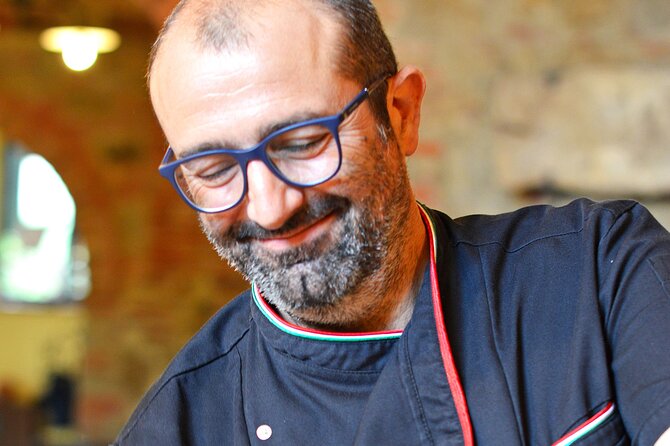
At Farmhouse Le Caggiole, Chef Giacomo turns a morning of pasta making into a full Tuscan meal. You prepare bruschette, two fresh pastas, and family-recipe tiramisu, then sit down to eat everything with three carefully paired local wines. Giacomo is both a chef and a trained sommelier, so the lesson covers more than recipes.
I like the hands-on focus on technique, especially the chance to make both pici and pappardelle instead of simply watching a demonstration. I also like the small group, capped at eight, which gives the class a friendly, personal feel. The main consideration is that you stand during the cooking, and the class does not allow video or other recording during preparation.
Key points at a glance
- Two traditional pastas: Make pici and pappardelle by hand, each served with its own Tuscan sauce.
- A full four-course meal: The menu includes bruschette, a Tuscan appetizer, pasta with traditional sauce, pappardelle with Cinta Senese pork ragù, and tiramisu.
- Three local wine pairings: Giacomo explains how to match wine and food, then serves selected wines with the meal.
- A small farmhouse setting: The class takes place at Le Caggiole near Montepulciano, with no more than eight people.
- A family-led welcome: Giacomo and Cristiana bring cooking instruction together with stories, humor, and a relaxed social setting.
- A useful practical tip: Wear comfortable clothes and shoes, eat a good breakfast, and report allergies before booking.
A cooking lesson built around the whole Tuscan meal
Many cooking classes give you one recipe, a quick taste, and a certificate to take home. This one uses the morning to show you how a Tuscan meal comes together from start to finish.
You work with ingredients, prepare a traditional appetizer, make two kinds of fresh pasta, and finish with tiramisu. The aim is not just to copy a recipe. Giacomo explains how to choose ingredients, how traditional dishes vary, and how to think about food before you start cooking.
That approach is one of the strongest parts of the class. One especially useful lesson is learning to cook around fresh ingredients rather than choosing a recipe first and forcing the ingredients to fit. You leave with techniques you can use at home, not just a pleasant memory of lunch.
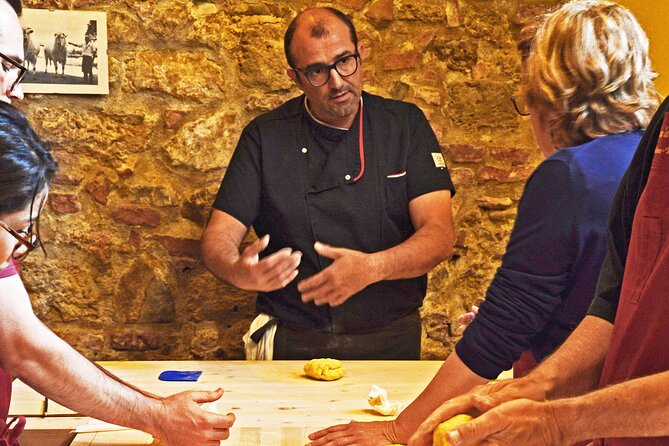
The setting helps. Farmhouse Le Caggiole gives the class a country feel near Montepulciano, while the large table creates a natural place to talk, eat, and compare results. The atmosphere is described as friendly and playful, with Giacomo leading the instruction and Cristiana adding warmth and encouragement.
More Pasta Making Classes in Italy:
- Florence: Pasta Cooking Class with Unlimited Wine
★ 4.9 · 10,285 reviews - 3 in 1 Cooking Class near Navona: Fettuccine, Ravioli & Tiramisu
★ 5.0 · 7,376 reviews - Florence: Pasta & Tiramisu Cooking Class with Unlimited Wine
★ 4.9 · 6,708 reviews
What happens from the 9:30 start
The class begins at 9:30 a.m. at Traversa di Montepulciano, 12, in Montepulciano. You should arrive ready to work. Cooking lasts much of the morning, and you need to remain standing during the preparations.
The exact rhythm can vary with the group, but the experience includes practical cooking, food tasting, wine tasting, and time around the table. You are not simply watching a chef work while standing behind a counter. You take part in the preparation, use the supplied tools, and help make the dishes served at lunch.
Because the group is limited to eight people, the format should suit anyone who prefers personal guidance over a large demonstration. Solo visitors are asked to contact the provider before booking so they can be placed with an already scheduled small group. That is a useful point to handle early, especially since the class is often reserved about 61 days ahead.
Bruschette and the Tuscan appetizer
The first course is traditional bruschette, alongside a typical Tuscan appetizer. This is a simple beginning, but it serves an important purpose. Tuscan cooking often depends on making a few good ingredients work together rather than hiding them under complicated preparation.
You learn how to think about the ingredients and the balance of the dish. The emphasis on selecting good raw materials is especially valuable here, since a modest appetizer leaves little room for poor choices.
The appetizer is also the first part of the wine lesson. Giacomo pairs each savory course with a selected local wine and explains the basic logic behind the match. You do not need advanced wine knowledge to take part. The point is to understand the basics well enough to make better choices at your own table.
Making pici by hand
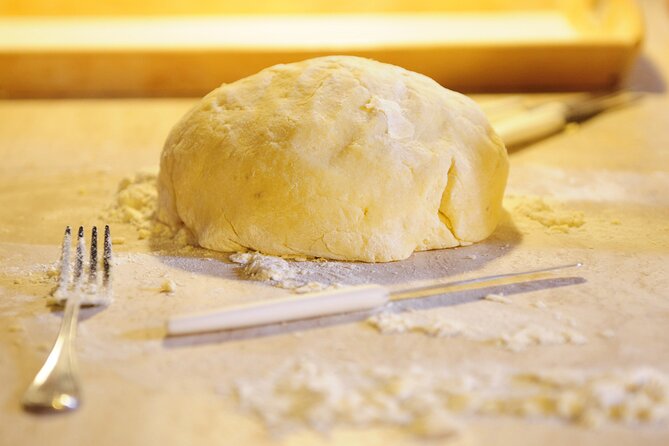
Pici is one of the most recognizable pastas of southern Tuscany. It is a thick, hand-rolled noodle with a pleasantly rustic shape. In this class, you make it yourself and serve it with a traditional sauce.
This is a good pasta for a hands-on lesson because it does not depend on producing identical strands. You can focus on texture, pressure, and the feel of the dough. The process also shows why handmade pasta is not only about appearance. The thickness of the noodle affects how it holds sauce and how it feels when you eat it.
The class places real weight on method. You learn how the pasta is formed and how to work with it, rather than leaving with a recipe that tells you only to mix, roll, and boil. That practical focus is likely to help you repeat the dish at home.
Pici is served as one of the main courses, with a traditional sauce and a wine selected for the dish. The result is a clear example of Tuscan cooking: straightforward, filling, and shaped by local habits.
More Italian Classes in Italy:
- Cooking Class and Lunch at a Tuscan Farmhouse with Local Market Tour from Florence
★ 5.0 · 4,831 reviews - Tuscan Cooking Class and Dinner in Florence
★ 4.5 · 732 reviews - Rome Pasta Making Class with Italian Sauces and Wine Included
★ 5.0 · 645 reviews - Tuscan Cooking Class
★ 5.0 · 584 reviews
Rolling pappardelle with Cinta Senese ragù
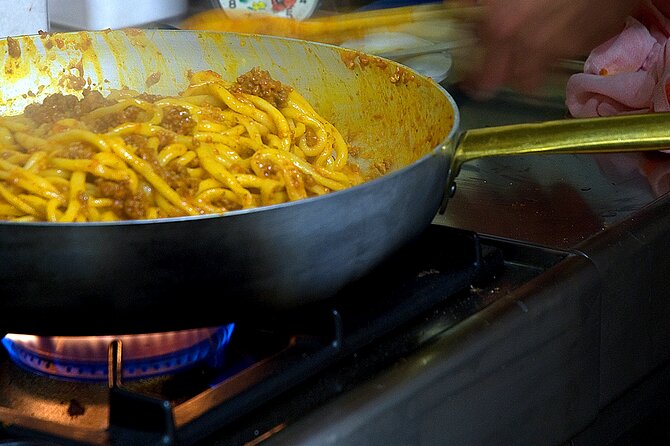
The second pasta is pappardelle, a broad ribbon pasta served with Tuscan meat ragù. The sauce uses Cinta Senese pork, a local Tuscan breed known for its place in regional cooking.
This course gives you a useful contrast with pici. Instead of a thick, rounded noodle, you work with wide ribbons that carry a hearty meat sauce. Making both types of pasta in one morning helps you see how shape and sauce work together.
The Cinta Senese ragù also connects the lesson to local food traditions. You are not making a generic tomato sauce or a standard pasta dish found everywhere in Italy. The meal highlights a Tuscan ingredient and a regional way of building flavor.
I like this part of the menu because it gives the class more substance. You are learning pasta technique, but you are also learning why a particular shape suits a particular sauce. That kind of context makes the lesson more useful once you return to your own kitchen.
Finishing with the family tiramisu
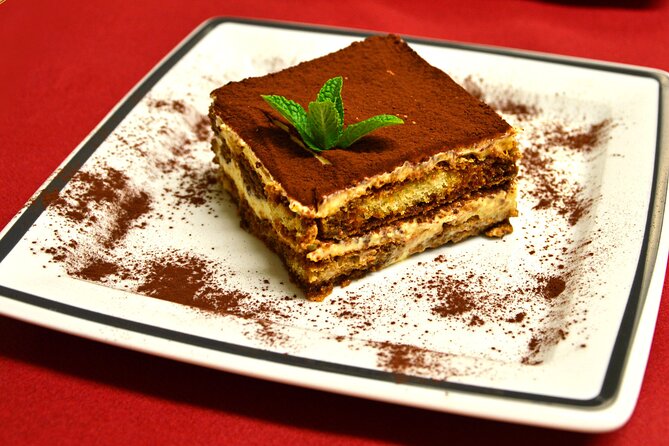
The dessert is tiramisu made from the family recipe. It is prepared during the class and served at the end of the meal.
Tiramisu is familiar to many people, but a family version can show how a well-known dessert changes from one kitchen to another. Here, it serves as a lighter, sweeter finish after the bruschette and two substantial pasta dishes.
Dessert is enjoyed on the terrace, where you can relax with the views around Montepulciano. This change of pace matters. The cooking portion is active and requires standing, while the final course gives you time to sit back and enjoy the setting.
The terrace is also a fitting place to finish the wine and food experience. By this point, you have made the meal yourself, and the setting allows the class to end as a shared lunch rather than a rushed tasting.
Giacomo’s food and wine teaching
Giacomo is the chef and a graded sommelier, so the class combines two subjects that often get separated. You learn how to prepare the food and how to choose a wine that works with it.
Three selected local wines are included. Each savory course is paired with a specific wine, creating what the class describes as a sensory path through the meal. You taste the food and wine together, then consider why the pairing works.
The useful part is the basic guidance. You are not expected to become a sommelier in four hours. Instead, you gain a foundation for matching dishes and wines at home. That can mean thinking about the weight of a sauce, the strength of a meat dish, or the balance needed with a simple appetizer.
The wine element also adds value to the price. A four-hour class at $212.85 per person is not a low-cost activity, but the fee covers instruction, ingredients, kitchen equipment, a four-course meal, and three wine tastings. If you already plan to pay for a quality meal in the Montepulciano area, the added cooking lesson and wine guidance make the cost easier to justify.
If you do not drink alcohol, the wine portion will be less useful to you. The provided details do not state whether nonalcoholic substitutes are available, so ask before booking if that matters.
Why the small group matters
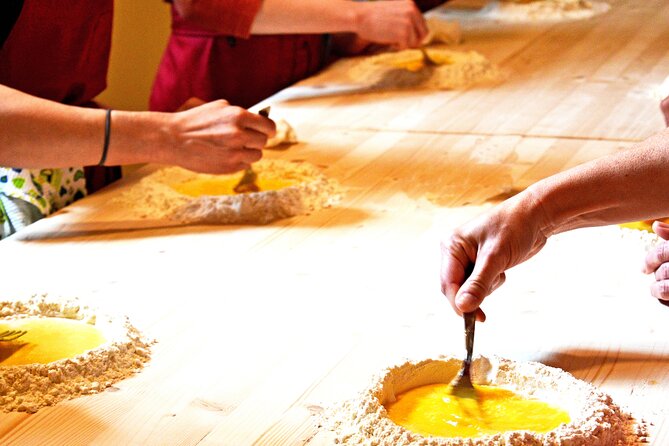
The maximum group size is eight people. That limit is important for a practical cooking class because everyone needs room to work and a fair chance to ask questions.
A smaller group also supports the social side of the morning. You cook with other people, eat together, and share the final table. The mood is intended to be relaxed and humorous rather than formal.
The class works well for couples, families with adult children, and friends who want an activity that feels more personal than a standard restaurant meal. It also suits solo visitors, though solo guests should contact the provider before booking so they can be matched with a scheduled group.
This is not the best pick for anyone who wants a short demonstration with minimal participation. You will be on your feet, handling ingredients, and following instructions for much of the preparation.
Practical details that can make or break the morning
Wear comfortable clothing and shoes. You remain standing during the cooking, so this is not the time for stiff footwear or an outfit that makes it hard to work around food.
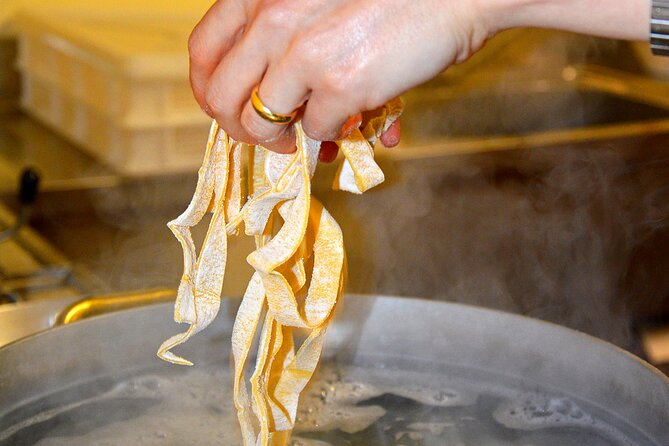
For hygiene reasons, do not wear rings, large bracelets, or artificial nails during preparation. Aprons and kitchen tools are supplied, and all ingredients are included. Pencil and note paper are available on request, which is helpful if you want to record techniques without using a phone.
The class does not permit video or other recording during preparation. If you like to document every step of a cooking lesson, this restriction may disappoint you. Bring a notebook instead, if you request one in advance.
Eat a good breakfast before arriving. That may seem odd for a class built around lunch, but the cooking takes several hours and the main meal comes at the end. A light breakfast will help you stay comfortable while you work.
Tell the provider about food allergies or intolerances before completing the booking. Changes to the menu cannot be considered after booking, and the provider needs time to judge whether an adjustment is possible.
There is no transfer or shuttle service. You are responsible for reaching the meeting point at Traversa di Montepulciano, 12, and the activity finishes back there. The experience is offered in English and uses a mobile ticket.
How the price fits the experience
At $212.85 per person, this class is a splurge. It costs more than a basic pasta workshop, but it also includes much more than a single dish.
You receive four hours of instruction, ingredients, aprons and kitchen tools, the food you prepare, three local wines, and a full meal. You also get instruction from a chef who can explain both cooking and wine pairing. The family setting and terrace meal add to the sense that this is a full morning activity, not simply a class squeezed between sightseeing stops.
I would consider the price fair for someone who values learning and food equally. It is less compelling if you mainly want a cheap lunch or if you would rather spend the morning visiting Montepulciano’s streets, churches, and wine cellars.
The strong point is that the meal is not separate from the lesson. You prepare the food, then eat it. That connection gives the cost more purpose and makes the experience easier to remember and repeat.
Cancellation and booking timing
Free cancellation is available if you cancel at least 24 hours before the local start time. Cancellations or changes made less than 24 hours ahead are not refundable.
The class requires a minimum number of participants. If the provider cancels because that number is not met, you will be offered another date or experience, or receive a full refund.
Since the class is often booked about 61 days ahead, I would reserve early if your Montepulciano dates are fixed. Solo guests should contact the provider before booking, and all allergy information should be given before the reservation is completed.
Who should book this class
I would recommend it to you if you want to do more than eat Tuscan food. It is especially suitable if you enjoy hands-on activities, want to learn traditional pasta methods, and appreciate a relaxed family setting.
It is a good match for:
- Couples looking for a shared food experience
- Families with adult children
- Small groups of friends
- Solo visitors willing to join a scheduled group
- Home cooks who want better pasta technique
- Anyone curious about basic food and wine pairing
I would think twice if you dislike standing for several hours, do not drink wine, or want complete freedom to record the cooking. The class also requires advance attention to allergies, since menu changes cannot be made after booking.
Should you book the Le Caggiole class?
Book it if you want a full Tuscan morning built around food, conversation, and practical cooking. The best reasons are the two handmade pastas, Giacomo’s combined chef and sommelier instruction, the small group, and the chance to eat a four-course meal on the terrace.
The class is not the cheapest way to have lunch near Montepulciano, and it is not designed for passive spectators. But for a visitor who wants to understand how Tuscan dishes are made, why the sauces and pasta shapes fit together, and how local wines work with the meal, it offers strong value.
Bring comfortable shoes, arrive hungry but not without breakfast, and handle allergies and booking questions early. If those details suit you, this is the kind of experience that can change how you cook long after your Italian holiday ends.
FAQ
Where does the cooking class take place?
The class takes place at Farmhouse Le Caggiole near Montepulciano. The meeting address is Traversa di Montepulciano, 12, 53045 Montepulciano SI, Italy.
What time does the class start?
The class starts at 9:30 a.m.
How long does the experience last?
The experience lasts approximately four hours.
Is the class offered in English?
Yes. The class is offered in English.
How many people can join the class?
The maximum group size is eight people.
What food will I prepare?
You will prepare traditional bruschette and a Tuscan appetizer, pici with a traditional sauce, pappardelle with Tuscan meat ragù made with Cinta Senese pork, and tiramisu from the family recipe.
Are wine tastings included?
Yes. Three selected local wines are included and paired with the food.
Are ingredients and cooking equipment provided?
Yes. The ingredients, aprons, and various kitchen tools are provided. Pencil and note paper are available on request.
Can I record the cooking preparation?
No. Video and other recording are not allowed during the preparations.
Can the menu be changed for allergies or intolerances?
You must provide information about allergies or intolerances before completing the booking. Requests to change the menu after booking cannot be considered.
Is transportation included?
No. Transfer and shuttle service are not provided. The activity ends back at the meeting point.
What is the cancellation policy?
You can cancel for a full refund up to 24 hours before the experience start time. Cancellations or changes made less than 24 hours before the start time are not accepted for a refund.
Newest classes around Italy
- Cooking Class in a Sicilian countryhouse★ 5.0 · 5 reviews
- Cesarine: Market Tour & Home Cooking Class in Catania★ 4.0 · 6 reviews
- Cesarine: Home Cooking Class & Meal with a Local in Catania★ 4.5 · 10 reviews
- Cooking Class in Taormina with Lunch Included★ 5.0 · 2 reviews
- Cooking class in Capri for small groups★ 4.0 · 4 reviews
- Cooking Class and Wine Pairing in Capri★ 5.0 · 57 reviews
- Lezione di Cucina : Pasta Fresca★ 5.0 · 12 reviews
- Private Cooking Class Experience in Reggio Calabria★ 5.0 · 5 reviews
Italy Cooking Classes, compared.
3 in 1 Cooking Class near Navona: Fettuccine, Ravioli & Tiramisu
Read our review →
Pasta & Tiramisu Cooking Class with Unlimited Wine
Read our review →
Cooking Class and Lunch at a Tuscan Farmhouse with Local Market Tour from Florence
Read our review →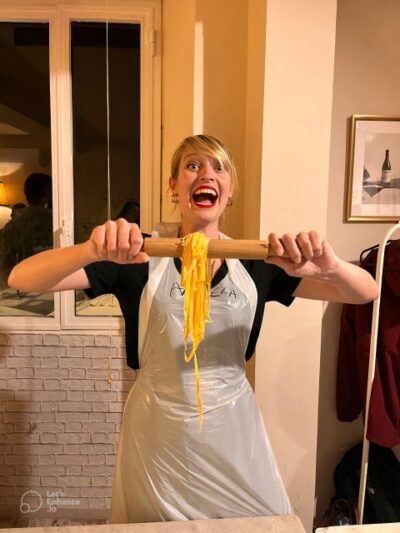
Pasta Making Class with Wine, Limoncello, and Dessert
Read our review →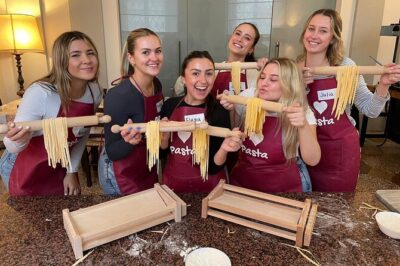
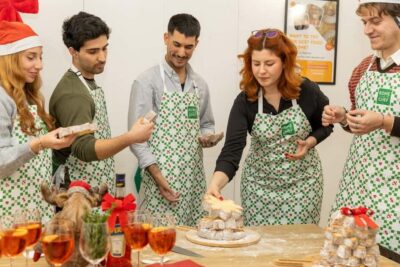
Rome Cooking Class: Make Pasta and 3 Spritz Cocktails
Read our review →Browse the lists this tour appears in