Review · COOKING CLASSES WITH A MARKET TOUR
Pierogi Cooking Class with Market Shopping and Local Snacks
The best part of this Krakow experience is that pierogi making begins before you reach the kitchen. Olga takes you through the city’s oldest marketplace, where you help choose fresh cheese and other ingredients, then leads you to her apartment for a small, hands-on class. You make the dough, filling, shapes, and final meal yourself.
I like the small maximum of six people, which gives you real time at the worktable rather than a quick demonstration from across the room. I also like the mix of cooking and local food culture: smoked cheese, sausage, pickles, sour cabbage, and Polish drinks make this more than a dumpling lesson.
The main consideration is simple: this is a home-based class, not a professional cooking school. You’ll be cooking in a local apartment, and the meal centers on one traditional vegetarian pierogi filling, with plenty of snacks along the way. On Sundays, the market visit is not included.
Key points to know before booking
- Market first, kitchen second: Shop for fresh cheese and other ingredients at Krakow’s oldest marketplace before walking to Olga’s apartment.
- A true hands-on lesson: You make the dough, filling, pleats, and finished pierogi rather than only watching a demonstration.
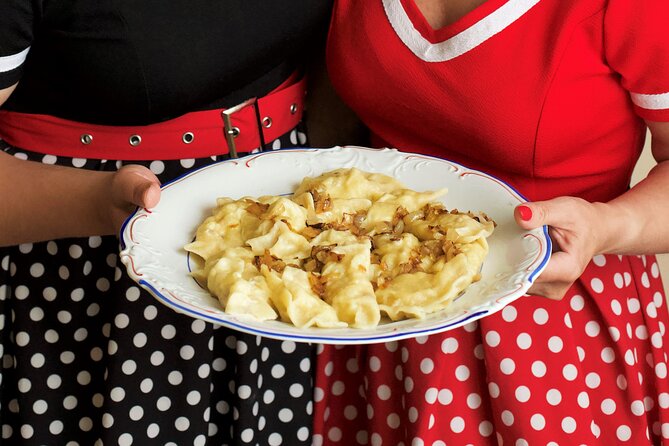
- Traditional filling: The main dumplings use potatoes, fresh cottage cheese, and caramelized onions.
- A generous food experience: Seasonal snacks, smoked cheeses, Polish sausage, pickles, sour cabbage, sour cream, and regional alcohol may all appear.
- Small-group setting: The class accepts no more than six people, with many sessions using even fewer.
- Sunday difference: The cooking class still takes place, but the food-market stop is left out.
From Grunwald Monument to Krakow’s oldest marketplace
The experience begins at the Grunwald Monument on plac Jana Matejki. This is a useful central meeting point, near public transportation, and the start is easy to reach if you are staying in central Krakow.
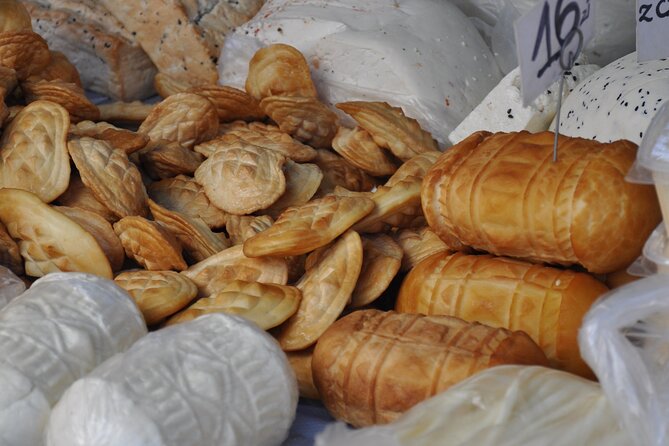
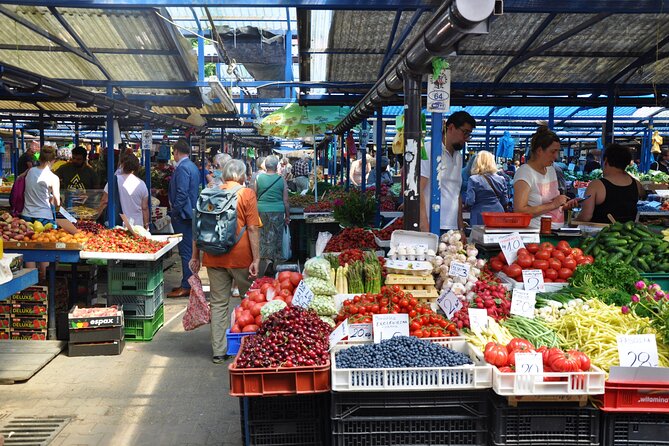
From there, Olga guides you to the local marketplace. The market is not just a place to collect ingredients. It gives you a quick look at the foods that shape Polish home cooking, including fresh cheeses, smoked cheeses, sausage, vegetables, mushrooms, pickles, and sour cabbage.
The shopping stop also gives the class a good sense of place. Instead of arriving at an apartment with ingredients already measured out, you see what goes into the meal and learn why the ingredients matter. Fresh cottage cheese is especially important for this recipe, and Olga explains the different types of cheese and which one works best for pierogi.
You may taste items at the market before the cooking begins. That helps turn the shopping walk into part of the meal, not simply a practical errand. It is also a good time to ask Olga what to buy for your own kitchen or what Polish foods are worth trying during the rest of your stay.
On Sundays, this part is skipped. If the market is important to you, avoid booking a Sunday session. The class itself remains available, but the experience is shorter in character because you go directly into the cooking portion.
More Cooking Classes with a Market Tour in the world:
- Hanoi Cooking Class: Culture, Local Market & Meaning CSR Impact
★ 5.0 · 5,147 reviews - 5 Traditional Dishes Hanoi Cooking Class with Market Trip
★ 5.0 · 4,890 reviews - Cooking Class and Lunch at a Tuscan Farmhouse with Local Market Tour from Florence
★ 5.0 · 4,831 reviews
The walk to Olga’s apartment
After shopping, you take a short walk to Olga’s apartment. Several descriptions place the walk at less than ten minutes, so this is not a strenuous transfer or a long trek across Krakow.
The apartment setting is central to the character of the experience. You are not in a restaurant kitchen with a rotating line of large groups. Olga welcomes you into her own home, prepares the work area, and sits down with the group for snacks and drinks before or during the lesson.
That setting can feel personal and relaxed, but it is worth knowing what you are booking. A private apartment has a different atmosphere from a purpose-built cooking studio. The space may feel more like a friend’s kitchen than a formal classroom, which is exactly the appeal for many people. If you prefer polished equipment, individual workstations, and a restaurant-style setup, this may not be your ideal class.
The group limit of six helps. You have room to work, ask questions, and see the details of dough making and pleating. Smaller groups also make it easier to talk with the other participants. Some sessions have had only a few people, which can make the afternoon feel more like a shared meal than a scheduled attraction.
Polish snacks before the pierogi
Before the main cooking starts, Olga serves seasonal local foods. The exact selection changes, but you might try fresh or smoked cheese, Polish sausage, sour cucumbers, sour cabbage, lard spread on bread, and other market purchases.
This is one of the strongest parts of the experience for anyone who wants more than the headline dish. Pierogi are famous, but Polish food culture includes many sharp, smoky, salty, and sour flavors that you may not encounter in a standard restaurant meal.
The snacks also help you understand how Polish food is eaten at home. A pickle with bread and lard, for example, may be unfamiliar if your idea of Polish food begins and ends with dumplings. The combination can be surprisingly good, especially alongside smoked cheese and sausage.
Regional alcohol is part of the meal as well. You may be served homemade liquor or a selection of local spirits, including bison-grass-infused vodka. One particularly memorable serving has been vodka poured from a fish-shaped container. This is a tasting, not the main event, but the alcohol adds a festive note to the table.
If you do not drink alcohol, the food and class still carry the experience. The supplied details do not specify a nonalcoholic substitute, so you should mention any preference when booking or at the start.
Making the dough from scratch
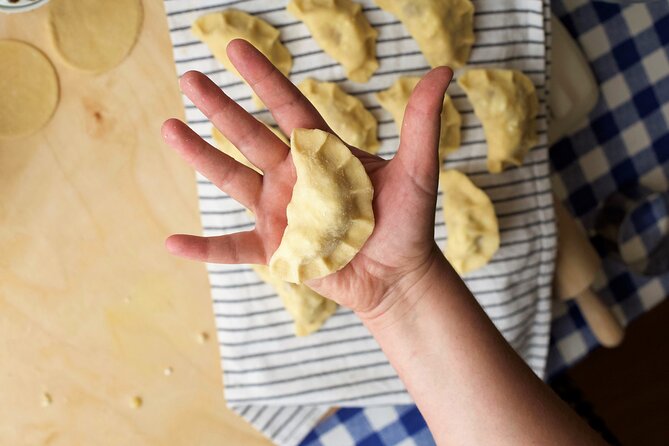
The cooking lesson covers the full process. You make the dough, prepare the filling, roll the dough to the right thickness, cut or shape it, add the filling, and seal the dumplings before boiling them.
Dough is the part that benefits most from an instructor. It needs the right texture, and the kneading technique affects how easy the pierogi are to roll and fold. Olga explains what to do and what to avoid as you work, rather than simply handing you a finished ball of dough.
You should expect a few imperfect dumplings at first. Pleating looks easy when someone else does it, but sealing the edges neatly takes practice. That is part of the fun, especially for families. Children can take part in rolling, filling, and folding, and the small group makes it easier for Olga to help each person.
This is also a useful lesson to take home. The recipe is not just a souvenir memory. You learn a repeatable process that you can use for family and friends later. The filling is vegetarian, so it is a practical place to start if you want to make Polish dumplings at home without handling meat.
More Cooking Classes in the world:
- Half-Day Thai Cooking Class at Organic Farm in Chiang Mai
★ 5.0 · 19,087 reviews - Florence: Pasta Cooking Class with Unlimited Wine
★ 4.9 · 10,285 reviews - 3 in 1 Cooking Class near Navona: Fettuccine, Ravioli & Tiramisu
★ 5.0 · 7,376 reviews - Florence: Pasta & Tiramisu Cooking Class with Unlimited Wine
★ 4.9 · 6,708 reviews
A classic potato, cheese, and onion filling
The main filling combines potatoes, fresh cottage cheese, and caramelized onions. This is one of Poland’s most familiar pierogi combinations, often associated with comfort food and home cooking.
The filling may look simple, but the preparation matters. Olga explains how the potatoes should be cooked, cooled, and prepared for the mixture. She also covers the role of the cheese and the onions, so you learn more than a list of ingredients.
The class focuses on this traditional filling rather than offering a long menu of options. That is a strength if you want to learn one classic recipe properly. It is a limitation if you are hoping to make several types, such as meat, mushroom, cabbage, or fruit pierogi in the same session.
You may produce a large number of dumplings. One session made more than 100 pierogi for the group, which explains why you should arrive hungry but not overloaded from an earlier meal. Some extra pierogi may be available to take home, though that is not guaranteed for every session.
Boiling, serving, and eating what you made
Once the dumplings are folded, Olga shows you how to boil them and serve them with suitable toppings. Sour cream is one accompaniment, and the final presentation brings the group back to the table to eat together.
This is where the lesson pays off. You have handled every stage, from market ingredients to the first bite. The dumplings may not all look identical, but that is part of the charm. Homemade pierogi are about technique, patience, and a shared table, not factory-perfect edges.
The meal can be substantial. Along with the pierogi, you have already eaten local snacks and tasted drinks. I would not schedule a major dinner immediately afterward. The three-hour experience is best treated as a full food outing rather than a small afternoon activity.
Olga also uses the meal to talk about Krakow, Polish food customs, and the story of pierogi in Poland. She offers suggestions for restaurants and places to visit, which can be useful early in your stay. Booking this near the beginning of a Krakow trip makes sense if you want food tips before choosing the rest of your meals.
What the $83.48 price includes
At $83.48 per person, this is not the cheapest way to eat pierogi in Krakow. You can find the dish at restaurants for far less, and a market visit on its own costs nothing beyond what you choose to buy.
The value comes from the combination of parts. Your price covers about three hours, the market walk, ingredients, instruction, snacks, a substantial meal, and regional alcohol. You also receive personal guidance in a group capped at six, which is a better setup for learning than a large demonstration.
The apartment setting adds another layer. You are paying for access to a local host’s kitchen and conversation, not just for food. If you want a polished cooking studio or a broad menu, the price may feel high. If you value a personal setting, a small class, and a full meal, it is easier to justify.
The experience is also more useful than a typical food tasting because you leave with a method. You learn how to make the dough, prepare the potato and cheese filling, and shape the dumplings. That gives the afternoon lasting value, especially if you enjoy cooking at home.
Who will enjoy this class most
I would recommend this to first-time visitors who want an easy introduction to Polish food and local customs. It works especially well near the start of a Krakow visit, when Olga’s restaurant and sightseeing suggestions can still shape your plans.
Families are a good match. Children as young as seven have taken part, and the work is active enough to hold their attention. The class gives children a clear task, but adults still learn useful cooking techniques and food context.
Couples, solo visitors, and small groups of friends should also find the format comfortable. Because the class is limited to six, you have a better chance to talk with the host and other participants than on a large city tour.
You should think twice if you dislike communal meals, entering a private home, or tasting unfamiliar foods. The class includes Polish snacks and alcohol, and the cooking takes place in Olga’s apartment. Those are central features, not minor details.
Timing, booking, and practical details
The experience lasts about three hours and is offered in English. Confirmation arrives within 48 hours of booking, subject to availability, so do not leave this until the final hours before your trip.
It is often booked well in advance, with an average booking time of 46 days. That is a useful warning for anyone visiting during a busy season. The group maximum is six, and a minimum number of participants is required. If the minimum is not reached and the experience is canceled, you are offered another date or experience, or a full refund.
Service animals are allowed, and the starting point is near public transportation. The activity ends back at the meeting point, although the class itself takes place at the apartment after the market walk.
Free cancellation is available up to 24 hours before the start time for a full refund. Changes or cancellations made less than 24 hours before the local start time are not accepted for a refund.
Should you book the pierogi class?
Book it if you want to make a classic Polish dish from start to finish, eat a generous meal, and spend time with a local host in a small group. The combination of market shopping, homemade snacks, practical instruction, and conversation gives you a better feel for everyday Polish food than a restaurant meal alone.
I would especially choose it for a first Krakow visit, a family trip, or a rainy afternoon when you want something social and indoors. Skip it if you only want a quick tasting, need a large menu of pierogi fillings, or prefer a formal cooking school.
For most visitors who enjoy food and conversation, the strongest value is the lesson itself. You leave with a full stomach, a better sense of Polish ingredients, and a recipe you can try again at home.
FAQ
Where does the pierogi experience begin?
It begins at the Grunwald Monument on plac Jana Matejki, 30-001 Krakow, Poland.
Where does the experience end?
The activity ends back at the meeting point.
How long does the class last?
The experience lasts approximately three hours.
Is the market visit included every day?
No. On Sundays, the experience takes place without a visit to the food market.
What type of pierogi will I make?
You will make pierogi filled with fresh cottage cheese, potatoes, and caramelized onions.
What other food is included?
You may receive seasonal local snacks such as fresh or smoked cheese, Polish sausage, sour cucumbers, or sour cabbage. The exact selection depends on the season.
Is alcohol included?
Yes. The dessert portion includes homemade liquor or a selection of regional alcohol paired with the main meal.
How large is the group?
The activity has a maximum of six participants.
Can I cancel for a full refund?
Yes. You can cancel at least 24 hours before the experience start time for a full refund. Cancellations or changes made less than 24 hours before the start time are not accepted for a refund.
Newest classes around the world
- Aroidee’s Farm-Fresh Thai Cooking Experience★ 5.0 · 8 reviews
- Authentic Thai Cooking Class and Farm Visit in Chiang Mai★ 5.0 · 66 reviews
- Signature Thai Cooking Course★ 5.0 · 79 reviews
- Half Day Guided Thai Cooking Class in Chiang Mai★ 5.0 · 13 reviews
- Yummy Tasty Thai Cooking School in Chiang Mai★ 5.0 · 2 reviews
- Online Thai and Akha Cooking Class★ 5.0 · 70 reviews
- Northern Thai Cooking Class in Chiang Mai in a Countryside Home★ 5.0 · 2 reviews
- Private Half-Day Thai Cooking Class in Chiang Mai★ 5.0 · 4 reviews
Cooking Classes with a Market Tour, compared.
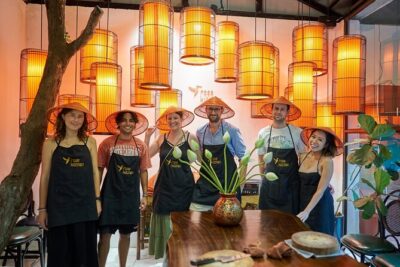
Hanoi Cooking Class: Culture, Local Market & Meaning CSR Impact
Read our review →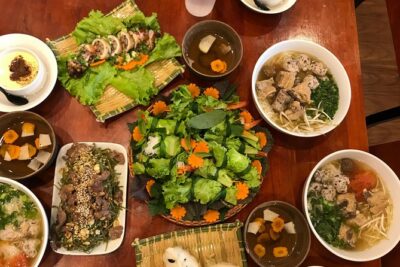
5 Traditional Dishes Hanoi Cooking Class with Market Trip
Read our review →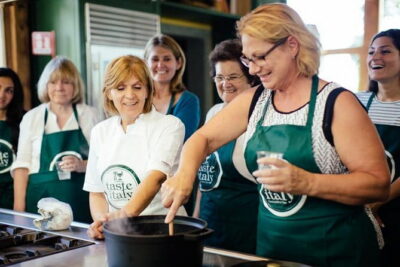
Cooking Class and Lunch at a Tuscan Farmhouse with Local Market Tour from Florence
Read our review →
Cooking Class, Market & Thai Herbs Garden Tour
Read our review →
Authentic Cooking Class with Market & Farm Visit
Read our review →
Paella Cooking Experience & Boqueria Market Tour
Read our review →
Cooking Class Hoi An:Local Market, Basket Boat, Fishing & Cooking
Read our review →