Review · FLORENCE COOKING CLASSES
Florence: Pasta Cooking Class with Unlimited Wine
Making pasta in a 1200s medieval tower near Florence’s Duomo gives this class a setting far more memorable than a plain cooking studio. You’ll work through dough, shaping, and sauces, then sit down to eat three pasta dishes with Tuscan wine.
I especially like the hands-on format and the generous meal. You make ravioli, tortelli, and pappardelle from scratch, while the chef prepares butter and sage, arrabbiata, and Tuscan ragù. The main drawback is that the class can feel lively rather than intimate, and one booking had the wrong meeting venue, adding a ten-minute walk and a rocky start.
Key things to know before booking
- Cook in a medieval tower: The school sits in a historic stone tower near Brunelleschi’s Dome, linked to the family of Dante’s wife.
- Make three pasta shapes: You’ll work on ravioli, tortelli, and pappardelle, with the chef guiding each stage.
- Eat a full dinner: The class includes all the pasta you prepare, three sauces, Tuscan wine, and unlimited soft drinks.
- Expect a social class: The maximum is 15 people, though some sessions may feel larger than expected.
- Chef quality matters: Lorenzo, Antonio, Valentino, Nico, Eduardo, David, Eddie, and others have drawn praise for clear teaching and warm personalities.
- Bring no equipment: Ingredients, tools, and cooking supplies are provided.
Cooking pasta inside Dante’s Florence
The class begins at Via de’ Bardi 23r, in central Florence. The meeting point is near public transportation, and the activity ends where it starts. Check the address carefully before setting out, since one session directed participants to a different venue about ten minutes away.
The setting is part of the appeal. This is not simply a modern room with a few pasta machines. The cooking school occupies a stone medieval tower dating from the 1200s, close to Brunelleschi’s Dome. The tower belonged to the family of Dante Alighieri’s wife, giving the class a genuine connection to Florence’s medieval past.
You won’t spend the whole three hours hearing a history lecture. The historical setting works more quietly. You are rolling dough and shaping pasta in a building that has been part of Florence for centuries, not just visiting another polished food attraction. For many people, that atmosphere gives the meal a stronger sense of place.
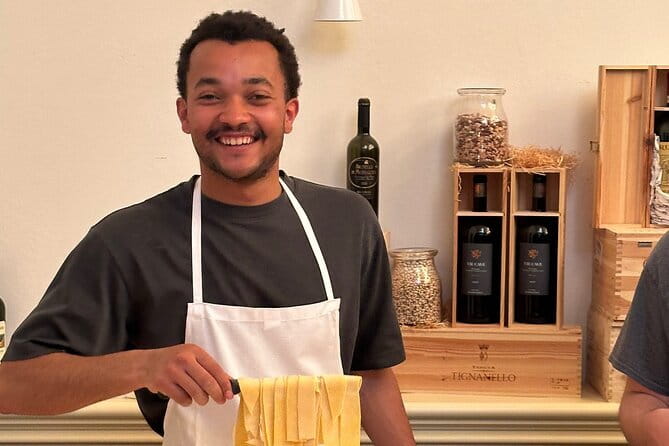
The class is conducted in English. You’ll be shown each task before doing it yourself, and the chefs stay involved throughout the process. Lorenzo is praised for explaining not just what to do, but why certain ingredients work and how Florentine cooking differs from food in other parts of Italy. Antonio, Valentino, Nico, Eduardo, David, Eddie, and other instructors are also named as friendly and capable teachers in different sessions.
Since instructors can vary, the personality of your chef will shape the evening. That is common with cooking classes. One chef may bring more jokes and energy, another may spend more time on technique. The useful point is that the format gives you direct instruction rather than leaving you to copy a demonstration from across the room.
More Cooking Classes with Wine Tasting in Florence
- Florence: Pasta Cooking Class with Unlimited Wine
★ 4.9 · 10,285 reviews - Florence: Pasta & Tiramisu Cooking Class with Unlimited Wine
★ 4.9 · 6,708 reviews - Florence: Cooking Class Pasta & Tiramisu Making Unlimited Wine
★ 5.0 · 2,234 reviews
From flour to three kinds of fresh pasta
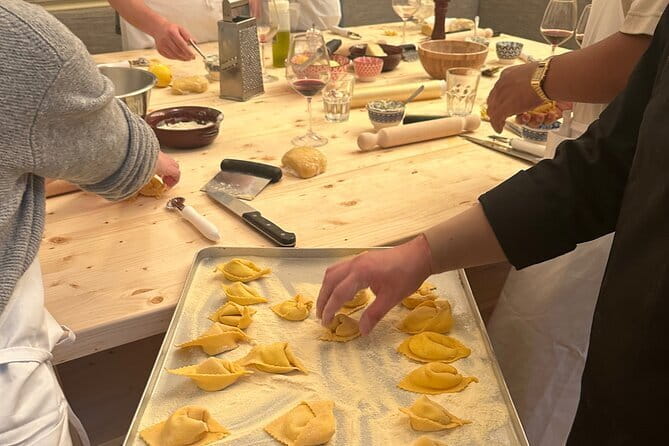
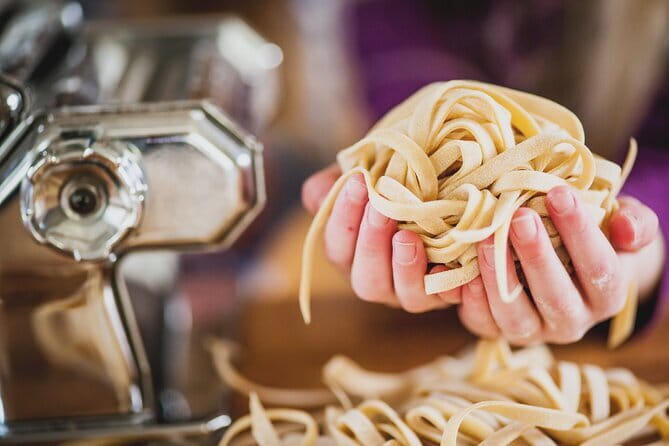
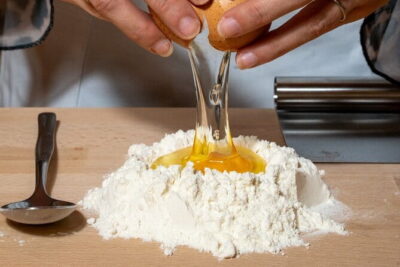
The central task is making pasta from scratch. You begin with the basic ingredients and work the dough through the steps used for traditional fresh pasta. The school describes the method as the kind Italian grandmothers made, and the class focuses on hand preparation rather than simply watching a machine do the work.
You’ll prepare three styles:
- Ravioli
- Tortelli
- Pappardelle
These shapes give you a good introduction to different pasta skills. Ravioli and tortelli require attention to filling, sealing, and cutting. Pappardelle teaches you how to handle and cut broad ribbons of dough. It is a useful spread of techniques for a first class.
The chef demonstrates the process, then you follow along at your own station or work area. The instruction is designed for beginners, and the experience suits older children, couples, families, friends, and solo participants. You do not need prior cooking experience.
I like this balance. You are not asked to master every detail of Italian pasta making in one evening. Instead, you learn enough to understand the basics and feel able to try again at home. Several participants leave with the confidence to recreate the dishes, though the class does not promise a highly technical or advanced course.
One useful expectation to set: the chef prepares the sauces while the class concentrates on pasta. That keeps the three-hour schedule manageable, but it also means you will not personally make every part of the meal. If you want a long lesson on slow-simmered ragù or detailed sauce theory, this class may feel light. If you want a practical introduction with plenty of eating, the division of labor works well.
Three sauces, three different pasta experiences
The sample meal includes tortello with arrabbiata, pappardelle with Tuscan ragù, and ravioli with butter and sage. The sauces give each pasta shape a different character rather than serving the same preparation three times.
Butter and sage is the simplest of the three. Its clean flavor allows the ravioli and its filling to take center stage. One participant did not care for the ricotta filling, so this is worth noting if you are particular about cheese-based pasta. The class can accommodate vegetarians, and vegetarian participants have been able to enjoy all three pasta preparations.
The arrabbiata brings tomato and heat to the tortelli. It is a direct, familiar sauce, but it gives you a chance to see how a filled pasta works with a stronger flavor. The Tuscan ragù is paired with the broad pappardelle, a classic match because the wide ribbons hold a substantial meat sauce.
The meal is not a tasting menu. You eat the pasta you make, and the portions can amount to a full dinner. One participant described having more than enough to eat. Come hungry, especially if you have scheduled the class as your evening meal.
The food is prepared with seasonal vegetables and Italian ingredients, according to the school. The exact filling and seasonal details may vary, so you should think of the sample menu as a guide rather than a guarantee of every dish on your date.
Unlimited Tuscan wine changes the mood

Tuscan wine is included, and the wine is described as unlimited. Soft drinks are also available without limit. This makes the class feel more like a shared dinner than a strict lesson followed by a small sample.
The wine is self-service, so you can help yourself during the cooking and meal. That is a generous inclusion, but it also calls for ordinary good judgment. You still need to knead dough, shape pasta, and follow instructions, so pace yourself rather than treating unlimited wine as a challenge.
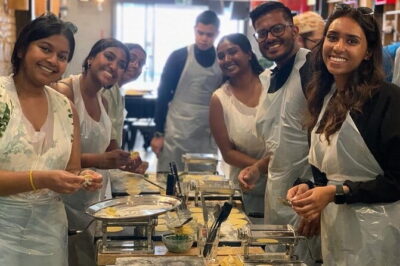
The drinks help people talk. A class can feel awkward during the first few minutes, especially if you arrive alone. Here, the shared work and open wine create easy conversation. You may be paired or grouped with couples, families, friends, and solo participants from different places.
That social side is one of the strongest reasons to book. You’ll likely spend as much time laughing and comparing pasta shapes as you do listening to the chef. If you want a quiet, private cooking lesson, this is not the right format. If you like meeting people while doing something practical, it fits well.
More Cooking Classes with Wine Tasting in Italy
- Florence: Handmade Pasta & Dessert Class with Unlimited Wine
★ 4.8 · 788 reviews - Florence: Premium Pasta Cooking Class with Tiramisu & Wine
★ 4.9 · 456 reviews - Cooking Art Brunelleschi with Unlimited Wine
★ 5.0 · 448 reviews - Florence: Tuscan cooking class with handmade pasta and wine
★ 4.7 · 316 reviews
Group size and the feel of the room
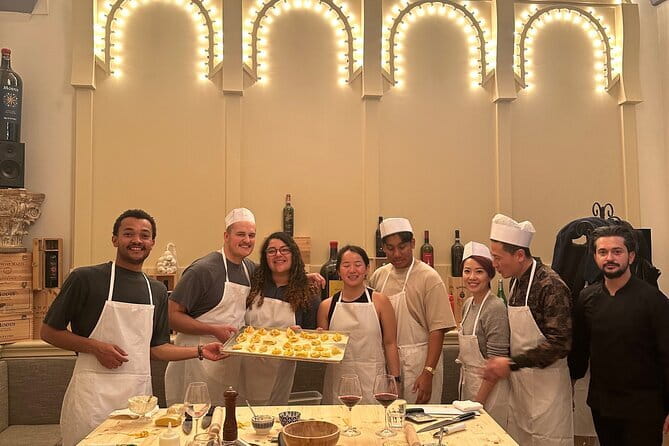
The maximum group size is 15 people. That is small enough for a chef to move around and help, but it is not a private class. Some sessions feel comfortably sized, while others may seem larger than expected.
The difference matters. In a smaller-feeling class, you get more room to ask questions and more personal attention when sealing ravioli or cutting pappardelle. In a fuller session, you may need to watch closely and wait briefly for help. The chef still demonstrates the steps for everyone, but the atmosphere is more communal than tailored.
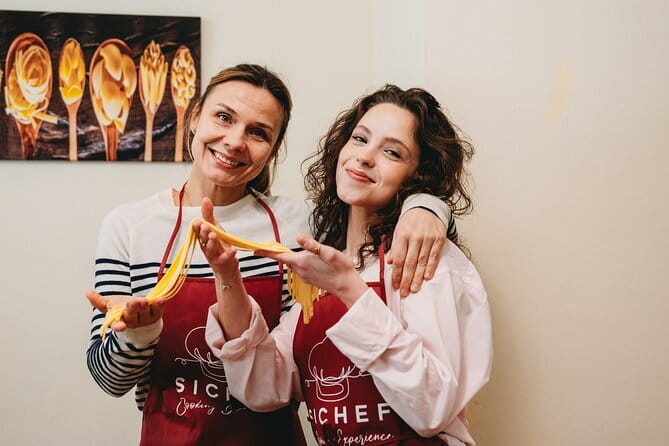
The upside is energy. You are not cooking alone at a counter. Families can work together, couples can compare results, and solo participants have a ready-made group around them. One mother and daughter considered it a highlight of their Florence stop, and it also suits friends who want an evening activity beyond sightseeing.
The class works for a range of ages and skill levels. Children and older family members can take part, though the hands-on dough work may require some patience. You should be comfortable standing and working with food for much of the session, since no special equipment or supplies need to be brought from home.
What the three-hour schedule feels like
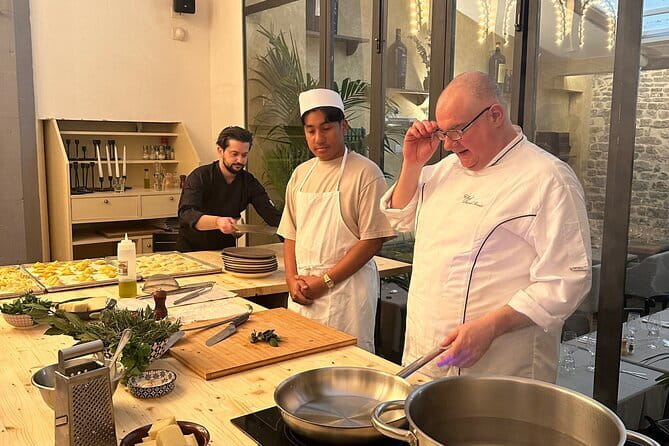
The experience lasts about three hours. That gives enough time for instruction, preparation, cooking, and eating without turning the class into an all-day project.
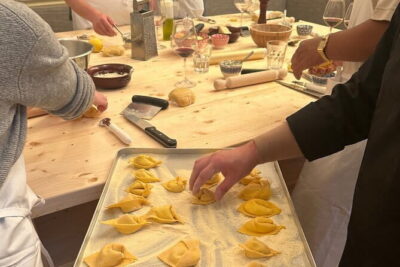
The opening portion focuses on introductions, ingredients, and the pasta dough. The chef demonstrates the technique, then you follow the process yourself. You’ll get a feel for mixing, working, and rolling the dough before moving on to shaping.
The middle portion is the most hands-on. You form the ravioli and tortelli, then work on the broad pappardelle. This is where the class becomes messy in a useful way. Dough can be too dry, too sticky, too thick, or unevenly cut. The chef’s role is to show you how to correct those problems instead of making the pasta for you.
At the same time, the chef prepares the sauces. You may learn how the sauces match the shapes and why broad pappardelle works with Tuscan ragù, while more delicate pasta pairs well with butter and sage. Lorenzo, in particular, is noted for explaining ingredient choices and regional differences.
The final part is dinner. You eat the three preparations together and continue with the wine and soft drinks. This closing meal gives the class a satisfying finish and lets you see the results of the work you just completed.
Do not expect a formal recipe demonstration for every sauce or a long lesson in Italian culinary history. The class gives you a practical pasta foundation, a meal, and a social evening. One participant wished for a more complex course, but also felt the content made sense within the time available.
Value, inclusions, and what you take home
No price is provided here, so I cannot judge the exact cost against other Florence classes. I can judge what the fee covers: a professional chef, ingredients, all equipment, three fresh pasta dishes, lunch or dinner, Tuscan wine, and unlimited soft drinks.
That is strong value if you would otherwise pay separately for a Florence meal and an activity. You are not just watching food being made, and you are not receiving a tiny tasting portion. You take part in preparing the meal and then eat it.
The practical value continues after the class. Once you understand the dough and shaping process, you can try making pasta at home without special Italian equipment. The class does not require you to bring tools, and several participants say they left ready to repeat the dishes.
One small weakness is that a printed recipe handout is not guaranteed. A participant tried to use a photo code for the recipes and found that it did not work. You may be able to download recipes online, but if you want the chef’s personal tips on paper, ask during the class and take your own notes.
Who should book this Florence pasta class
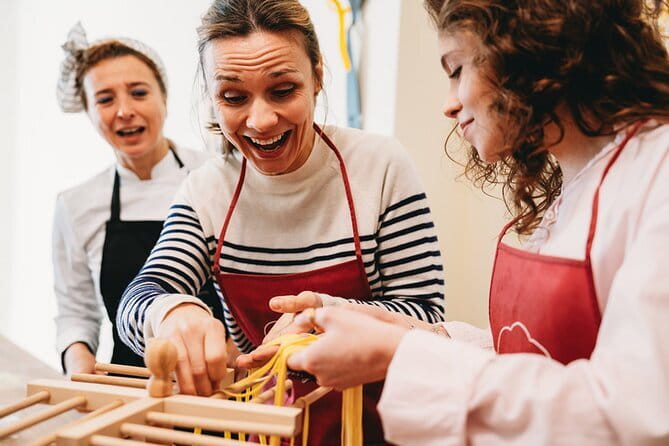
I would choose this experience for you if you want an active evening in Florence rather than another guided walk. It suits:
- First-time pasta makers
- Couples looking for a shared activity
- Families with older children
- Solo visitors who enjoy meeting people
- Vegetarians, since the class can accommodate vegetarian meals
- Food lovers who want to eat a full dinner after cooking
It is less suited to you if you want a private lesson, a highly advanced cooking course, or a quiet meal. The group can be social and fairly lively, and the chef handles the sauces while you focus mainly on the pasta.
Arrive with the meeting address confirmed. The stated start is Via de’ Bardi 23r, but one session involved a venue mix-up and a ten-minute walk between locations. That is not a reason to avoid the class, but it is a good reason to check the details before leaving your hotel.
Free cancellation is available until 24 hours before the start time. Inside that window, the cost is not refunded and changes are not accepted. The activity is offered in English, confirmation is provided at booking, and it ends at the meeting point.
Should you book it?
Yes, if you want a friendly, hands-on Florence activity with a real meal at the end. The medieval tower, three pasta shapes, unlimited Tuscan wine, and strong instructors such as Lorenzo, Antonio, Valentino, and Nico give the class plenty of substance for a three-hour outing.
Book with realistic expectations. This is not a private chef lesson, and it is not an advanced course in every part of Italian cooking. It is a social pasta workshop where you learn useful basics, eat generously, and leave with techniques you can try at home. For most first-time pasta makers, that is a very good way to spend an evening in Florence.
FAQ
Where does the pasta class begin?
The stated meeting point is Via de’ Bardi, 23 r, 50100 Firenze FI, Italy. The activity ends back at the meeting point.
How long does the experience last?
The class lasts approximately three hours.
Is the class offered in English?
Yes. The experience is offered in English.
What types of pasta will I make?
You will prepare three types of fresh pasta, such as ravioli, tortelli, and pappardelle.
What sauces are included?
The sample menu includes butter and sage, arrabbiata, and old-fashioned Tuscan ragù. The sample dishes are tortello with arrabbiata, pappardelle with Tuscan ragù, and ravioli with butter and sage.
Is wine included?
Yes. Tuscan wine is included and described as unlimited. Unlimited soft drinks are also included.
Do I need to bring cooking equipment?
No. All ingredients and cooking equipment for the class are provided.
What is the cancellation policy?
You can cancel for a full refund up to 24 hours before the experience start time. Cancellations or changes made less than 24 hours before the start time are not accepted and are not refunded.
More Pasta Making Classes in Florence
- Pastamania – Florence Pasta Making Class
★ 5.0 · 3,050 reviews - Florence: Premium Pasta and Gelato Cooking Class
★ 4.9 · 877 reviews - Pasta Cooking Class: Mastering Nonna’s Recipes
★ 5.0 · 554 reviews - Pasta and Tiramisu Cooking Class with optional Local Market Tour
★ 5.0 · 515 reviews
Newest classes around Florence
- Florence: Art of Pasta Cooking Workshop with Food and Wine★ 5.0 · 69 reviews
- Pasta Cooking Experience in Florence★ 4.8 · 139 reviews
- MasterSteak: Tuscan Steak Cooking Class with Unlimited Wine★ 5.0 · 2 reviews
- Florence: Market Visit and Cooking Class★ 4.4 · 16 reviews
- From Livorno: Authentic italian Pasta Cooking Class★ 5.0 · 3 reviews
- Florence:Dolce Vita by Day Market Tour & Pasta Making Class★ 5.0 · 2 reviews
- Florence: Traditional Pizza and Gelato Cooking Class + Wine★ 5.0 · 2 reviews
- Florence Cooking Class: Ravioli & Pasta & Wine + Gift Apron★ 5.0 · 5 reviews
Florence Cooking Classes, compared.
Pasta & Tiramisu Cooking Class with Unlimited Wine
Read our review →
Cooking Class and Lunch at a Tuscan Farmhouse with Local Market Tour from Florence
Read our review →
Cooking Class Pasta & Tiramisu Making Unlimited Wine
Read our review →
Florence Cooking Class The Art of Making Gelato & Authentic Pizza
Read our review →
Small Group Cooking Class & Market Food Tour in Florence
Read our review →