
Review · CHIANG MAI COOKING CLASSES
Morning Cooking Class in Traditional Pavilion with Beautiful Garden – Chiang Mai
The best part of this Chiang Mai morning is the change of pace. You begin at a local market, then leave the city for an organic farm with Thai-style pavilions and a garden. Along the way, you learn what the ingredients are, where they come from, and how they become lunch.
I like the small group limit of eight, which gives each person an individual cooking station. I also like the hands-on farm stop, where you can gather herbs, harvest mushrooms, and collect chicken eggs instead of simply watching a chef work. The main caution is pickup: one booking had a missed transfer and a one-hour wait, although the school arranged and paid for a taxi afterward.
Key points at a glance
- Market first: Learn how to identify and select common Thai ingredients before cooking.
- Farm activities: Gather fresh ingredients, harvest mushrooms, collect eggs, and see Thai herbs and vegetables growing.
- Three dishes: Prepare a soup, stir-fry, and curry, with dessert served afterward.
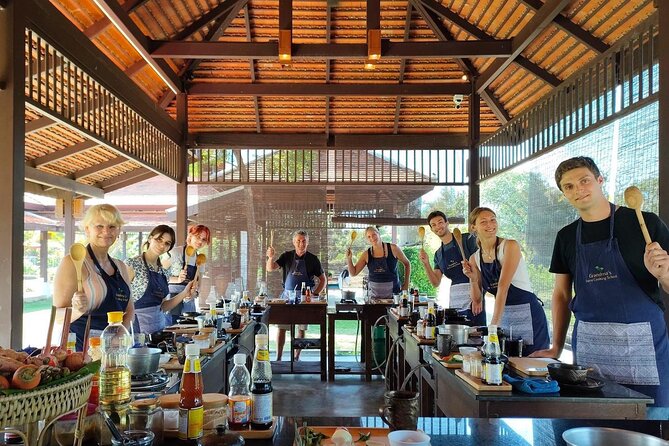
- Small class: The maximum is eight people, and everyone gets an individual cooking station.
- Morning timing: Meet at Tha Phae Gate at 9 a.m. for a class lasting about four hours.
- Flexible menu: Dishes can change with the season and ingredient supply.
From Tha Phae Gate to a Chiang Mai farm kitchen
This is a four-hour morning outing that links three parts of Thai food culture: the market, the farm, and the cooking table. You meet at Tha Phae Gate on Tha Phae Road at 9 a.m., with pickup offered as part of the arrangement.
The exact transport details deserve attention when you book. The published meeting point is Tha Phae Gate, and the activity returns there at the end. If you are relying on pickup rather than meeting at the gate, confirm the arrangement in advance. A missed pickup has happened, and the delay lasted about an hour before the cooking school arranged a taxi.
That issue appears to be an exception rather than the main character of the experience, but it matters. A cooking class is easiest to enjoy when you are not wondering if the vehicle will arrive. Keep the meeting point and local contact details handy, especially if your morning schedule is tight.
Once the outing gets moving, the plan is simple and appealing. You visit a local market, continue to the organic farm, take part in a short farm session, and then cook in a traditional pavilion. The experience ends back at the meeting point.
More Morning Classes in Chiang Mai:
- Cooking Morning Class Chiang Mai Visit Organic Garden and Market
★ 5.0 · 211 reviews - Morning Cooking Class in Organic Farm with Local Market Tour
★ 5.0 · 157 reviews - Morning Thai Cooking with Grandma – Market Visit & Farm Tour
★ 5.0 · 148 reviews
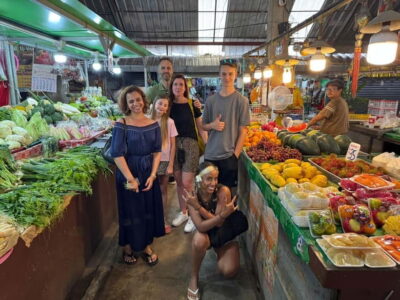
Learning Thai ingredients at the local market
The market visit gives the class a useful beginning. Instead of meeting a pile of unfamiliar herbs and vegetables at the cooking table, you get an introduction to the ingredients first. The instructor explains basic Thai cooking items and shows you how to select them.
That lesson is more useful than it may sound. Thai recipes often depend on a balance of hot, sour, salty, sweet, and creamy flavors. The freshness and type of an ingredient can affect the final dish, so learning what to look for helps you cook with more confidence later.
You should expect this to be an orientation rather than a long market tour. The available information does not promise extensive shopping time or a list of specific vendors. Its purpose is to prepare you for the farm and the kitchen.
The market also gives you a little local context. You see Thai food as a daily habit, not just a set of recipes prepared for tourists. For anyone who plans to visit Thai markets during the rest of a Chiang Mai stay, this short introduction can help you recognize ingredients on your own.
Gathering ingredients on the organic farm
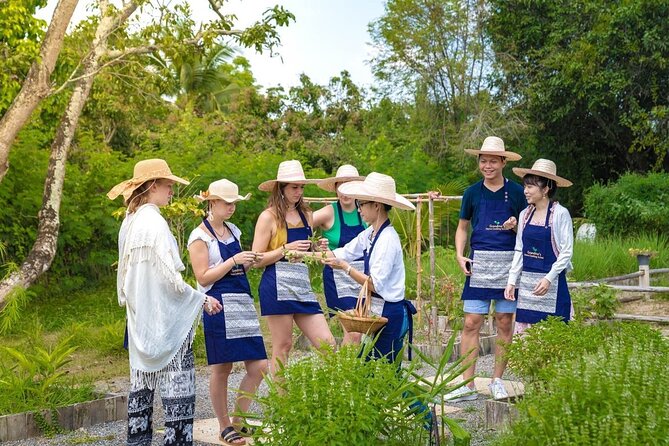
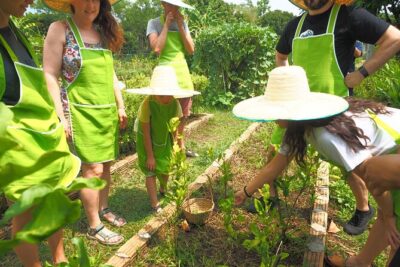
After the market, you go to an organic farm. This is where the experience becomes more hands-on. You learn about Thai herbs and vegetables, pick some fresh ingredients, harvest mushrooms, and collect chicken eggs.
I like this part because it connects the recipe to the source. A cooking demonstration can teach technique, but handling the ingredients before they reach the stove gives the meal more meaning. You get a clearer sense of how much Thai cooking depends on fresh produce, herbs, and careful seasoning.
The farm is described as peaceful, clean, and attractive, with cooking pavilions set in a garden. That setting should appeal to anyone who wants a break from Chiang Mai’s traffic and busy streets. It also gives the morning a rural feel without requiring a full day in the countryside.
Keep your expectations practical. This is a cooking class with farm activities, not a dedicated agriculture tour. The farm portion is designed to introduce ingredients and provide a few simple tasks. You will not be spending the entire morning on farm work.
The mushroom harvest and egg collection are useful touches for families and first-time visitors. They make the visit more active, though young children would still need to follow the class rules and any instructions from the staff. The supplied information does not give a minimum age or specific child policy, so check those details before booking for a child.
Cooking three Thai dishes at your own station
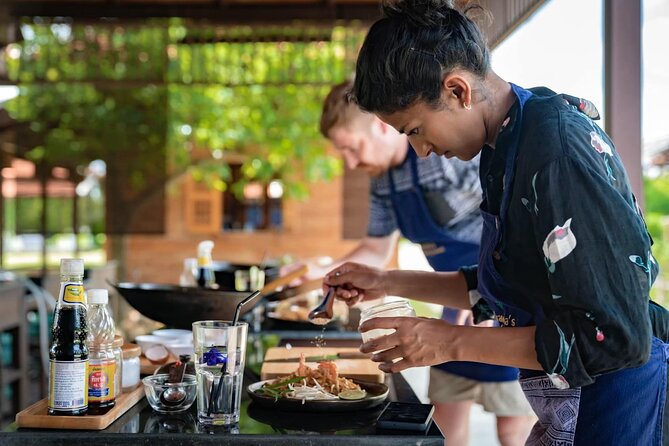
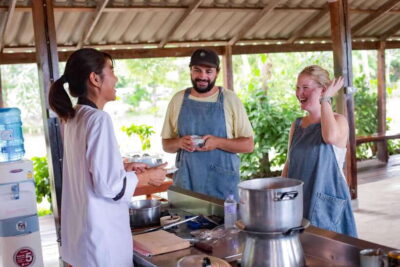
The cooking session is the heart of the morning. The instructor demonstrates the techniques step by step, then you prepare your own selected dishes at an individual cooking station.
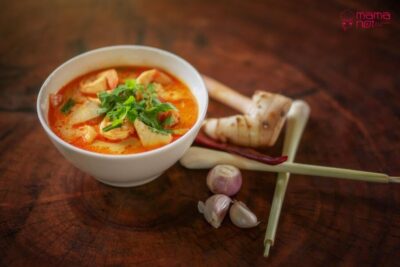
The menu is built around three main categories: soup, stir-fry, and curry. Choices can include Tom Yam, Tom Kha, Pad Thai, green curry, or red curry. One dessert, mango sticky rice, is served rather than prepared by you.
The wording around the menu allows for some choice, but it is not perfectly simple. The activity information says you cook three dishes from the listed soup, stir-fry, and curry choices, while also describing five categories that include appetizer and dessert. The clearest expectation is that you prepare one soup, one stir-fry, and one curry, then receive mango sticky rice as dessert.
The menu can change with the season and the availability of ingredients. That is normal for a farm-based class, but it means you should not book expecting one exact recipe. If Tom Yam or Pad Thai is the main reason you want to attend, ask about the current menu before the cooking date.
The class may include:
- Tom Yam, a hot and sour soup
- Tom Kha, a coconut-based soup
- Pad Thai, stir-fried rice noodles
- Green curry
- Red curry
- Mango sticky rice served as dessert
The value of the cooking format is the chance to repeat the steps yourself. You are not simply watching an instructor chop, stir, and plate the food. You get to work through the recipe with guidance close by.
The small class size helps here. With no more than eight participants, the instructor has a better chance of seeing what each person is doing. That does not guarantee private instruction, but it is a much more personal setup than a large demonstration class.
More Cooking Classes in Chiang Mai:
- Half-Day Thai Cooking Class at Organic Farm in Chiang Mai
★ 5.0 · 19,087 reviews - Chiang Mai: Cooking Class, Market & Thai Herbs Garden Tour
★ 4.9 · 4,824 reviews - Chiang Mai: Authentic Cooking Class with Market & Farm Visit
★ 4.9 · 4,546 reviews - Thai and Akha Cooking Class in Chiang Mai
★ 5.0 · 4,358 reviews
Why the pavilion setting matters
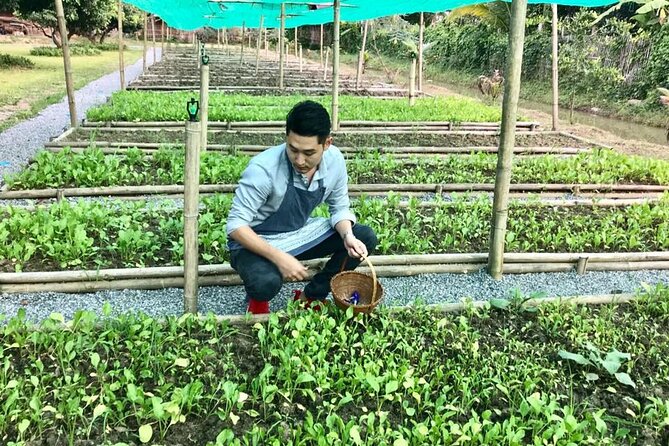
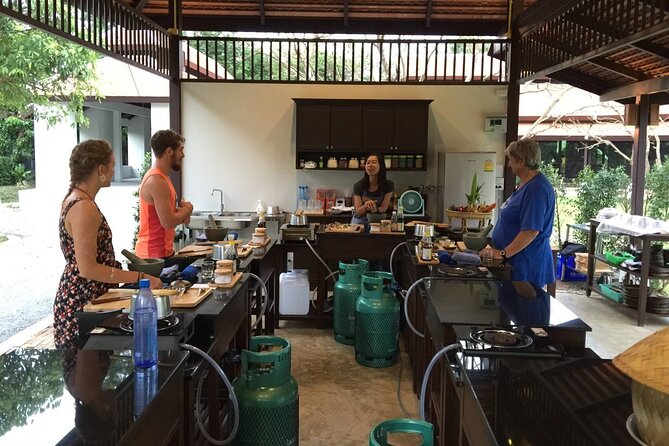
The cooking takes place in traditional Thai-style pavilions surrounded by a garden. The setting is part of the experience, not just a background for photographs.
A pavilion keeps the class connected to the outdoors while giving everyone a defined place to work. The garden setting should make the morning feel calm and separate from the city. One visitor described the farm as clean and attractive, and that fits the practical appeal here: you get a pleasant place to cook without giving up the structure of a proper class.
I would choose this outing over a purely indoor cooking lesson if you want a little more variety. The market and farm give the morning a sense of movement. You learn, gather, cook, and eat rather than staying at one counter for four straight hours.
Still, the garden setting may also mean less control over weather conditions. The activity requires good weather, and poor weather can lead to a different date or a full refund. Chiang Mai mornings can be pleasant, but conditions are not guaranteed, so keep that cancellation possibility in mind if you are building a tightly packed itinerary.
Food choices, teaching style, and the final meal
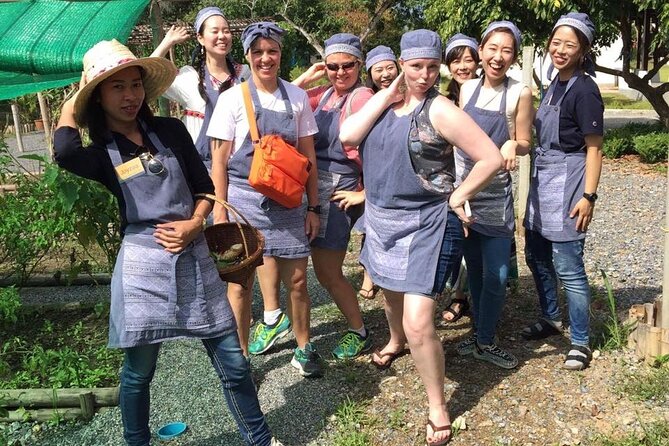
The cooking method is designed for beginners. First, the instructor demonstrates each dish. Then you follow the same steps at your station.
That structure suits people who want practical skills without needing previous cooking experience. You can watch the order of preparation, then try it yourself while the process is still fresh. The class also lets you focus on familiar favorites or choose dishes that are new to you.
The range of food covers several important parts of Thai cooking. Tom Yam shows how sour and spicy flavors work together. Tom Kha adds coconut and a softer texture. Pad Thai introduces noodles and stir-frying, while the curries show how herbs and spice pastes build a sauce.
Mango sticky rice is served as dessert. Since it is not one of the dishes you prepare, the class remains focused on the three savory recipes. That is worth knowing if you want a full dessert lesson. You receive dessert, but you should not expect to make it from start to finish.
The class has one listed refreshment as well. The supplied details do not specify the drink, so do not count on a particular beverage when planning your morning.
Is $50.50 a fair price?
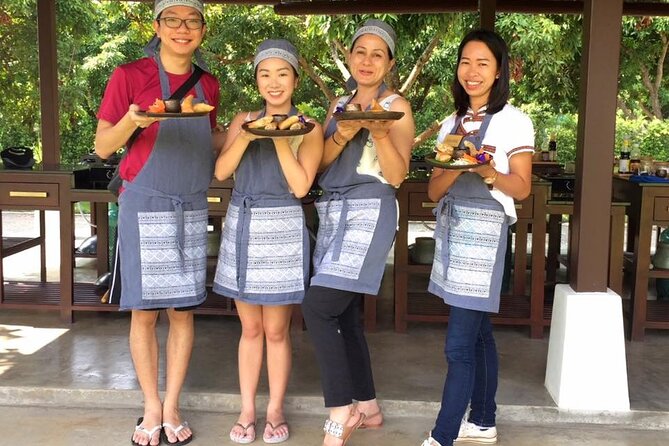
At $50.50 per person, this is not the cheapest way to eat Thai food in Chiang Mai. It can still be fair value if you want several parts in one morning: market guidance, farm activities, transport arrangements, instruction, ingredients, three cooked dishes, and dessert.
The individual cooking station is important to the value. You are paying for participation, not only a meal. The class also keeps the group to eight people, which gives the experience a more personal scale.
The price makes less sense if your only goal is to eat Pad Thai or curry. Chiang Mai has many inexpensive restaurants, and a restaurant meal will cost much less. This outing earns its price through the activity, setting, and instruction.
I would also compare the price with your transport plans. Pickup is offered, but the meeting point is Tha Phae Gate and the activity ends there. Confirm exactly what is included for your booking so you are not surprised by a transfer issue or extra taxi cost.
Who will enjoy this morning most?
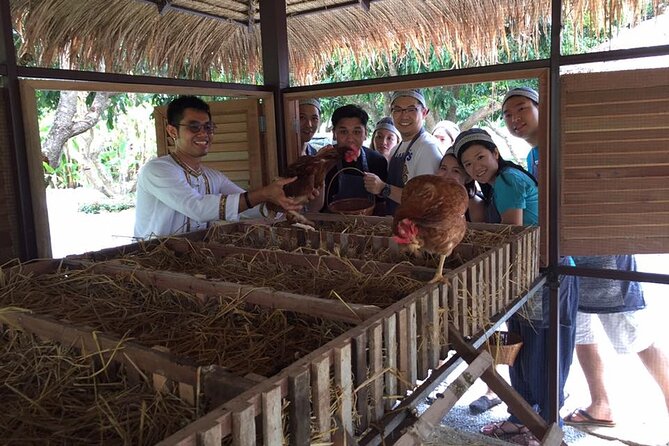
I would recommend this class to first-time visitors who want an easy introduction to Thai food. The market explanation gives you basic context, and the farm visit adds something beyond a standard kitchen lesson.
It also suits couples, families, and small groups who prefer a relaxed half-day activity. The farm work is simple enough to add variety without turning the outing into a demanding physical tour.
Food lovers who enjoy learning by doing will get the most from it. You can ask questions, watch a demonstration, and then put the method into practice. If you like to recreate meals at home, pay close attention to the instructor’s order of preparation and seasoning.
This may not be right for someone who wants a highly polished restaurant-style lesson, a private chef, or a guaranteed fixed menu. The group is small, but it is not private. The recipes can change with the season, and the dessert is served rather than cooked.
Timing, cancellation, and useful planning advice
The class starts at 9 a.m. and lasts about four hours. That leaves much of the afternoon free for temples, museums, a massage, or a long lunch in Chiang Mai.
Arrive ready for a morning that mixes walking, farm activity, and kitchen work. The supplied details do not state a dress code or equipment list, so follow the provider’s instructions after booking. The meeting point is near public transportation, which gives you another option if pickup is not suitable.
Free cancellation is available if you cancel at least 24 hours before the start time. Changes or cancellations inside that window are not accepted for a refund. The cutoff uses local time.
The class also requires a minimum number of participants. If that minimum is not met, you should be offered another date or activity, or receive a full refund. Poor weather can lead to the same choices.
Should you book the traditional pavilion cooking class?
Book it if you want more than a recipe lesson. The combination of a local market, organic farm, mushroom harvest, egg collection, and individual cooking station gives the morning a good range of experiences. The farm setting and small group are the strongest reasons to choose it.
I would skip it if you need a guaranteed dish list, a private class, or completely dependable pickup without confirming the details first. The missed transfer is the main practical warning, and the seasonal menu may not match your first choice.
For most visitors, $50.50 is reasonable when you value the full morning rather than the food alone. Confirm pickup, ask about the current menu, and leave room in your schedule for the four-hour program. If you do that, this is a pleasant and useful way to learn Thai cooking away from the city center.
FAQ
Where does the cooking class start?
The stated meeting point is Tha Phae Gate on Tha Phae Road in Chiang Mai.
What time does the experience begin?
The class begins at 9 a.m.
How long does the activity last?
It lasts approximately four hours.
Where does the activity finish?
The activity ends back at the meeting point.
How many people can join the class?
The maximum group size is eight participants.
What dishes can I cook?
The choices can include Tom Yam, Tom Kha, Pad Thai, green curry, and red curry. The stated format is to cook three dishes, including a soup, stir-fry, and curry.
Is dessert included?
Yes. Mango sticky rice is served as dessert.
Can I cancel for a full refund?
Yes, if you cancel at least 24 hours before the local start time. Cancellations or changes made less than 24 hours before the start time are not refundable.
Newest classes around Chiang Mai
- Aroidee’s Farm-Fresh Thai Cooking Experience★ 5.0 · 8 reviews
- Authentic Thai Cooking Class and Farm Visit in Chiang Mai★ 5.0 · 66 reviews
- Signature Thai Cooking Course★ 5.0 · 79 reviews
- Half Day Guided Thai Cooking Class in Chiang Mai★ 5.0 · 13 reviews
- Yummy Tasty Thai Cooking School in Chiang Mai★ 5.0 · 2 reviews
- Online Thai and Akha Cooking Class★ 5.0 · 70 reviews
- Northern Thai Cooking Class in Chiang Mai in a Countryside Home★ 5.0 · 2 reviews
- Private Half-Day Thai Cooking Class in Chiang Mai★ 5.0 · 4 reviews
Chiang Mai Cooking Classes, compared.
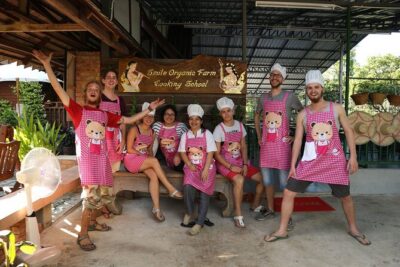
Half-Day Thai Cooking Class at Organic Farm in Chiang Mai
Read our review →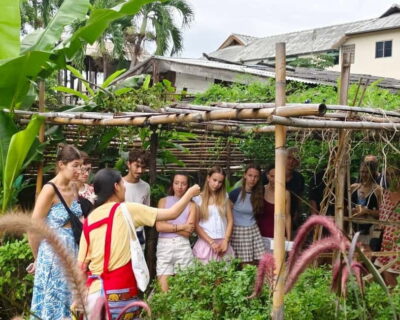
Cooking Class, Market & Thai Herbs Garden Tour
Read our review →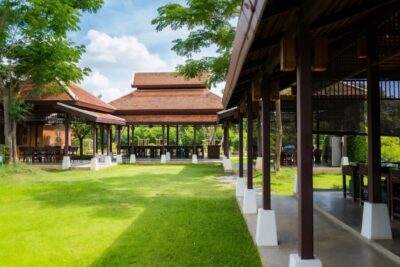
Authentic Cooking Class with Market & Farm Visit
Read our review →
Browse the lists this tour appears in