
Review · CHIANG MAI COOKING CLASSES
Morning Thai cooking class
The best part of this Chiang Mai morning class is that you do not simply watch someone cook. You choose five dishes, shop for their ingredients at Kad Kom Market, then prepare everything yourself, including curry paste from scratch. That gives you a useful taste of everyday Thai cooking rather than a quick demonstration.
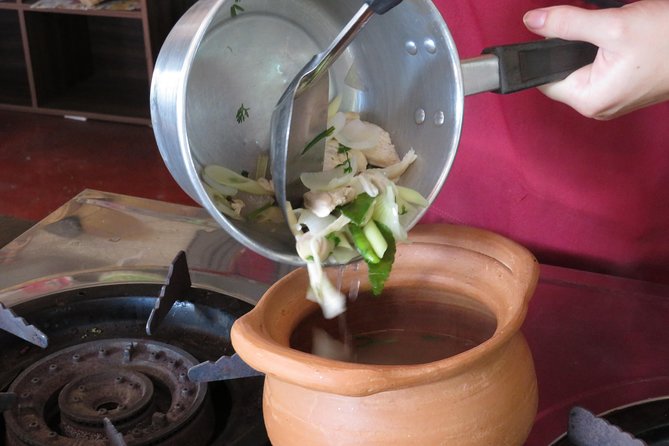
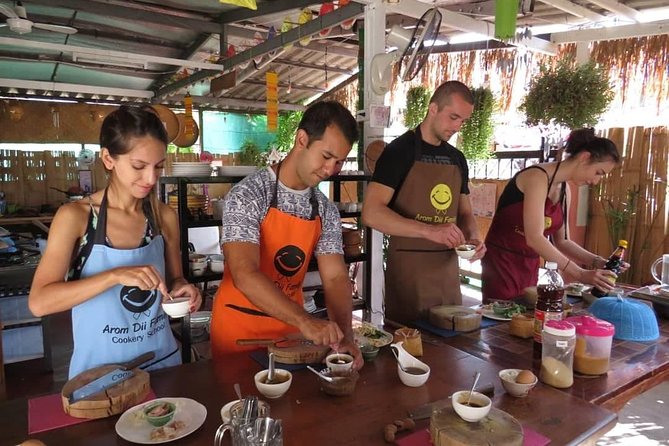
I like the small maximum of eight people, since it leaves room for personal help at the stove. I also like the broad menu: Pad Thai, Khao Soi, Tom Yum, green curry, mango sticky rice, and several other choices let you build a meal around your own tastes. The main consideration is heat. The kitchen and eating room have fans but no air-conditioning, which matters most from March through June.
Key points to know before booking
- Five dishes from five menu groups: Choose one stir-fried dish, appetizer, soup, curry, and dessert.
- Market shopping comes first: Spend about 15 to 20 minutes learning about Thai herbs, spices, vegetables, and the ingredients you will use.
- Curry paste is made from scratch: The curry course is more hands-on than simply opening a prepared packet.
- A true small-group format: The class accepts no more than eight participants, with no space reserved for nonparticipating visitors.
- Convenient nearby transport: Pickup and return transport are included for locations within 3 kilometers of the school.
- Fan-cooled cooking: There is no air-conditioning in either the kitchen or dining room, so dress for warmth.
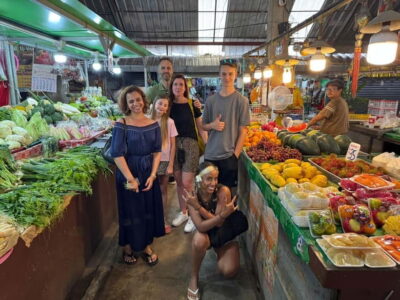
Starting at Kad Kom Market at 9 a.m.
Your morning begins at Kad Kom Market, at the listed meeting point in Chang Khlan. The class starts at 9 a.m., so plan to arrive ready to walk through the market before the cooking begins. Pickup is offered for nearby locations within 3 kilometers, but the meeting point is also near public transportation.
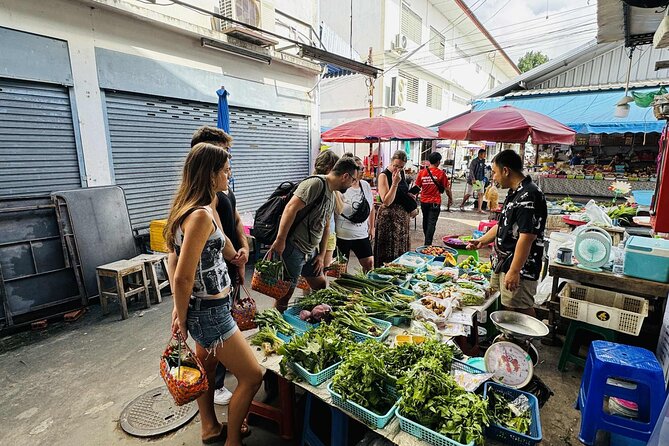
The market portion lasts about 15 to 20 minutes. It is short, but it serves a clear purpose. Before you handle a knife or turn on a burner, you select your dishes and gather the produce needed for them. This helps connect the finished food with the ingredients you see in their fresh form.
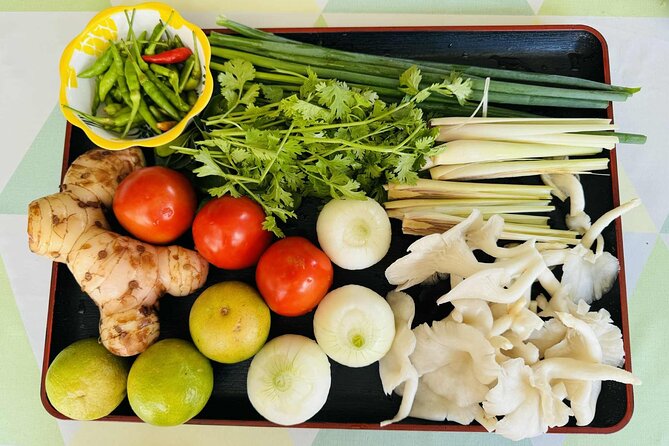
You will be shown Thai vegetables, herbs, and spices as you walk. There is time to take photographs, and you can buy some spices to take home. I would treat this as an introduction rather than a full market tour. The focus is on the class menu, not on spending an hour examining every stall.
That focused approach is useful. Instead of collecting random ingredients, you see the items that will become your own lunch. If you choose curry, you can pay closer attention to the aromatics and spices involved. If you choose papaya salad or spring rolls, you can see the produce before it reaches the worktable.
More Thai Classes in Chiang Mai:
- Half-Day Thai Cooking Class at Organic Farm in Chiang Mai
★ 5.0 · 19,087 reviews - Chiang Mai: Cooking Class, Market & Thai Herbs Garden Tour
★ 4.9 · 4,824 reviews - Thai and Akha Cooking Class in Chiang Mai
★ 5.0 · 4,358 reviews
Choosing five dishes from two Thai regions
The menu is divided into five courses: stir-fried food, an appetizer, soup, curry, and dessert. You select one dish from each group before class starts. This gives you plenty of control, but it also means you should think about balance.
For stir-fried food, your choices are:
- Pad Thai
- Fried drunken noodles
- Pad See Ew
- Fried cashew nut
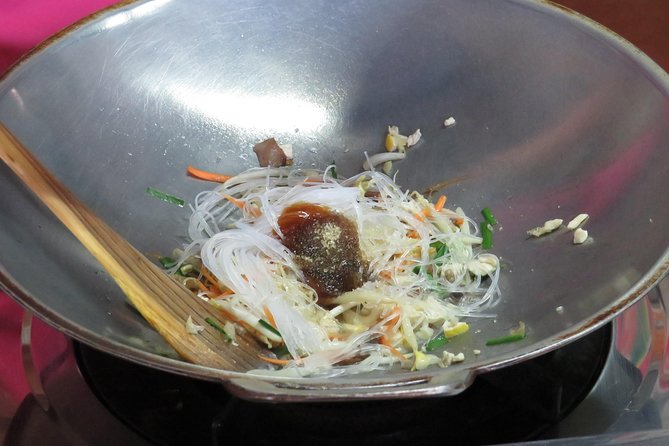
Pad Thai is the familiar choice, while drunken noodles and Pad See Ew give you different noodle styles to work with. Fried cashew nut is the option for someone who wants a dish built around a savory stir-fry rather than noodles.
The appetizer list includes papaya salad, fresh spring rolls, fried spring rolls, and mixed fruit salad. Papaya salad brings a sharper, fresher style to the meal. Fresh spring rolls keep the cooking lighter, while fried spring rolls add another hot dish. Mixed fruit salad is the simplest choice if you want less preparation in this part of the class.
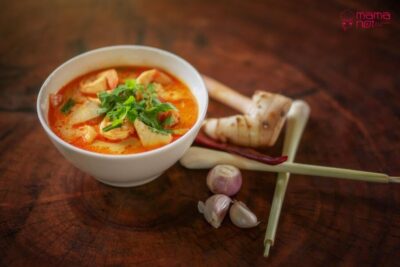
For soup, you can choose hot and sour prawns in a thick soup, coconut chicken, Tom Yum chicken, or hot and sour prawns in a clear soup. This is a useful chance to compare styles. The two prawn soups differ in texture, while coconut chicken offers a creamier profile. Tom Yum chicken provides a classic hot and sour direction without prawns.
The curry choices are especially appealing in Chiang Mai. You can make Khao Soi, the local noodle dish, or choose green curry, Massaman curry, or red curry. Since the class includes making the curry paste from scratch, this is likely the most instructive section for anyone hoping to repeat the dish at home.
Dessert choices are mango sticky rice or pumpkin in coconut milk. Mango sticky rice is the obvious Chiang Mai favorite, but pumpkin in coconut milk gives you a less familiar Thai dessert to try. Choosing one of each category means you finish with a full meal rather than a single signature dish.
The menu also accommodates vegetarian and vegan choices. The supplied options do not spell out which substitutions are made for each dish, so you should make your dietary needs clear when choosing your menu.
Cooking five dishes in about four and a half hours
The cooking school portion lasts approximately four and a half hours. The class begins with the stir-fried course, then moves to soup and appetizer, followed by dessert and curry. That order lets you get comfortable with basic preparation before taking on the curry paste.
A five-dish class is a serious amount of food and work for one morning. You will not be making only a small sample. The value comes from learning several techniques in one sitting: stir-frying, preparing fresh salad or rolls, building soup, mixing dessert, and grinding or combining ingredients for curry paste.
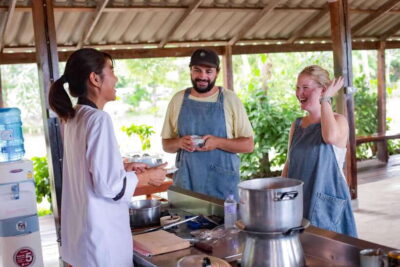
The small class size matters here. With no more than eight participants, the instructor has a better chance of giving you individual comments as you work. A French-language review described a group of eight as a good size for personal guidance and a friendly atmosphere. That is a useful limit: large enough for a social class, but not so large that you disappear at the back of the room.
The class is not presented as a restaurant meal with a little cooking added. You pick the ingredients, prepare the food, and eat what you make. That makes the pace more active. If you prefer to sit back and watch, this may feel like too much work. If you want to leave with methods you can use again, the format is a good fit.
Making curry paste from scratch
The curry course is the strongest reason to choose this class over a basic Pad Thai lesson. You do not simply spoon a ready-made paste into a pan. You make the curry paste from scratch, then use it in your chosen curry.
That step helps explain why Thai curry tastes layered rather than merely hot. You work with the herbs and spices introduced at the market, then see how they become part of a finished dish. The class offers Khao Soi, green curry, Massaman curry, and red curry, so the regional connection is built into the menu.
Khao Soi is the most location-specific option. It is associated with Chiang Mai and gives you a chance to make the city’s well-known curry noodle dish during your stay. Green, Massaman, and red curry are useful choices if you want recipes that are familiar across Thailand and easier to compare with dishes you may order elsewhere.
The information supplied describes the class as covering dishes from two different regions of Thailand. The menu itself gives you the clearest sense of that range, with local Khao Soi alongside other Thai standards. If you want a strictly northern Thai menu, check the available choices on your booking date.
More Morning Classes in Chiang Mai:
- Cooking Morning Class Chiang Mai Visit Organic Garden and Market
★ 5.0 · 211 reviews - Morning Cooking Class in Organic Farm with Local Market Tour
★ 5.0 · 157 reviews - Morning Thai Cooking with Grandma – Market Visit & Farm Tour
★ 5.0 · 148 reviews - Half Day Morning Cooking Class with Market Tour in Chiang Mai
★ 5.0 · 84 reviews
Heat, clothing, and the no-air-conditioning setup
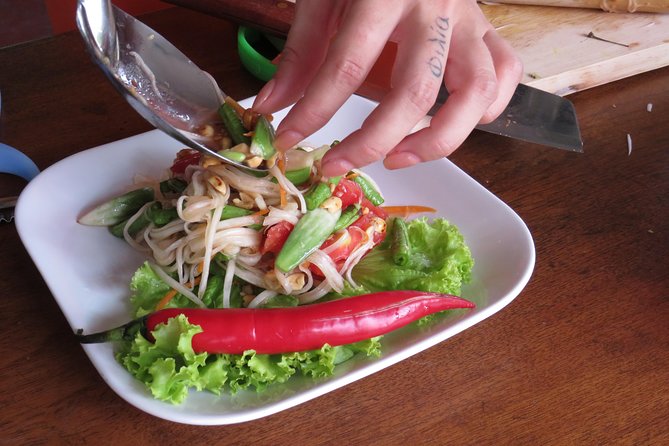
The school clearly warns that the kitchen and eating room have fans only. There is no air-conditioning. That is not a minor detail in Chiang Mai, especially during the summer period from March through June.
The rainy season is listed as July through October, and winter as November through February. Temperatures and comfort can vary by season, but the practical advice is simple: wear light clothing and expect to be warm around the cooking area. Bring water, though bottled water is included.
The lack of air-conditioning may actually suit some people who prefer an open, simple cooking-school setting. Still, it can affect your enjoyment if you dislike heat or plan to spend the rest of the day in formal clothes. Choose breathable clothing and shoes that are comfortable for market walking and kitchen work.
The school provides seasonal fruit as well as bottled water. The recipes are available for download from the school website, which makes the class more useful after you leave Chiang Mai. You can try to recreate one or two dishes at home instead of letting the recipes disappear into a phone gallery.
What the $27.70 price really gives you
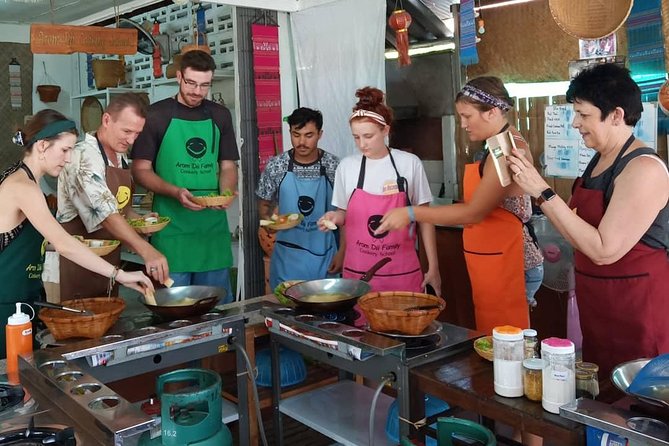
At $27.70 per person, this is inexpensive for a four-and-a-half-hour food experience that includes a market visit, five dishes, ingredients, bottled water, seasonal fruit, and recipes. The strongest value is the amount of cooking time. You are not paying only for a meal or a short lesson.
The price also includes transport for nearby locations within 3 kilometers. That is helpful if you are staying close to the school, but it is not a citywide pickup service. If you are farther away, you need to reach the meeting point at Kad Kom Market yourself.
The value depends on your appetite for hands-on work. Five dishes sound generous, but they also require a long morning and sustained attention. If you want one quick class focused on a single dish, this is more than you need. If you want a broad introduction to Thai home cooking, the price is strong.
A maximum of eight participants adds to the value. Small groups usually make it easier to ask questions and get corrections while chopping or cooking. The available feedback describes the group atmosphere as friendly and personal, which matches the practical advantage of keeping the class this size.
Who will enjoy this Chiang Mai cooking class
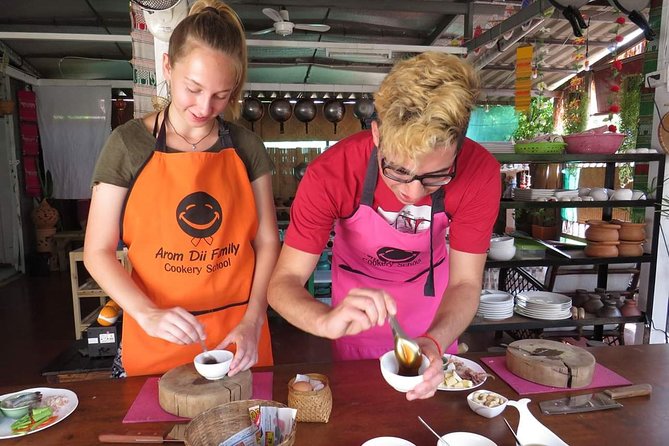
I would recommend this class to you if you want to understand Thai food through its ingredients and preparation. It suits curious eaters, home cooks, couples, families with an interest in food, and anyone who prefers an active morning to a sightseeing bus.
It is also a smart choice if you want to make Khao Soi during your Chiang Mai visit. The curry-paste lesson adds a local touch that a generic Thai cooking class may not offer.
Vegetarian and vegan participants have menu choices, though you should confirm your needs before the class begins. The large menu makes it easier to avoid unwanted ingredients, but the available information does not promise separate kitchen equipment or specific substitutions.
You may want to skip it if you need air-conditioning, dislike group cooking, or have limited time in the morning. The class runs about four and a half hours and ends back at the meeting point, so it occupies most of your morning and early afternoon.
You should also note that only registered participants are accommodated. The school reserves space for the people taking the class, not for friends or family who want to watch.
Booking, pickup, and cancellation details
Confirmation is provided when you book. The experience is booked an average of 21 days ahead, so reserve early if your Chiang Mai dates are fixed, particularly if you want a certain morning.
Free cancellation is available if you cancel at least 24 hours before the 9 a.m. start time. Changes or cancellations inside that window are not refunded. The local cut-off time applies.
The class needs good weather and a minimum number of participants. If poor weather or low enrollment causes cancellation, you can choose another date or experience, or receive a full refund.
Should you book this class?
Book it if you want five practical Thai recipes, a short market introduction, and a proper lesson in curry paste rather than a staged cooking show. The eight-person limit, wide menu, and included recipe download make the $27.70 price easy to justify.
Think twice if you cannot handle a warm, fan-cooled kitchen or if a four-and-a-half-hour class feels too long. For most food-focused visitors, though, this is a well-priced way to spend a Chiang Mai morning, especially if you choose Khao Soi and make the curry paste yourself.
FAQ
Where does the cooking class begin?
The class begins at Kad Kom Market, บ้านเลขที่19 3มบ เวียงทอง 1, Tambon Chang Khlan, Chiang Mai 50100, Thailand.
What time does the class start?
The start time is 9 a.m.
How long does the experience last?
The experience lasts approximately four hours and 30 minutes.
Is pickup included?
Pickup and transportation are included for nearby locations within 3 kilometers of the cooking school. The activity ends back at the meeting point.
How many people can join the class?
The class has a maximum of eight participants.
What happens during the market tour?
The market visit lasts about 15 to 20 minutes. You select your dishes, gather the ingredients needed for them, and learn about Thai vegetables, spices, and herbs. You can also take photographs or buy spices.
How many dishes will I cook?
You choose and prepare five dishes: one stir-fried dish, one appetizer, one soup, one curry, and one dessert.
Can I choose vegetarian or vegan dishes?
The class offers vegetarian and vegan options. You select your menu before the cooking begins.
Is the cooking room air-conditioned?
No. The kitchen and eating room have fans but no air-conditioning.
What is included in the price?
The price includes the cooking class, ingredients, bottled water, seasonal fruit, a downloadable handmade recipe collection, and transportation within 3 kilometers.
Can I cancel for a full refund?
Yes. You can cancel at least 24 hours before the experience start time for a full refund. Cancellations or changes made less than 24 hours before the start time are not refunded.
Newest classes around Chiang Mai
- Aroidee’s Farm-Fresh Thai Cooking Experience★ 5.0 · 8 reviews
- Authentic Thai Cooking Class and Farm Visit in Chiang Mai★ 5.0 · 66 reviews
- Signature Thai Cooking Course★ 5.0 · 79 reviews
- Half Day Guided Thai Cooking Class in Chiang Mai★ 5.0 · 13 reviews
- Yummy Tasty Thai Cooking School in Chiang Mai★ 5.0 · 2 reviews
- Online Thai and Akha Cooking Class★ 5.0 · 70 reviews
- Northern Thai Cooking Class in Chiang Mai in a Countryside Home★ 5.0 · 2 reviews
- Private Half-Day Thai Cooking Class in Chiang Mai★ 5.0 · 4 reviews
Chiang Mai Cooking Classes, compared.
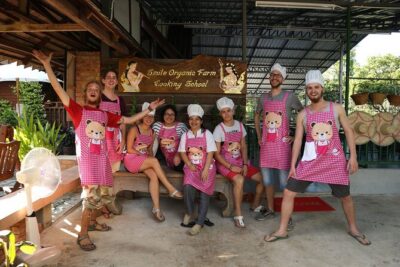
Half-Day Thai Cooking Class at Organic Farm in Chiang Mai
Read our review →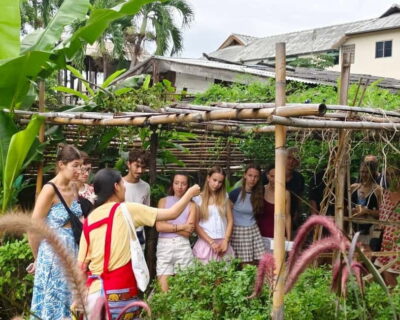
Cooking Class, Market & Thai Herbs Garden Tour
Read our review →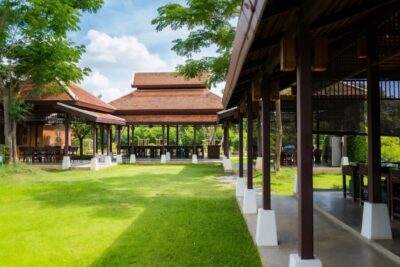
Authentic Cooking Class with Market & Farm Visit
Read our review →
Browse the lists this tour appears in