
Review · CHIANG MAI COOKING CLASSES
6-Hour Akha Tribe Culture and Cooking Class in Chiang Mai
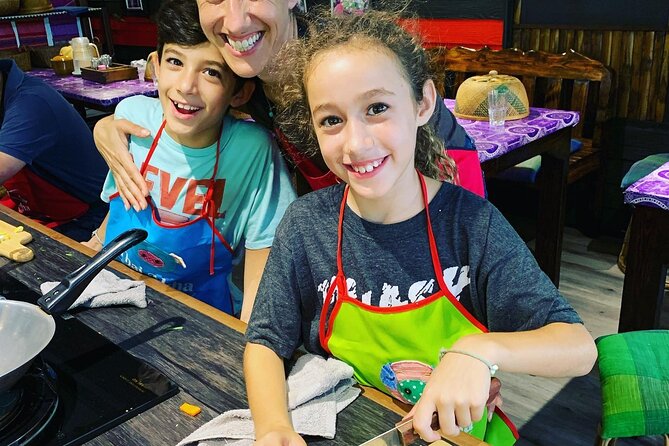
The most interesting part of this Chiang Mai experience is that food leads the way into Akha culture, not just Thai cooking. You visit a local market, learn how the Akha community became part of Thailand, then prepare a large meal that combines Thai recipes with Akha dishes. I like the market stop because it shows everyday buying habits rather than a tourist-only food display. I also like the wide menu and practical recipe book, which give you something useful to take home.
The main consideration is quantity. You prepare 10 dishes in about six hours, so this is a serious food session, not a quick demonstration. The market visit belongs to the morning class, while the evening class is cooler and includes dinner, so choose your time with care.
Key points at a glance
- Morning market visit: See local produce, prices, and ordinary shopping habits before cooking.
- Ten dishes in one class: Prepare a generous mix of appetizers, soups, stir-fries, curries, Akha recipes, and desserts.
- Akha and Thai food together: Learn about Akha traditions and the community’s history in Thailand through its cooking.
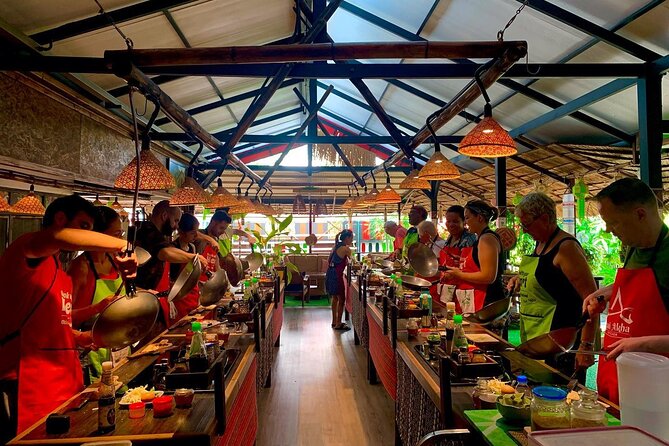
- Evening outdoor kitchen: Cook in a Thai-Akha setting when temperatures are cooler, then eat in an air-conditioned dining room.
- Personal instruction: On is praised as an engaging teacher who keeps the class fun and explains easy recipes clearly.
- Small maximum group: The class accepts up to 15 people, with pickup offered and a return to the Wat Pan Whean meeting point.
Why this class is more than a Thai cooking lesson
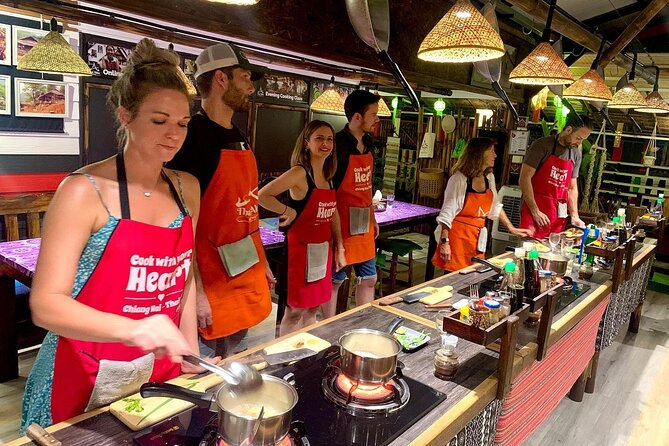
Many cooking classes in Chiang Mai focus on familiar dishes and move quickly from chopping to eating. This one adds a cultural thread by introducing you to the Akha people, a community that immigrated to Thailand in the 1900s.
That context matters. Food is not presented as a list of recipes alone. You learn how Thai and Akha cooking sit alongside each other, and how ingredients can tell part of Thailand’s story. The Akha section includes Sapi Thong, a tomato dipping sauce, Akha salad, and Akha soup. These dishes give the class a point of difference from a standard pad Thai lesson.
I like this approach because you leave with more than a full stomach. You get a clearer idea of how food reflects movement, community, and local customs. The class still keeps its feet firmly on the ground, though. You are cooking, eating, and handling ingredients rather than sitting through a long history lecture.
The six-hour duration is generous. That allows time for shopping in the morning option, instruction, preparation, and a full meal. It also means you should not book this when you want a quick activity between temple visits. You are committing a good part of your day.
More Cooking Classes in Chiang Mai:
- Half-Day Thai Cooking Class at Organic Farm in Chiang Mai
★ 5.0 · 19,087 reviews - Chiang Mai: Cooking Class, Market & Thai Herbs Garden Tour
★ 4.9 · 4,824 reviews - Chiang Mai: Authentic Cooking Class with Market & Farm Visit
★ 4.9 · 4,546 reviews
The morning market shows Chiang Mai at ground level
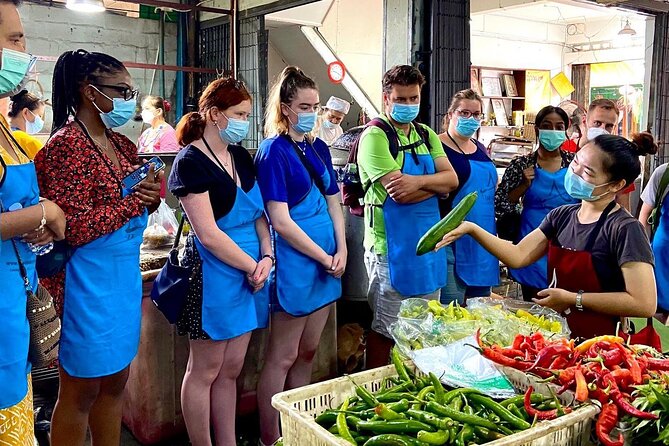
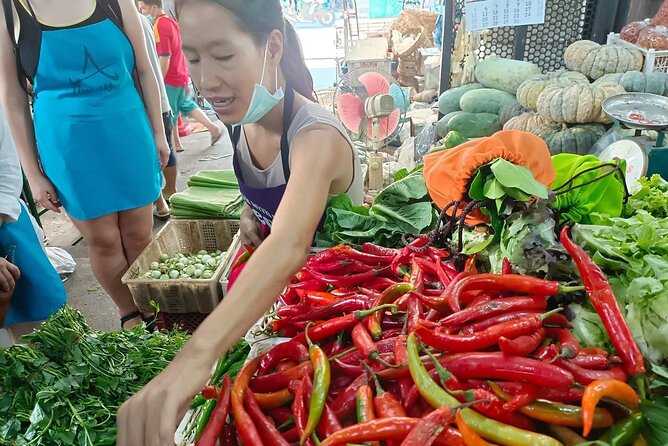
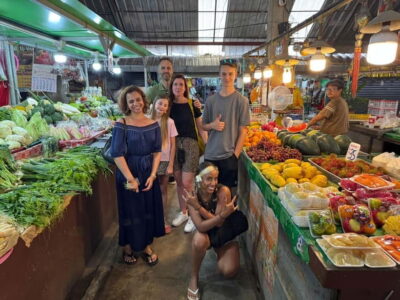
The morning course begins with a visit to a local market. This is one of the strongest parts of the experience for anyone who wants to see ordinary Chiang Mai life rather than a market arranged for sightseeing.
You will see produce sold at different prices and learn how the same type of ingredient can vary in cost. The class describes this idea as same same, but different, a useful reminder that local shopping involves judging quality, size, freshness, and value.
The market may feel different from a Western grocery store. That is part of the point. You are expected to encounter local buying habits without special treatment designed to make the visit feel polished for tourists. I would arrive ready for a more direct, practical market experience, not a staged tasting tour.
This stop also makes the cooking lesson easier to understand. Ingredients no longer appear on a classroom table without context. You have seen where the shopping happens and can connect the produce to the dishes you will later prepare.
The information provided does not specify the exact market name or how much walking is involved. If mobility or heat is a concern, ask the operator for current details before booking. The activity is near public transportation, and pickup is offered, but the stated meeting point is Wat Pan Whean at 50 Phra Pok Klao Road Soi 4.
The evening option trades the market for comfort
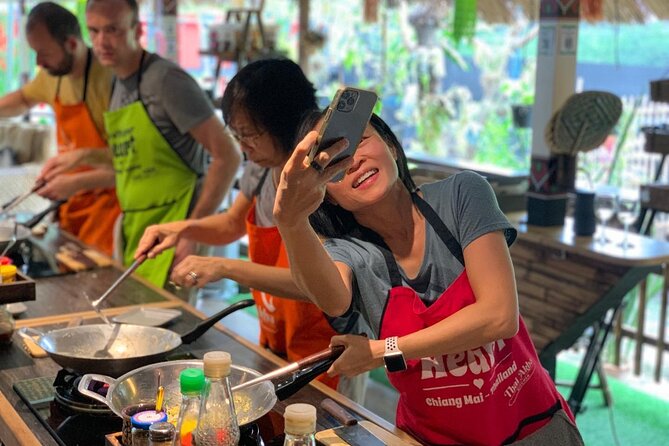
The evening class suits you if your daytime schedule is already full. It also has a practical advantage in Chiang Mai: cooking outside is more comfortable after the heat of the day has eased.
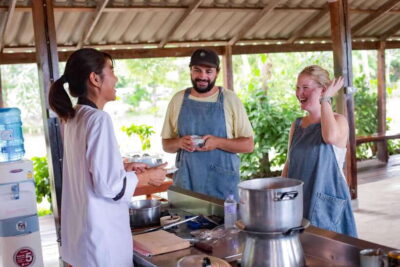
The kitchen is set up outdoors with a mix of Thai and Akha cultural touches. After cooking, you eat in an air-conditioned dining room. That combination gives the class a relaxed rhythm. You work in an open setting, then cool down for the meal.
The evening course is also an easy dinner plan. You do not need to choose a restaurant or decide what to order after a long day. You make the food yourself and eat it afterward.
You should not assume the evening class includes the same market visit as the morning class. The description specifically links the local market trip with the morning course and presents the evening class as a cooler cooking-and-dinner option. If the market is your main reason for booking, choose morning.
Ten dishes make this a substantial meal
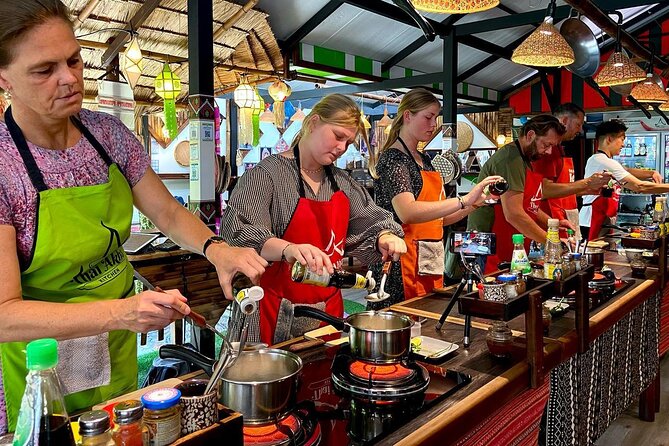
The class includes 10 dishes, and the menu covers far more ground than one signature recipe. The exact combination can vary, but the choices include the following groups:
- Appetizers: Papaya salad and spring rolls
- Desserts: Mango with sticky rice and pumpkin in coconut milk
- Akha dishes: Sapi Thong, Akha salad, and Akha soup
- Stir-fries: Sweet and sour vegetables, cashew nut with chicken, chicken with hot basil, and pad Thai
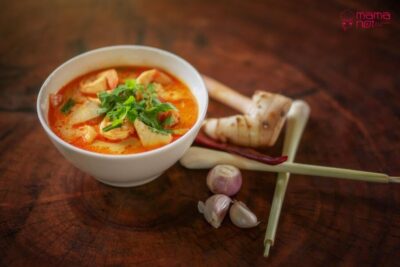
- Soups: Chicken in coconut milk, hot and sour prawn soup, and clear soup with egg tofu
- Curries: Chicken green curry, chicken red curry, panaeng curry, and Massaman curry
That is a lot of food for one sitting. One participant specifically advises arriving hungry, and that is sensible advice. You will not simply prepare a small sample and move on. The stated plan is to eat the dishes after the cooking session.
The menu is useful for mixed groups because it covers mild, spicy, savory, sweet, creamy, fresh, and fried dishes. It also offers familiar choices such as pad Thai and spring rolls alongside less familiar Akha recipes.
The large menu has one possible downside. You may not get the same depth of practice on each dish that you would receive in a short class focused on one curry or one regional specialty. If your goal is mastery of a single recipe, ask how the 10 dishes are divided during the lesson. If you want variety and a memorable feast, the broad menu works in its favor.
Same region, a different dish to learn:
- Thai and Akha Cooking Class in Chiang Mai
★ 5.0 · 4,358 reviews - Chiang Mai: Cooking Class with Market and Pickup
★ 4.9 · 1,365 reviews - Chiang Mai: Cooking Class with Organic Farm at Mama Noi
★ 4.9 · 1,151 reviews - Full Day Thai Cooking at Farm (Chiang Mai)
★ 5.0 · 1,127 reviews
On brings a friendly teaching style
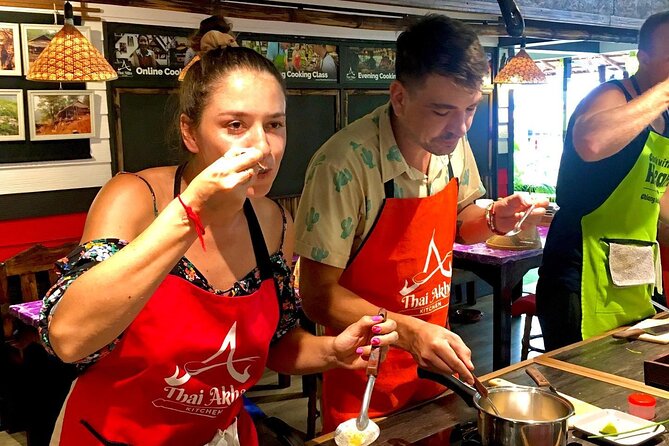
The available feedback names On as an excellent teacher who makes the class fun. It also highlights easy recipes and the usefulness of a recipe book.
Those details are important. A recipe is only worth taking home if you can repeat it without special equipment or hard-to-find instructions. The recipe book gives you a practical reference after the class, when you are back in your own kitchen and trying to remember how the sauces and spice levels came together.
The teaching style appears lively rather than formal. That should suit beginners, families, and anyone who enjoys learning by doing. You can expect instruction around several dishes instead of a silent cooking station where you are left to guess what comes next.
Still, a group of up to 15 people is not private tuition. You will share the kitchen and the instructor’s attention. On may be an especially useful guide, but the class size means you should expect a group setting rather than one-to-one coaching.
What the food lesson teaches about place
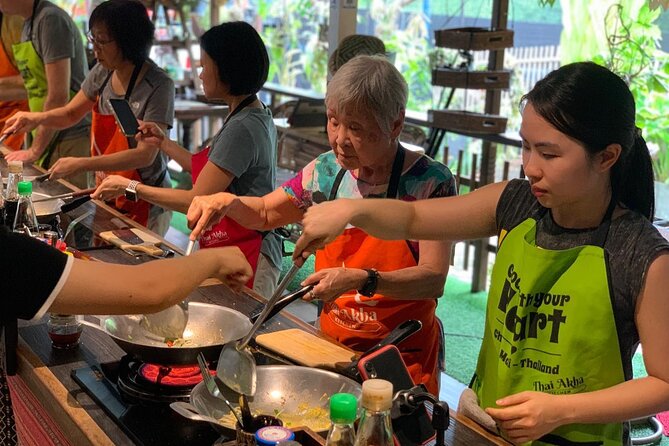
Thai cooking is often reduced to a few international favorites. This class gives you a wider view by placing those familiar dishes beside Akha food.
Papaya salad, spring rolls, hot basil chicken, curry, and pad Thai connect the class with widely recognized Thai flavors. The Akha dishes shift the focus toward another community’s food traditions. Sapi Thong, for example, gives the menu a tomato-based dipping element, while Akha soup and salad broaden the lesson beyond the standard tourist menu.
The history component is brief in the supplied details, so I would not book this as a dedicated cultural history course. Its value comes from the connection between explanation and action. You hear about Thai and Akha culture, then work with recipes associated with that food world.
That hands-on format can make the information easier to remember. You are more likely to recall a dish you chopped, stirred, and ate than a fact delivered in isolation.
Price, group size, and what you receive
At $48.83 per person, the experience offers a strong amount of included activity for a half-day. You get a six-hour program, a market visit with the morning option, cooking instruction, 10 dishes, a meal, cultural information, and a recipe book.
The value is best if you would otherwise pay separately for dinner and a market tour. The evening class is especially straightforward to assess: you spend the evening cooking and eat your first home-cooked Thai dinner in Thailand. The morning class adds the market component and may be the better choice if you want a fuller look at local food shopping.
The price is less compelling if you dislike group cooking or are unlikely to use the recipes later. You are paying for participation, not just a plate of food. The class works best when you want an activity with a clear start, a practical task, and a meal at the end.
The maximum group size is 15. That is small enough to keep the experience social without making it a huge demonstration, but it is not intimate. Pickup is offered, and the activity ends back at the meeting point, Wat Pan Whean. Confirm pickup details when you book rather than assuming door-to-door transport.
Dietary needs and practical planning
Special dietary requirements can be accommodated, including allergies, gluten intolerance, vegetarian diets, and other dietary needs. Tell the operator when booking and repeat the information at the start of the class.
Because the menu includes chicken, prawns, egg tofu, coconut milk, curry, and several stir-fries, clear communication matters. The stated ability to adapt the class is helpful, but it does not mean every dish will be identical to the standard version.
Wear something suitable for cooking and expect a long session. The provided details do not specify clothing rules, equipment, or the exact balance between demonstration and individual preparation, so ask if those details affect your decision.
The activity requires good weather. That matters most for the outdoor kitchen and any market movement. If poor weather forces cancellation, you are offered another date or a full refund.
You receive confirmation when booking, and a mobile ticket is available. Free cancellation applies up to 24 hours before the start time. Changes or cancellations inside that window are not accepted for a refund, so keep your schedule firm once the cutoff passes.
Who will enjoy this six-hour class
I would recommend it most strongly to:
- First-time visitors who want food, culture, and a meal in one activity
- Beginner cooks who prefer clear recipes and hands-on preparation
- People curious about Akha culture and food beyond standard Thai dishes
- Couples, families, and small groups looking for a shared evening
- Anyone who wants a recipe book and several dishes to recreate at home
- Diners who appreciate a large meal and do not want to plan dinner separately
I would think twice if you want a short class, dislike eating a large amount of food, or need a private instructor. The six-hour schedule is also a poor fit for a packed sightseeing day.
The morning option is best for market access and a fuller food-focused day. The evening option is better for a cooler cooking session and an easy dinner. That simple choice helps match the experience to your Chiang Mai schedule.
Should you book the Oh-Hoo cooking class?
Book it if you want more than pad Thai. The combination of a local market, Thai recipes, Akha dishes, cultural context, a recipe book, and a full meal gives the class a clear identity.
Choose the morning course if the market matters most. Choose evening if you want to cook after sightseeing and eat dinner without making another plan. Arrive hungry, disclose dietary needs early, and allow the full six hours.
The limited number of published ratings means I would not treat the perfect score as the only reason to book. The specific praise for On, the easy recipes, the recipe book, and the generous amount of food are more useful signals. For a hands-on cultural food experience at $48.83, this is a sensible choice, provided you are happy to spend half a day cooking in a group.
FAQ
How long does the Akha Tribe Culture and Cooking Class last?
The activity lasts approximately six hours.
Where does the experience start?
The stated meeting point is Wat Pan Whean, 50 Phra Pok Klao Road Soi 4, Phra Sing, Mueang Chiang Mai, Chiang Mai 50200, Thailand.
Where does the experience end?
The activity ends back at the meeting point.
Is pickup offered?
Yes, pickup is offered. Confirm the current pickup details when booking.
Does the morning class include a market visit?
Yes. The morning class includes a visit to a local market where you can see local produce, prices, and everyday shopping practices.
What is different about the evening class?
The evening class fits around a busy daytime schedule, takes place when it is cooler, and includes cooking in an outdoor Thai-Akha setting followed by a meal in an air-conditioned dining room.
How many dishes will I prepare?
You will prepare 10 dishes during the cooking course.
What kinds of food are included?
The menu includes appetizers, desserts, Akha dishes, stir-fries, soups, curry pastes, and curries. Examples include spring rolls, mango with sticky rice, Akha soup, pad Thai, hot and sour prawn soup, and chicken green curry.
Can the class accommodate dietary requirements?
Yes. Special requirements such as allergies, gluten intolerance, vegetarian diets, and other dietary needs can be accommodated. Provide those details when booking.
What is the cancellation policy?
You can cancel up to 24 hours before the experience for a full refund. Cancellations or changes made less than 24 hours before the start time are not accepted for a refund. If poor weather causes the operator to cancel, you will be offered another date or a full refund.
Newest classes around Chiang Mai
- Authentic Thai Cooking Class and Farm Visit in Chiang Mai★ 5.0 · 66 reviews
- Aroidee’s Farm-Fresh Thai Cooking Experience★ 5.0 · 8 reviews
- Signature Thai Cooking Course★ 5.0 · 79 reviews
- Half Day Guided Thai Cooking Class in Chiang Mai★ 5.0 · 13 reviews
- Yummy Tasty Thai Cooking School in Chiang Mai★ 5.0 · 2 reviews
- Online Thai and Akha Cooking Class★ 5.0 · 70 reviews
- Northern Thai Cooking Class in Chiang Mai in a Countryside Home★ 5.0 · 2 reviews
- Private Half-Day Thai Cooking Class in Chiang Mai★ 5.0 · 4 reviews
Chiang Mai Cooking Classes, compared.
Half-Day Thai Cooking Class at Organic Farm in Chiang Mai
Read our review →
Cooking Class, Market & Thai Herbs Garden Tour
Read our review →
Authentic Cooking Class with Market & Farm Visit
Read our review →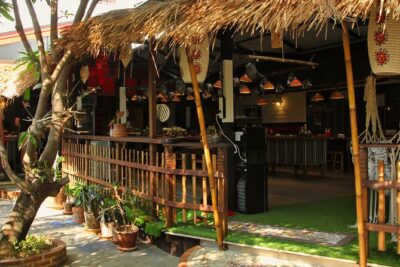
Browse the lists this tour appears in