Review · COOKING CLASSES
BA: Empanadas and Alfajores Cooking Experience in Palermo
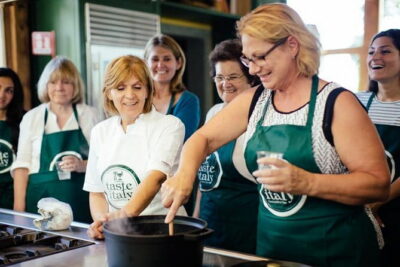
The best part of this Palermo cooking experience is that it turns two Argentine staples into a shared meal. You chop, shape, fill, bake, and eat empanadas, then make alfajores with dulce de leche while learning the small customs behind them. The intimate group size, capped at 10, gives the class a friendly, social feel.
I like the choice between meat and vegan empanadas, and I like that you leave with recipes rather than just a full stomach. The stories about folding styles, family kitchens, and mate add real local flavor. The main caution is that the amount of hands-on cooking can vary. Some sessions involve plenty of chopping and shaping, while others rely more on prepared ingredients and demonstrations.
Key points to know before booking
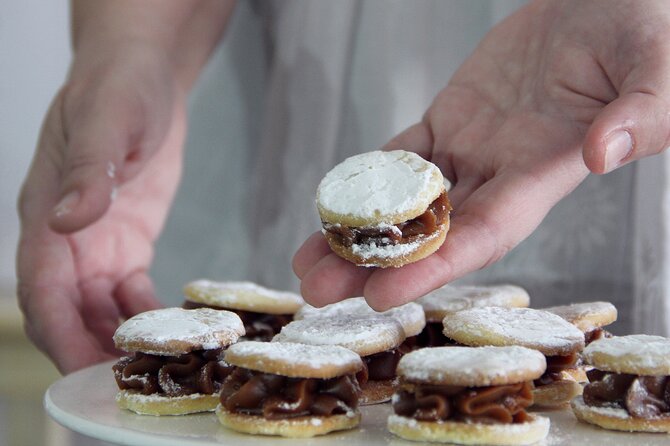
- Two Argentine classics in one session: Prepare savory empanadas, then make dulce de leche alfajores.
- Meat and vegan choices: Lentil fillings are available for vegetarian or vegan participants.
- Small Palermo class: The group maximum is 10 people, which makes conversation and personal help easier.
- Family-friendly, with a knife caveat: Children can join, but young cooks need help during chopping.
- Mate and cultural stories: Expect Argentina’s famous herbal infusion, plus local customs and food traditions.
- Recipes to take home: The recipes are sent by WhatsApp, so you can repeat the dishes after your trip.
Why this Palermo food class works so well
Buenos Aires is a city where food is part of ordinary family life, not just something served in a restaurant. This class gives you a seat at that table, in a practical way. You are not simply watching a chef assemble a plate. You are handling the ingredients and learning the habits that make these foods feel Argentine.
The setting is in Palermo at Gorriti 4882. The meeting point is near public transportation, and the activity finishes where it begins. That makes it easy to fit into a day of exploring the neighborhood. Allow about two and a half hours, though the relaxed pace may make the session feel more like a long meal with a cooking lesson attached.
I especially like the limited group size. With no more than 10 people, you have a better chance to ask how to seal an empanada, compare folding patterns, or get help when an alfajor cookie starts to crack. It also works well for solo visitors, couples, and families who want to meet other people without joining a large bus-style group.
More Cooking Classes in the world:
- Half-Day Thai Cooking Class at Organic Farm in Chiang Mai
★ 5.0 · 19,087 reviews - Florence: Pasta Cooking Class with Unlimited Wine
★ 4.9 · 10,285 reviews - 3 in 1 Cooking Class near Navona: Fettuccine, Ravioli & Tiramisu
★ 5.0 · 7,376 reviews
Starting with empanadas, Argentina’s everyday classic
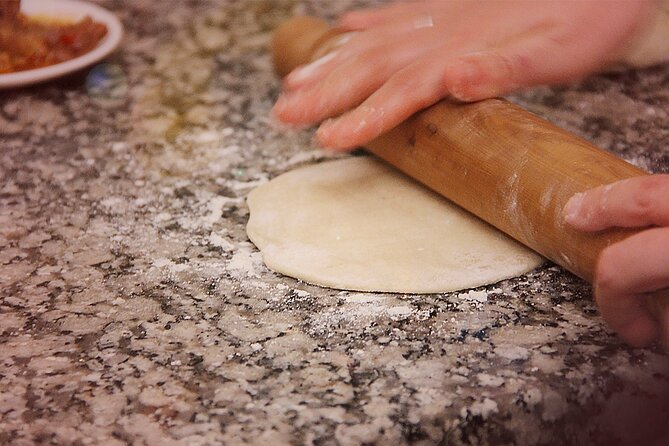
The first major task is making empanadas. Your host explains the filling, shows you how to prepare it, and talks about the dish’s place in Argentine food culture. Depending on the session, you may chop vegetables and meat, cook the filling briefly on the stovetop, and then fill the pastry rounds.
The vegetarian option has included lentils, which is useful for mixed groups. Someone in your party can choose meat while another person chooses a plant-based filling. This is not a token side dish. The class is designed so both versions can be shaped and cooked as proper empanadas.
One of the most interesting lessons is the folding. Empanadas are not all sealed the same way. The shape and crimp can signal what is inside, and local cooks use familiar patterns to tell fillings apart. That small detail makes the class more useful than a basic recipe demonstration. You learn a bit of the visual language of the dish.
Do not expect every minute to involve elaborate cooking technique. Some sessions use prepared pastry shells, with the active work focused on filling and sealing. Other participants have described making much of the process from scratch. The exact balance can depend on the host and the group. If you want a serious pastry workshop, this may feel light. If you want a friendly introduction that leaves time for conversation, the format is a good fit.
Families should pay attention during the chopping stage. Children aged 10 and 13 have enjoyed the activity, but sharp knives are part of the preparation. Younger children can still take part in shaping and filling, with an adult handling the cutting and hot pans.
Folding tips that make the class worthwhile

Empanada dough looks simple, but the final seal can be surprisingly tricky for a first-timer. Your host shows how to keep the filling from spilling out and how to press the edge closed. You may also learn that the folds are not just decoration.
This is where the class becomes more than a recipe card. A recipe can tell you how much filling to add, but it cannot easily show the pressure needed to close the pastry or the way to turn a rough edge into a neat crimp. Hands-on correction saves you from producing empanadas that open in the oven.
The experience is beginner-friendly, so you do not need prior kitchen skills. Hosts including Tomas and Valentino have been praised for their patience and clear instruction. Other sessions have been led by Carolina or Catalina, with a similar emphasis on simple guidance and group conversation.
Once the empanadas are prepared, they are cooked and served for the group to eat. This meal is part of the value. You are not making a tiny sample and then being sent elsewhere for lunch. The food you prepare becomes the center of the session.
Dulce de leche alfajores and the fragile-cookie lesson
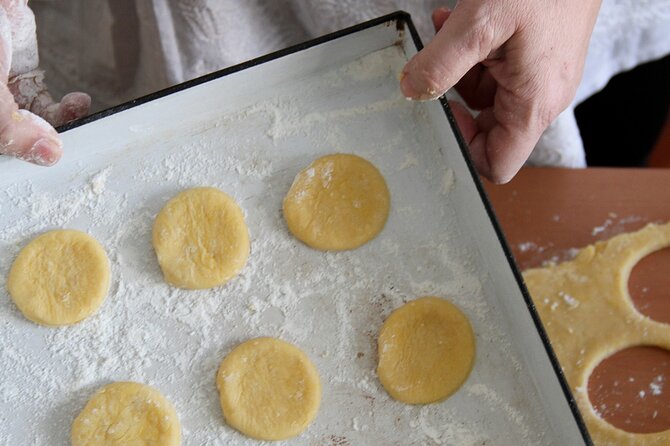
The sweet course is the alfajor, a sandwich cookie filled with dulce de leche. You mix and bake the cookies, then assemble them with the creamy filling. Some sessions finish the edges with coconut, and you may be able to shape the cookies in different ways.
The alfajores are delicate. Handle the cookies gently when adding the dulce de leche, because pressing too hard can break them. That sounds like a minor tip, but it is exactly the kind of practical kitchen knowledge you want from a cooking class.
The timing also works well. While the empanada filling cools, the group can work on the cookies. This keeps the session moving without making you rush. You get savory preparation, baking, assembly, and time to talk, rather than a single quick demonstration.
The results may depend on your taste and on the individual session. Most people have found the food delicious, but a small number have felt that the recipes lacked flavor. The class is aimed at approachable home cooking, not restaurant-level experimentation. If you prefer bold spice, ask your host about variations. One host has offered recipe adjustments and different versions, and the class can be a useful starting point for adapting the dishes at home.
Same region, a different dish to learn:
- Florence: Pasta & Tiramisu Cooking Class with Unlimited Wine
★ 4.9 · 6,708 reviews - Florence: Pasta Cooking Class with Unlimited Wine
★ 5.0 · 6,413 reviews - Hanoi Cooking Class: Culture, Local Market & Meaning CSR Impact
★ 5.0 · 5,147 reviews - 5 Traditional Dishes Hanoi Cooking Class with Market Trip
★ 5.0 · 4,890 reviews
Mate, wine, and the social side of the afternoon
Mate is Argentina’s signature infusion, and it is included as part of the cultural side of the class. Your host can explain how it fits into daily life while you cook and eat. Coffee or tea may also be available, but the stated inclusion is mate, so do not book this expecting a formal coffee tasting.
Wine has appeared in some sessions, and several participants enjoyed having a glass with the food. It is not listed as a guaranteed inclusion, so treat it as a possible extra rather than a promise. One session substituted wine for the expected tea or coffee, which shows why it is wise to confirm drink arrangements if that matters to you.
The social setting is one of the class’s strengths. You may share a table with people from several countries, compare your folding attempts, and trade ideas about Buenos Aires. Solo visitors can join comfortably, while families have a ready-made activity that gives children something to do besides follow adults around a city.
The pace also seems forgiving. Once the food is ready, you are not necessarily pushed out immediately. There is time to eat, chat, and ask for suggestions. That relaxed finish makes the class feel like a neighborhood gathering rather than a timed production line.
The guides make a real difference
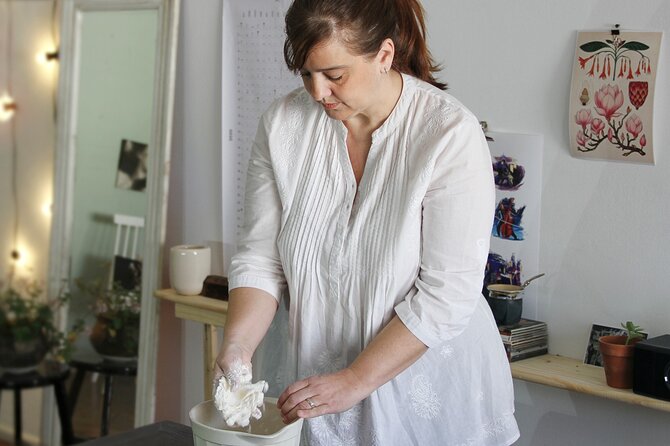
This is a host-led experience, so the personality and teaching style matter. Names associated with the sessions include Tomas, Valentino, Carolina, Catalina, and Thomas. Their roles go beyond measuring ingredients. They explain local customs, talk about food traditions, and answer questions about the dishes.
Tomas has received particular praise for patient instruction and friendly encouragement. Valentino has been described as clear and supportive through each stage, from filling the empanadas to assembling the alfajores. Carolina and Catalina have also led warm, social sessions.
The quality is not perfectly uniform. One participant found the class too passive, with one person doing most of the work. Another felt the host did not share enough background or local suggestions. That is worth keeping in mind if you want every member of your group actively cooking throughout the full two and a half hours.
In practical terms, speak up early. Ask to chop, fold, or assemble rather than waiting for the next instruction. In a small group, the host can usually involve you more when you make your interest clear.
What you get for $49
At $49 per person, the price covers about two and a half hours, all empanada and alfajor ingredients, cooking tools, the host, and mate, coffee, or tea as provided. It also includes the food you prepare, which can function as a substantial snack or light meal.
I see the value in the combination of food and culture. A restaurant meal would let you taste empanadas and alfajores, but it would not teach you how to distinguish fillings by their folds or how to handle fragile alfajor cookies. You also get recipes to use at home, reportedly sent through WhatsApp after the class.
The value is lower if you want advanced culinary training or a fully hands-on workshop from start to finish. Some preparation may be done ahead of time, and certain groups may watch more than they cook. The price makes the most sense for visitors who want a social activity, a local introduction, and enough technique to repeat the dishes later.
Transportation is not included. You need to make your own way to Gorriti 4882 in Palermo, and tips are separate. Since the class starts and ends at the same address, you can plan another Palermo activity before or after it without arranging a second pickup point.
Who should book this experience
I would recommend this class most strongly to families, first-time visitors to Buenos Aires, solo food lovers, and couples who want an easy social afternoon. It suits people who enjoy learning by doing but do not need a demanding professional kitchen course.
It is especially useful for a mixed-diet group. Meat and vegan empanada options mean you do not need to split up for the main dish. Children can take part in shaping, filling, and decorating, though adults should supervise the knife work.
You may want to skip it if you have very strict dietary needs that are not addressed in the provided details, or if you expect a polished restaurant cooking school with every ingredient prepared from scratch. The session is informal and friendly, and that is both its appeal and its limit.
The class is also a good choice near the start of a trip. You learn foods you will see across Buenos Aires, and the local tips can help you order empanadas or recognize alfajores during the rest of your stay. It also works near the end of a trip, when you want an edible souvenir that does not take up space in your luggage.
Booking, timing, and cancellation
The experience is often reserved well ahead, with an average booking lead time of about 37 days. If your Buenos Aires dates are fixed, reserving early is sensible, especially for a small class with a 10-person maximum.
You receive confirmation when booking. Free cancellation is available up to 24 hours before the local start time for a full refund. Changes or cancellations inside that 24-hour window are not accepted for a refund, so check your schedule before committing.
The activity does not include transportation. Use the listed meeting point, Gorriti 4882, and allow enough time to reach Palermo. The class returns to that same location.
FAQ
How long does the empanadas and alfajores class last?
The activity lasts approximately 2 hours and 30 minutes.
Where does the cooking experience begin?
It begins at Gorriti 4882, C1414BJN, in Buenos Aires, Argentina, and ends at the same meeting point.
How many people can join the class?
The maximum group size is 10 participants.
Are vegan or vegetarian empanadas available?
Yes. Meat and vegan options are available, and lentil filling has been used for vegetarian participants.
Are ingredients and cooking equipment included?
Yes. Empanada ingredients, alfajor ingredients, and cooking tools are included.
Is mate included?
Yes. Mate, Argentina’s traditional infusion, is included along with coffee and/or tea as provided during the session.
Is transportation included?
No. You must arrange your own transportation to and from the meeting point.
Should you book the Palermo cooking experience?
Book it if you want to learn two distinctly Argentine foods in a small, relaxed setting and you like the idea of eating what you make. The recipes, folding techniques, mate, and family food stories give the afternoon more substance than a simple meal.
Go in expecting a beginner-friendly cultural cooking session, not a rigorous culinary course. Ask to take an active role, be patient with delicate alfajor cookies, and remember that wine may be offered but is not guaranteed. For $49, it is a good-value choice for families and food-minded visitors who want to carry a practical piece of Buenos Aires home with them.
Newest classes around the world
- Aroidee’s Farm-Fresh Thai Cooking Experience★ 5.0 · 8 reviews
- Authentic Thai Cooking Class and Farm Visit in Chiang Mai★ 5.0 · 66 reviews
- Signature Thai Cooking Course★ 5.0 · 79 reviews
- Half Day Guided Thai Cooking Class in Chiang Mai★ 5.0 · 13 reviews
- Yummy Tasty Thai Cooking School in Chiang Mai★ 5.0 · 2 reviews
- Northern Thai Cooking Class in Chiang Mai in a Countryside Home★ 5.0 · 2 reviews
- Private Half-Day Thai Cooking Class in Chiang Mai★ 5.0 · 4 reviews
- Online Thai and Akha Cooking Class★ 5.0 · 70 reviews
Cooking Classes, compared.
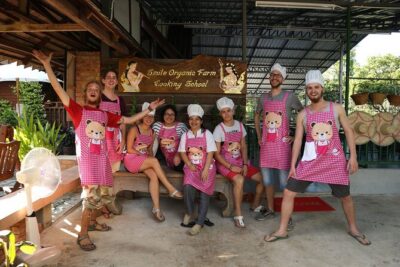
Half-Day Thai Cooking Class at Organic Farm in Chiang Mai
Read our review →

3 in 1 Cooking Class near Navona: Fettuccine, Ravioli & Tiramisu
Read our review →
Pasta & Tiramisu Cooking Class with Unlimited Wine
Read our review →
Hanoi Cooking Class: Culture, Local Market & Meaning CSR Impact
Read our review →
5 Traditional Dishes Hanoi Cooking Class with Market Trip
Read our review →