Review · BANGKOK COOKING CLASSES
Hands On Thai Cooking Class & Market Tour in Sathon, Bangkok
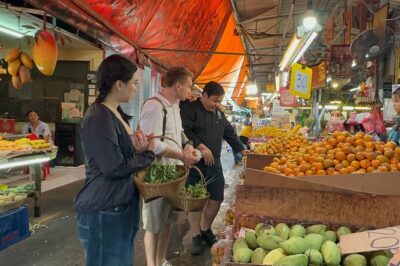
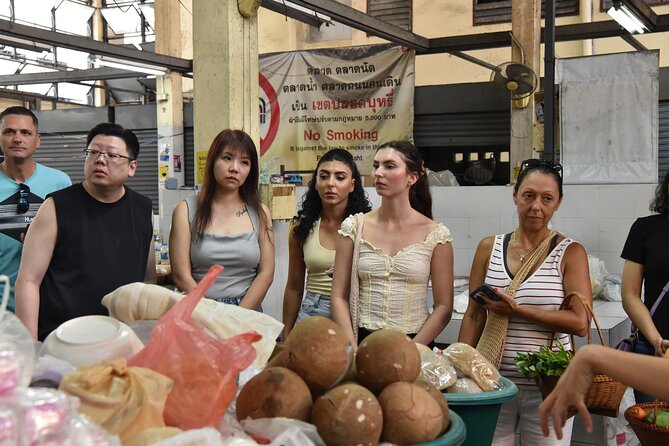
The best part of this Sathon cooking class begins before you reach the stove. Suan Phlu fresh market is only a one-minute walk from House of Taste Thai Cooking School, so you can see the ingredients in their everyday setting before turning them into lunch or dinner. You’ll shop with the group, learn what the vegetables, herbs, spices, and rice are used for, then make four Thai dishes during roughly two hours of cooking.
I like two things in particular. First, you make curry paste from scratch, rather than simply spooning it from a jar. Second, the class includes fresh coconut milk, a small but useful lesson that gives Thai cooking more sense once you try it at home. The recipes are practical, the instructors keep the mood light, and the portions are generous.
The main consideration is the fixed cancellation policy: this booking is non-refundable and cannot be changed. The class can also have up to 18 people, so the feel may be more social and group-oriented than private. Still, at $45.64 per person, it offers a substantial half-day of food, market time, instruction, and four dishes to eat.
Key points to know before booking
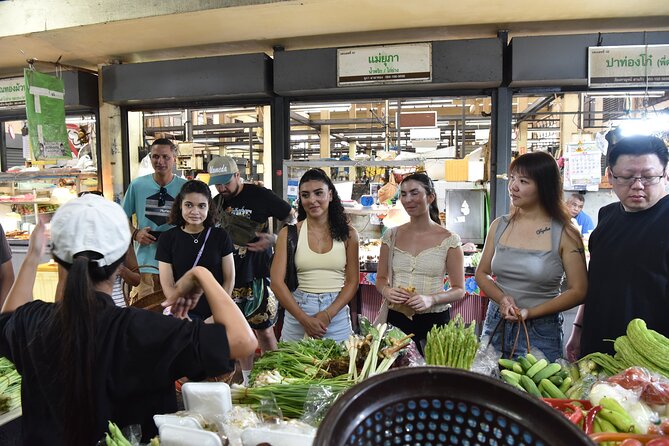
- Suan Phlu market comes first: The guided market visit is included with morning, afternoon, and evening classes.
- Four dishes are cooked and eaten: You prepare each dish, then enjoy it while it is hot and fresh.
- Curry paste is made by hand: This is the most hands-on part of the lesson and a useful Thai technique to take home.
- Fresh coconut milk is part of the lesson: You learn how this ingredient fits into Thai cooking.
- Jay is one instructor praised for her teaching: Her friendly, funny style helped make the process feel easy for beginners.
- The class ends where it begins: Meet at House of Taste Thai Cooking School in Suan Phlu, Sathon, near Silom.
Why the Suan Phlu setting matters
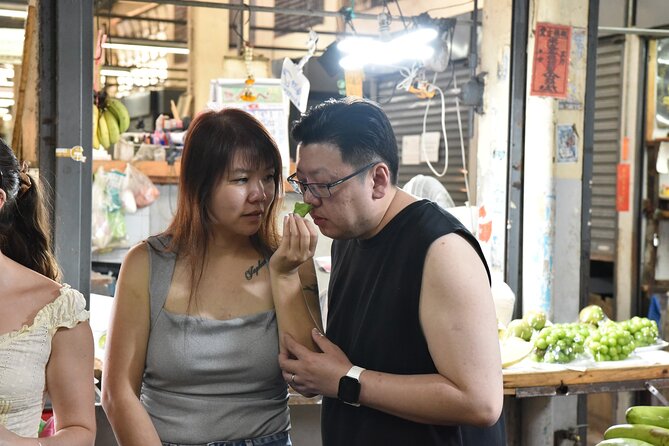
Bangkok has plenty of cooking schools, but location changes the lesson. Here, the market is not a distant stop reached by van or a staged display made for visitors. It is one minute from the school, making the transition from shopping to cooking quick and easy.
That short walk also helps you connect the ingredients with their use. You will see vegetables, herbs, spices, rice, and other Thai cooking staples before they appear on your work surface. The class is designed around selecting fresh ingredients, so the market visit has a clear purpose rather than being a separate sightseeing stop.
I like this format because Thai food can look simple on a menu while relying on ingredients that are unfamiliar to many home cooks. Learning about those ingredients at the market gives you a better chance of remembering them later. You may not become an expert shopper in one morning, but you should leave with a clearer idea of what makes Thai cooking taste like Thai cooking.
Suan Phlu is in Sathon, near Silom, a central part of Bangkok. The school address is 33 Thanon Suan Phlu, Khwaeng Thung Maha Mek, Khet Sathon. You should still allow time to find the building, since the class information recommends using a motorcycle taxi or taxi from nearby rail stations.
More Cooking Classes with a Market Tour in Bangkok
- Bangkok: Hands-on Thai Cooking Class and Market Tour
★ 4.9 · 1,614 reviews - Bangkok: Maliwan Thai Cooking Class with Market Tour
★ 4.9 · 1,133 reviews - Hands on Thai Cooking Class and Market Tour
★ 5.0 · 660 reviews
Starting with a guided market visit
The market portion is included in every class, not just the morning session. That is useful if your schedule is tight or you prefer cooking after a day of sightseeing. Morning, afternoon, and evening classes all include the same basic market component.
At the market, the focus is on ingredients for the dishes you will cook. You can expect explanations about Thai vegetables, herbs, spices, and rice, along with guidance while selecting what is freshest. This is the point where the class becomes more than a list of recipes. You begin to see how Thai cooking depends on balance, freshness, and the right combination of fragrant ingredients.
The market is also a good place to ask questions. If you have wondered what a particular herb does, why one chili is used instead of another, or how coconut fits into a dish, this is the time to ask. The supplied information does not name every market item or promise a particular menu, so you should not book expecting a fixed list of four named dishes unless the school confirms it before your visit.
One practical tip: wear comfortable clothes and shoes. The class lasts about three and a half hours, and the market comes before approximately two hours of cooking. You will get more from the visit if you are ready to walk briefly, look closely, and pay attention to unfamiliar produce.
Learning the basics behind Thai flavor
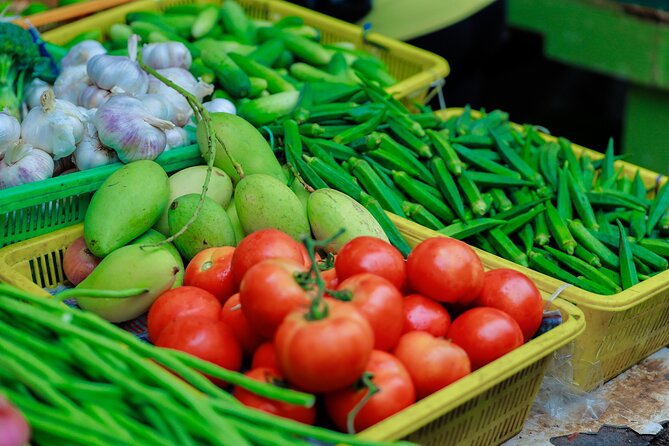
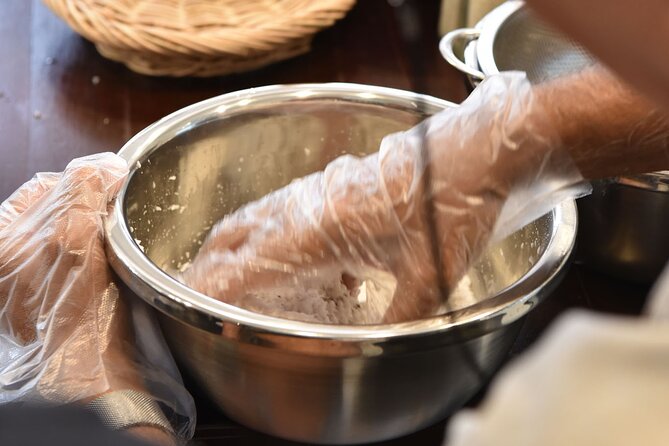
The class does not stop at chopping and stirring. You learn how to make fresh coconut milk and curry paste from scratch, two tasks that give the cooking session its strongest sense of place.
Curry paste is especially important. In many casual cooking lessons, a prepared paste can make the process fast, but it also hides the work behind the flavor. Here, you get your hands into the process. That physical effort helps you understand why Thai curries can taste layered and aromatic even when the ingredient list looks manageable.
The coconut milk lesson adds another useful skill. Fresh coconut milk is not just a creamy liquid poured from a carton. Learning how it is made gives you a better sense of how coconut is used in Thai dishes and why it changes the texture and flavor of a recipe.
You do not need to be an accomplished cook. The class is described as approachable, and the instruction is built around simple steps. One participant found the process easy enough for a beginner, while another came away with a few tricks to use at home. That is the right expectation: you are not training for restaurant work, but you can pick up solid fundamentals.
The interactive format also matters. You are not sitting through a demonstration and then eating food prepared by someone else. You take part in preparing the dishes, which means you see how the ingredients change as you work with them.
Two hours at the stove and four dishes to eat
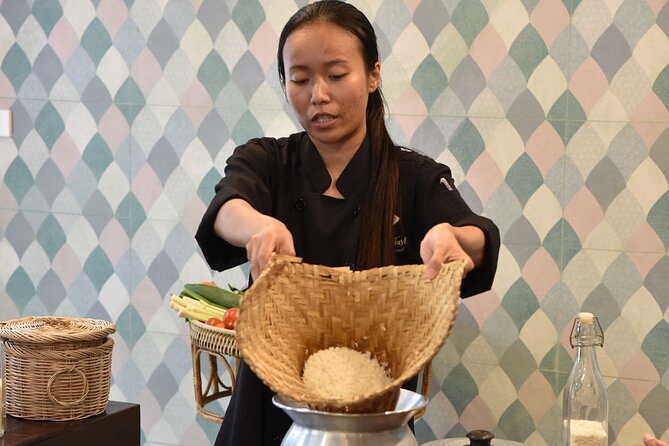
After the market, you spend about two hours cooking. The class includes four authentic Thai dishes, and you eat each one while it is hot and fresh. The four-dish format gives you more range than a single-recipe lesson, although it also means the session is active and fairly full.
The exact menu is not provided, so I would check the current dish list if you have strong preferences or dietary concerns. What is clear is that the lesson covers several parts of Thai cooking, including curry paste, coconut milk, and other ingredients selected at the market.
The food is not treated as a final reward only. Eating each dish as you go lets you taste the result of each technique while the instructor can still explain it. You can compare textures, notice how the herbs work, and ask about substitutions while the lesson is fresh in your mind.
Portions are described as generous, so plan for a very filling session. The amount of food is one reason the $45.64 price feels fair. You are paying for a guided market visit, instruction, ingredients, kitchen time, and four prepared dishes, not just a tasting plate.
Mango sticky rice receives particular praise, so it may be one of the highlights if it appears on your class menu. Since menus can change, treat it as a possibility rather than a guarantee. The important point is that dessert may be part of the meal experience, not an afterthought.
More Cooking Classes with a Market Tour in Thailand
- Tingly Thai Cooking Class with Morning Market Tour
★ 5.0 · 589 reviews - Hands-on Thai Cooking Class & Market Tour in Sukhumvit
★ 5.0 · 571 reviews - Pink Chili – Thai Cooking Class and Market Tour in Bangkok
★ 5.0 · 416 reviews - Authentic Thai Cooking with the Largest market visit &TukTuk ride
★ 5.0 · 350 reviews
The teaching style and group atmosphere
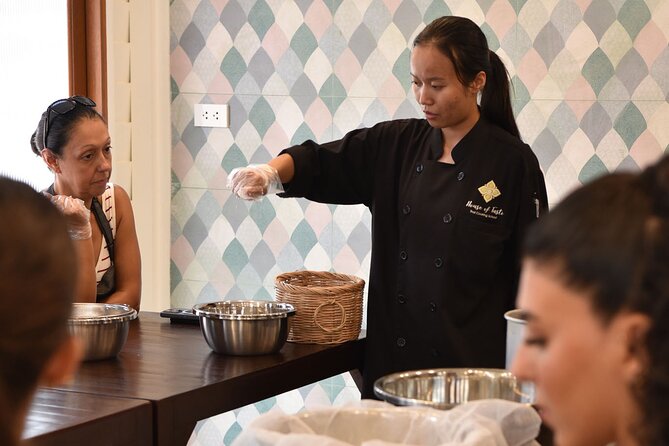
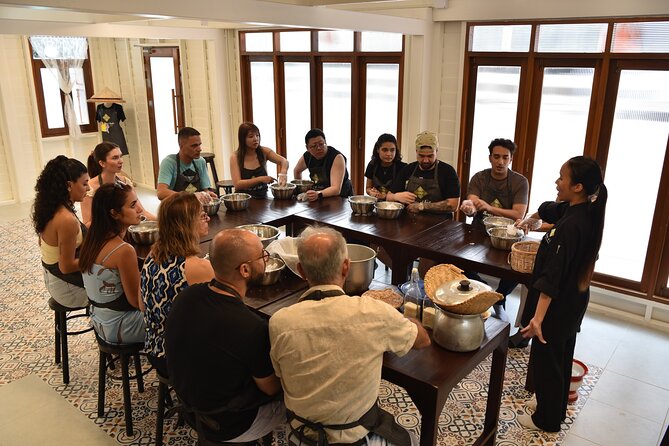
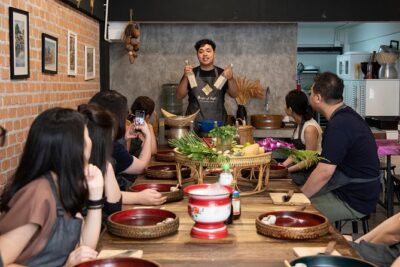
The school can accept a maximum of 18 participants. That is large enough to create a social class, but not so large that the activity becomes a mass demonstration. Your experience will depend partly on the instructor and the size of your particular session.
Jay is specifically praised for being funny, personable, and reassuring. Her teaching style reportedly made the cooking feel easy and simple, which is useful if you are nervous around unfamiliar ingredients. Another instructor is described as enthusiastic, and the general tone of the class is friendly and interactive.
I would choose this class if you want to meet other people while cooking. The format encourages conversation, and the market visit gives the group something to discuss before the kitchen work begins. It is less suitable if you want a quiet, private lesson with constant one-to-one attention.
The school itself is described as clean, which matters during a cooking activity. Clean surroundings and fresh ingredients make a real difference when you are handling food for several hours. Still, the provided details do not specify private workstations, dietary accommodations, or the exact student-to-instructor ratio, so ask the school directly if any of those points are important to you.
What you take home besides a full stomach
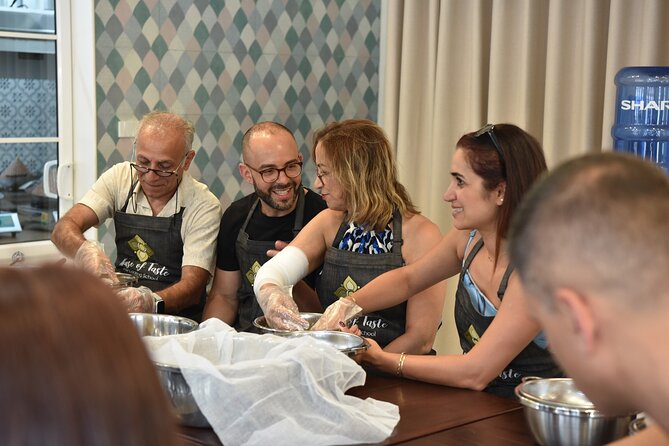
The most useful souvenir is the recipe collection. You receive the recipes so you can recreate the dishes later, which gives the class value after your Bangkok visit ends.
Recipes alone do not always lead to success. The market explanations and hands-on curry paste work add context that a printed page cannot provide. You will have seen the ingredients, handled them, and tasted the finished dishes. That makes it easier to remember what each part is supposed to do.
The class also teaches general habits rather than one-off tricks. You learn about selecting ingredients, preparing coconut milk, building curry paste, and handling several Thai staples. Those are transferable skills. Even if you cannot find every ingredient at home, you will have a better basis for choosing substitutes.
A few hours of cooking can also change how you order food for the rest of your trip. Once you understand the role of herbs, spices, coconut, and curry paste, Thai menus become less mysterious. You can make more informed choices instead of ordering at random.
Price, timing, and getting to the school
The price is $45.64 per person. For Bangkok, that is not the cheapest way to eat, but it is a reasonable price for a three-and-a-half-hour activity that includes market time, ingredients, teaching, four dishes, and recipes to take home.
The value is strongest if you want both food and instruction. If you only want a meal, a local restaurant will cost less and require less time. If you want to understand how Thai dishes are made, the cooking class gives you much more than dinner.
The school is near public transportation, but the directions recommend taking a motorcycle taxi or taxi from one of several nearby stations. Possible rail connections include:
- BTS Saint Louise, Exit 1
- BTS Chong Nonsi, Exit 2
- BTS Sala Daeng, Exit 2
- MRT Lumphini, Exit 2
- MRT Silom, Exit 2
The activity begins and ends at House of Taste Thai Cooking School. Allow enough time to reach the school from your station, especially if this is your first visit to Sathon. The market is close to the school, but the class does not begin at a rail station.
You receive confirmation when booking, and the activity uses a mobile ticket. The non-refundable policy deserves attention. You cannot change or cancel the booking for a refund, so choose your class time carefully before paying.
Who will get the most from this class
I would recommend this for first-time visitors who want a practical connection to Thai food. It is also a good fit for home cooks who want useful techniques rather than a formal culinary qualification.
Beginners should feel comfortable. The class is described as manageable for people who do not cook often, and the teaching style is supportive. Couples, friends, and solo visitors can all fit the format, especially if you like sharing a table and working alongside other people.
Families may want to confirm age requirements directly, since no minimum age is provided. The same applies to allergies, dietary restrictions, and accessibility. The available information confirms that the school is near public transportation, but it does not give enough detail to promise step-free access or menu adjustments.
You may want to skip it if you dislike group activities, do not want to eat a large amount of food, or prefer to keep your Bangkok schedule loose. The class lasts about three and a half hours, and the strict cancellation policy leaves little room for a last-minute change.
Should you book the Sathon cooking class?
I would book it if you want more than a quick food demonstration. The nearby market, handmade curry paste, fresh coconut milk, four dishes, and take-home recipes create a well-rounded introduction to Thai cooking. Jay’s friendly teaching style is another reason the class should suit beginners and anyone who wants a relaxed social activity.
The main cautions are the group size, the substantial amount of food, the unspecified menu, and the non-refundable booking terms. Confirm the dish list and any dietary needs before paying.
For $45.64, this is a strong choice for a half-day in Bangkok. You shop for ingredients, learn what they do, cook with your own hands, and eat the results. That is a much better way to understand Thai food than simply ordering another plate and guessing what is in it.
FAQ
Where does the Thai cooking class begin?
The class begins at House of Taste Thai Cooking School, 33 Thanon Suan Phlu, Khwaeng Thung Maha Mek, Khet Sathon, Bangkok 10120, Thailand.
Where does the activity end?
The activity ends back at the cooking school, the same place where you meet.
How long does the experience last?
The activity lasts approximately 3 hours and 30 minutes, including the market visit and cooking session.
Is the market tour included in every class?
Yes. The guided Suan Phlu fresh market tour is included in morning, afternoon, and evening classes.
How far is the market from the cooking school?
Suan Phlu fresh market is about a one-minute walk from the school.
How many dishes will I cook?
You will prepare four authentic Thai dishes and eat each one while it is hot and fresh.
Will I learn to make curry paste?
Yes. The class includes making curry paste from scratch.
Will I learn to make fresh coconut milk?
Yes. Fresh coconut milk is included among the Thai cooking techniques covered.
Are recipes provided after the class?
Yes. You receive the recipes so you can make the dishes again at home.
What is the maximum group size?
The activity allows a maximum of 18 participants.
How much does the class cost?
The listed price is $45.64 per person.
Can I cancel or change my booking?
No. The experience is non-refundable and cannot be changed for any reason.
More Thai Classes in Bangkok
- Bangkok: Tingly Thai Cooking School Half-Day Cooking Class
★ 4.9 · 1,191 reviews - Tingly Thai Cooking School Evening Class
★ 5.0 · 335 reviews - Tingly Thai Cooking School Afternoon Class
★ 5.0 · 291 reviews - Bangkok: White Lotus Thai Cooking Class with Market Tour
★ 5.0 · 285 reviews
Newest classes around Bangkok
- Thai cooking class experience in Bangkok with Tingly Thai cooking school★ 5.0 · 59 reviews
- Thai Cooking Class in Bangkok★ 5.0 · 23 reviews
- Hands-On Thai Cooking Class Bangkok with Local Chef (Small Group)★ 5.0 · 119 reviews
- Bangkok Udomsuk Thai Cooking Class with local market tour★ 5.0 · 5 reviews
- Thai Cooking Class★ 5.0 · 25 reviews
- Baipai Thai Cooking School: Authentic Cooking Class Tour★ 5.0 · 3 reviews
- Sompong Thai Cooking School★ 5.0 · 92 reviews
- Sompong Thai Cooking School: Hands-On Culinary Experience★ 5.0 · 4 reviews
Bangkok Cooking Classes, compared.
Tingly Thai Cooking School Half-Day Cooking Class
Read our review →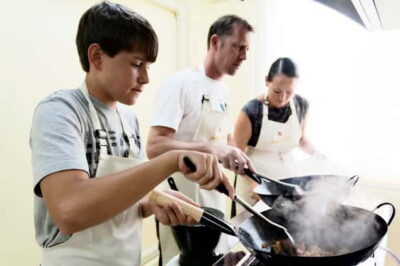
Tingly Thai Cooking Class with Morning Market Tour
Read our review →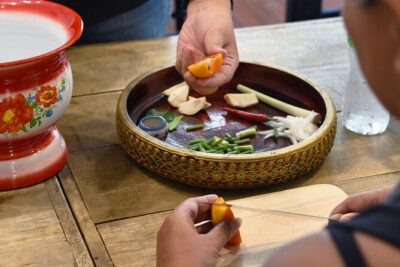
Hands-on Thai Cooking Class & Market Tour in Sukhumvit
Read our review →
Pink Chili – Thai Cooking Class and Market Tour in Bangkok
Read our review →