Review · BANGKOK COOKING CLASSES
Bangkok: Hands-on Thai Cooking Class and Market Tour
A curry paste pounded by your own hands tastes different from one scooped out of a jar. This three-and-a-half-hour Bangkok class takes you from Thai ingredients to a full meal, with four dishes cooked by you, not simply demonstrated by a chef.
I like the small-class feel and the clear, patient teaching reported from instructors such as Jay, Pitch, April, Jane, and Jen. I also like the useful split between morning and later sessions: choose the morning for a market walk, or the afternoon and evening for a mango-carving finish. The one catch is that the market visit may be modest, with some visitors finding it closer to a few nearby stalls than a large wet market.
Key points at a glance
- Four dishes, one filling meal: Cook soup or salad, a noodle or stir-fried dish, curry, and mango sticky rice, depending on the day.
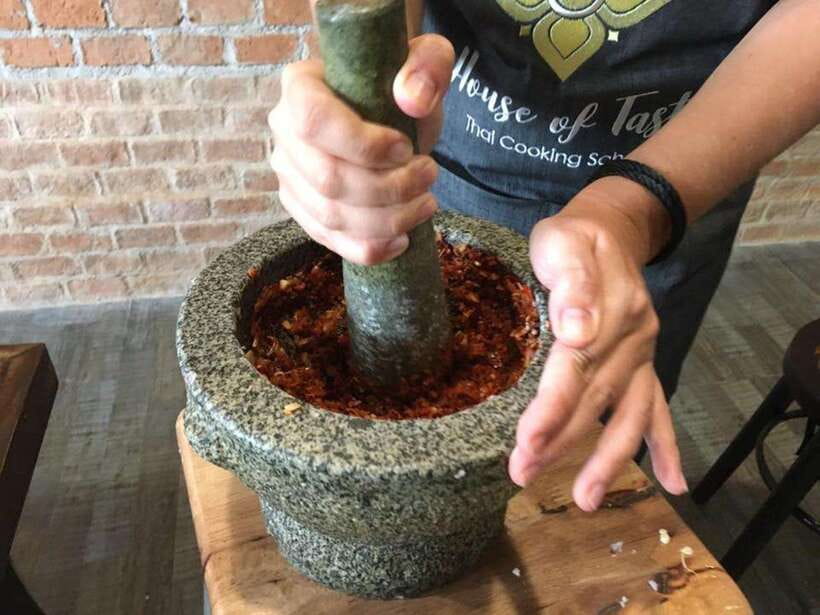
- Curry paste from scratch: Learn how herbs, spices, coconut milk, and fresh ingredients shape Thai cooking.
- Morning market option: Meet at BTS Asoke or MRT Sukhumvit and walk to nearby food stalls with your instructor.
- Mango carving later in the day: Afternoon and evening classes replace the market visit with a hands-on carving session.
- Strong value at $45: Ingredients, equipment, water, a personal locker, instruction, and recipes sent by email are included.
- Dietary requests are possible: Vegetarian, halal, kosher, and allergy-related substitutions can be arranged with advance notice.
What makes this Bangkok cooking class worth your time
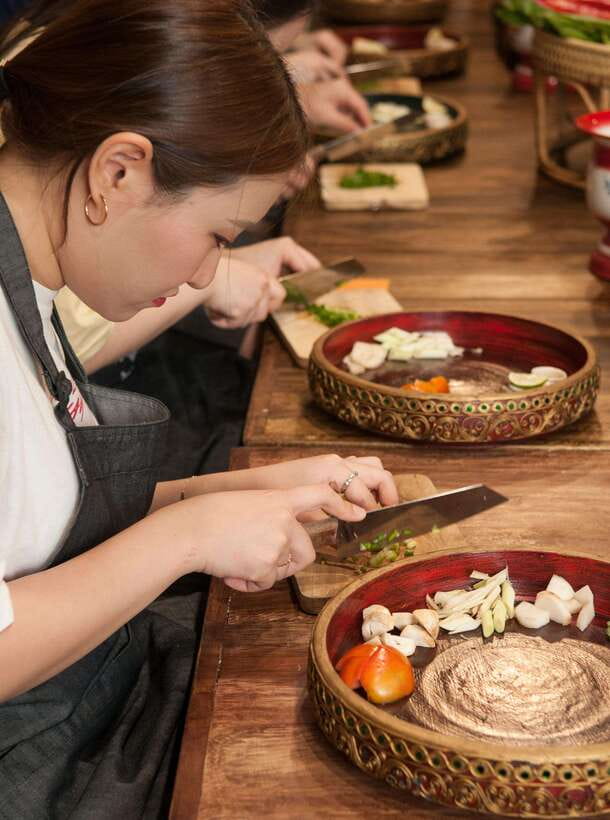
Bangkok offers endless food tours, but a cooking class gives you something a street-food tasting cannot: a way to understand what went into the bowl. Here, you chop, pound, stir, season, and taste as you go. You then sit down to eat food that is still hot rather than sampling small bites from a procession of stalls.
The format also works well for beginners. You do not need previous cooking experience, and the instructors keep the steps practical. I would especially look for a class led by an instructor such as Pitch or Jay if you value cultural context along with the recipes. Several instructors are praised for explaining not only what to add, but why the ingredient matters.
At $45 per person, the price is sensible for Bangkok. You are getting 210 minutes of instruction, four prepared dishes, all ingredients and equipment, drinking water, a locker, and recipes for future use. Alcohol is extra, but you do not need to buy it to enjoy the meal.
This is not a quiet cooking demonstration where you watch a professional do all the work. Expect knives, heat, pounding, mixing, and a fair amount of eating. Wear comfortable shoes and arrive hungry.
More Cooking Classes with a Market Tour in Bangkok
- Bangkok: Maliwan Thai Cooking Class with Market Tour
★ 4.9 · 1,133 reviews - Hands on Thai Cooking Class and Market Tour
★ 5.0 · 660 reviews - Tingly Thai Cooking Class with Morning Market Tour
★ 5.0 · 589 reviews
Choosing the right class time
The three class options have different personalities, so timing matters.
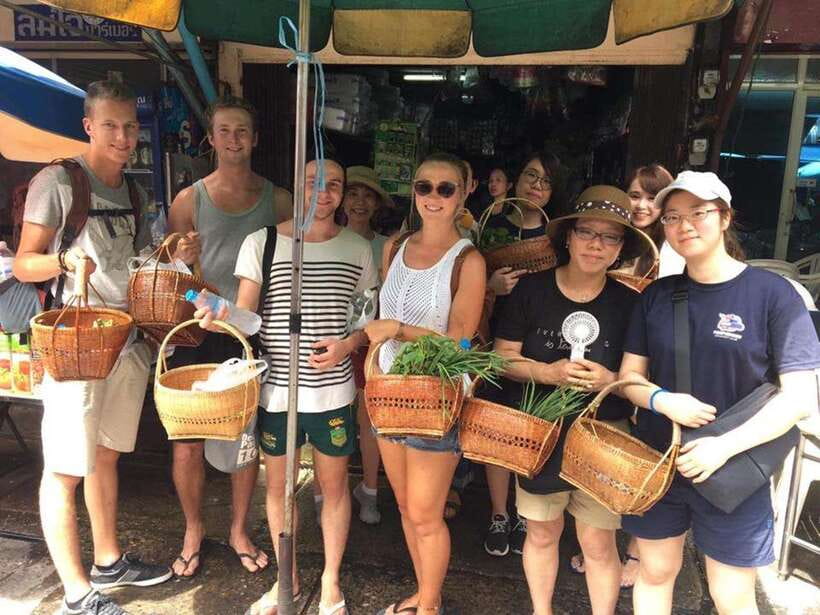
The 8:30 a.m. morning class is the pick if you want the market component. Meet at street level by BTS Asoke Exit 3 and MRT Sukhumvit Exit 3, with Hey! Coffee MRT Sukhumvit available as a map reference. From there, the instructor leads you toward nearby food sellers and introduces the ingredients used later in class.
The afternoon and evening classes meet at House of Taste Thai Cooking School in Sukhumvit 4. Instead of visiting the market, you receive an introduction to the ingredients at the school and finish with mango carving. That makes the later classes a good fit if you prefer a direct start, dislike early mornings, or want a more creative final activity.
Do not book an afternoon class expecting the same market walk. The difference is clear: morning means market visit, later sessions mean mango carving. If the market is the main reason you are booking, choose the morning.
The morning market walk near Asoke
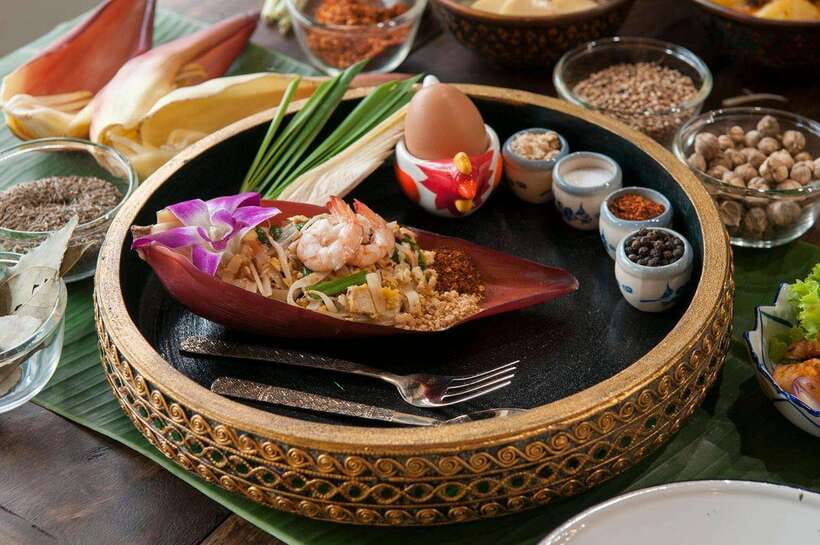
The morning begins with a practical look at Thai cooking before the burners come on. You browse fresh vegetables, herbs, rice, spices, and other ingredients with the instructor, learning how they appear in everyday Thai dishes.
This is useful because Thai recipes can look simple on paper while hiding a long list of unfamiliar ingredients. The market walk gives you a chance to connect the names with their shapes, smells, and uses. It also helps explain why Thai food balances hot, sour, salty, sweet, and creamy notes so well.
Keep your expectations measured. The market portion takes place around Asoke and may involve only a few stalls and a dry-ingredient shop rather than a sprawling wet market. I see that as a short introduction rather than a full market tour. If you want a large, crowded market with many vendors, this may feel limited. If you want a convenient orientation before cooking, it does the job without taking over the day.
The walk also adds a bit of local routine to the class. You are not simply transported into a studio with ingredients already lined up. You get a glimpse of how the shopping side of Thai cooking works before handling the food yourself.
What happens inside House of Taste
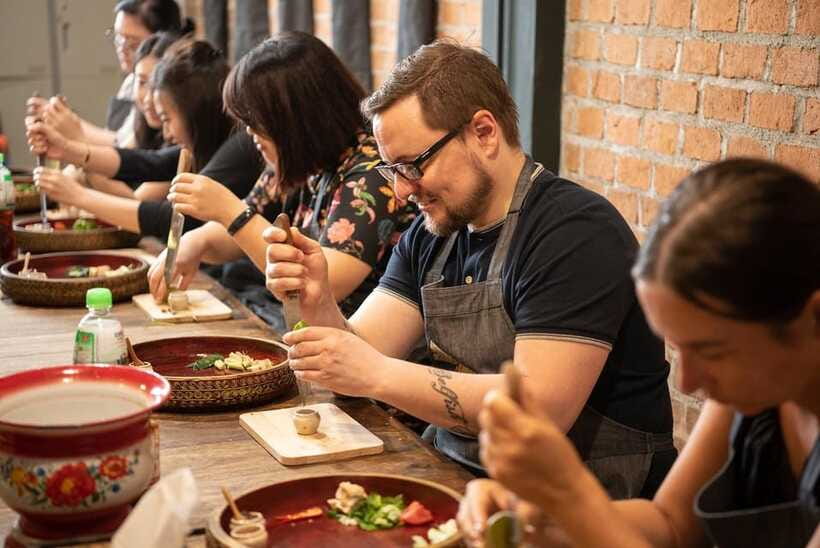
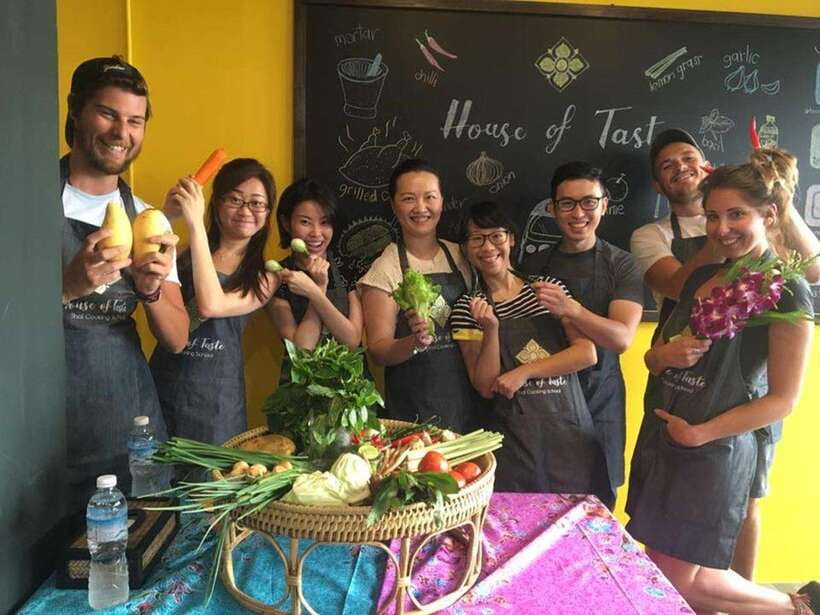
Once at the school, the instructor introduces the ingredients and equipment. You learn about vegetables, herbs, rice, spices, coconut milk, and curry paste. The class also covers how to build curry paste from scratch, which is one of the most hands-on parts of the session.
The school provides all cooking equipment and ingredients, so you do not need to shop before arriving. A personal locker is included, which is handy if you are carrying a small bag after sightseeing around central Bangkok.
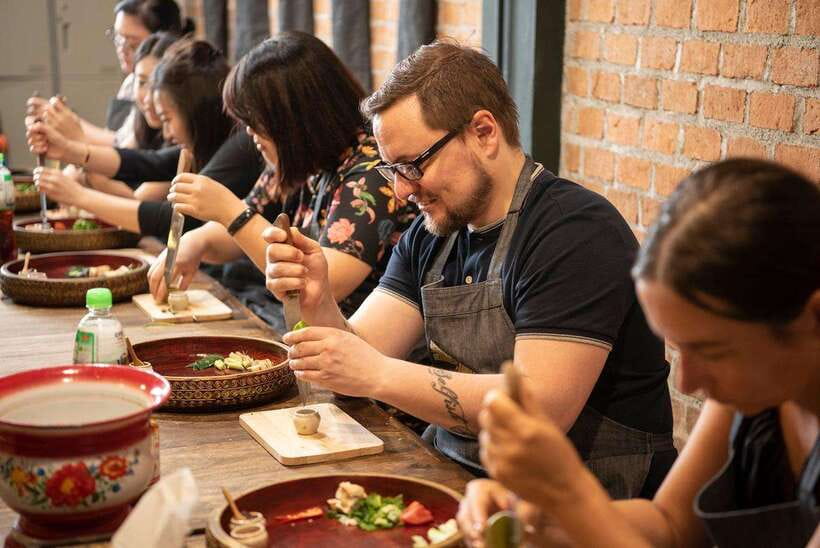
The teaching style is geared toward participation. You work on your own food, rather than watching one shared pot from a distance. This matters because cooking times, seasoning, and texture become easier to understand when you are the person making the decisions.
The English instruction is a strong point. Names such as Jay, Pitch, April, Jen, and Jane appear in the class experience, and the teaching is described as easy to follow for people with different skill levels. You should still expect a busy session. With four dishes in about two hours of cooking, the pace can feel brisk at moments, particularly when several ingredients need preparation close together.
More Cooking Classes with a Market Tour in Thailand
- Hands-on Thai Cooking Class & Market Tour in Sukhumvit
★ 5.0 · 571 reviews - Pink Chili – Thai Cooking Class and Market Tour in Bangkok
★ 5.0 · 416 reviews - Authentic Thai Cooking with the Largest market visit &TukTuk ride
★ 5.0 · 350 reviews - Bangkok: White Lotus Thai Cooking Class with Market Tour
★ 5.0 · 285 reviews
The daily menu changes your meal
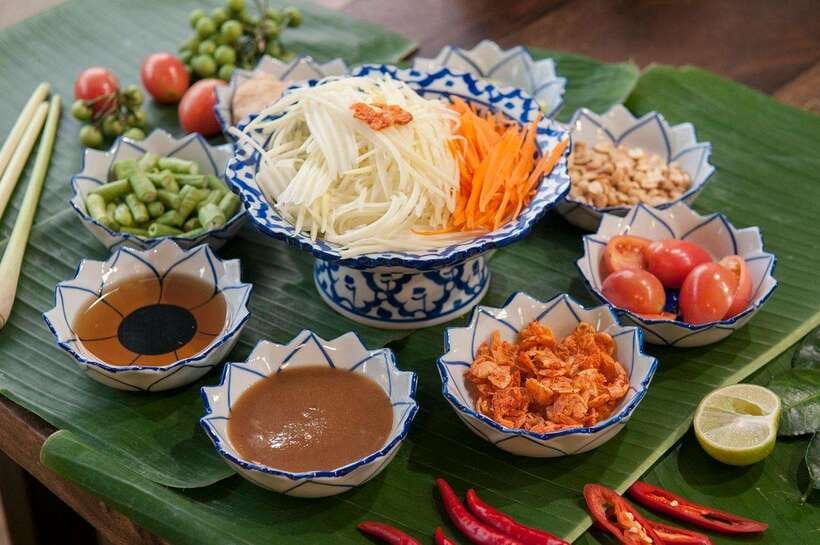
The menu follows a seven-day rotation. This is important when choosing a date, since the menu can influence the whole experience.
Monday
You make Thai papaya salad, shrimp pad Thai, green curry with chicken, and mango sticky rice. This is a classic introduction, with the sharp crunch of som tum, sweet-savory noodles, a creamy curry, and a familiar Thai dessert.
Tuesday
The menu includes tom kha gai, Thai basil chicken, red curry with chicken, and mango sticky rice. The coconut soup gives you a gentler, creamy counterpoint to the spicy basil dish.
Wednesday
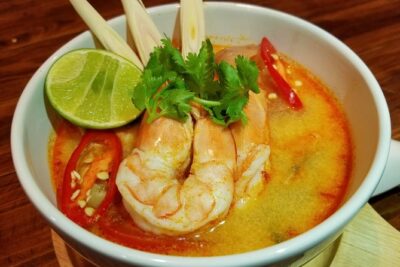
You cook tom yum goong, chicken pad see ew, green curry with chicken, and mango sticky rice. This is a good day for comparing two very different noodle and soup profiles, with sour shrimp soup balanced by the darker, sweeter flavor of pad see ew.
Thursday
The dishes are larb gai, shrimp pad Thai, panang curry with chicken, and mango sticky rice. Larb introduces a spicy minced-chicken salad with herbs and seasoning, while panang curry is generally thicker and more concentrated than a lighter curry.
Friday
The menu pairs som tum with Thai basil chicken, red curry with chicken, and mango sticky rice. It has plenty of contrast, from crisp salad to fragrant stir-fry and creamy curry.
Saturday
You make tom kha gai, shrimp pad Thai, green curry with chicken, and mango sticky rice. This is another approachable day for first-time cooks, with several widely recognized Thai dishes.
Sunday
You prepare tom yum goong, chicken pad see ew, panang curry with chicken, and mango sticky rice. The combination gives you sour soup, broad rice noodles, a thick curry, and a sweet finish.
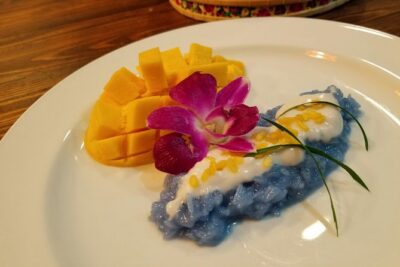
Every day includes mango sticky rice. That is a smart choice for a class because it gives you a dessert to prepare while also showing how coconut cream, sticky rice, and ripe mango work together. Some classes feature pink mango sticky rice, adding a cheerful final touch.
Four dishes, cooked and eaten in stages
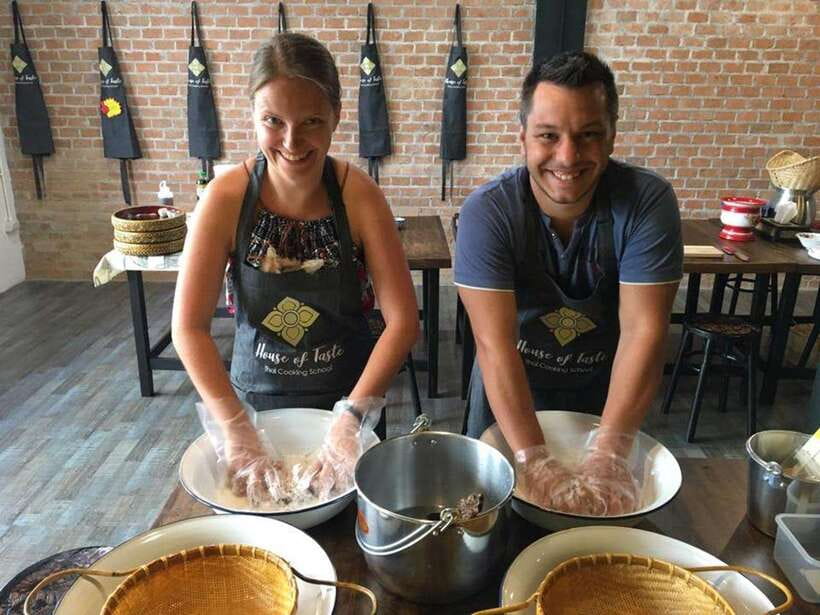
The class is not built around preparing everything and then waiting for one large meal. You cook and eat each dish while it is hot and fresh. That makes the meal more enjoyable, but it also helps you notice how temperature and texture affect the final result.
The curry paste is a key lesson. You get your hands into the process and see how herbs and spices become the base for a finished curry. The instructors also explain coconut milk preparation and how the paste changes the flavor of the dish.
Noodle dishes teach a different skill. Pad Thai and pad see ew depend on timing, heat, and careful mixing. The cooking is quick, so you learn why preparation before the pan gets hot matters.
The soups and salads offer another useful comparison. Tom yum brings hot and sour flavors, tom kha adds coconut cream, and som tum relies on pounding and balancing fresh ingredients. Larb shows how herbs and seasoning can make minced chicken feel bright rather than heavy.
By the end, you have cooked three savory dishes and a dessert. The portions are generous enough that you should arrive with an empty stomach. You also get drinking water, while alcoholic drinks are available to buy separately.
Afternoon mango carving
The later classes replace the market tour with mango carving. You first receive the ingredient introduction at the school, then return to the kitchen work and finish by shaping mango into a decorative form.
This is more than a photo-friendly extra. It gives the class a slower, lighter activity after the cooking and makes the dessert course feel special. It is also a good option for families and couples who want a practical activity without an early start.
The tradeoff is simple. You gain mango carving but lose the market walk. I would choose the afternoon or evening if the carving sounds more appealing than shopping for ingredients, or if your Bangkok schedule makes a morning meeting difficult.
Small groups and the teaching style
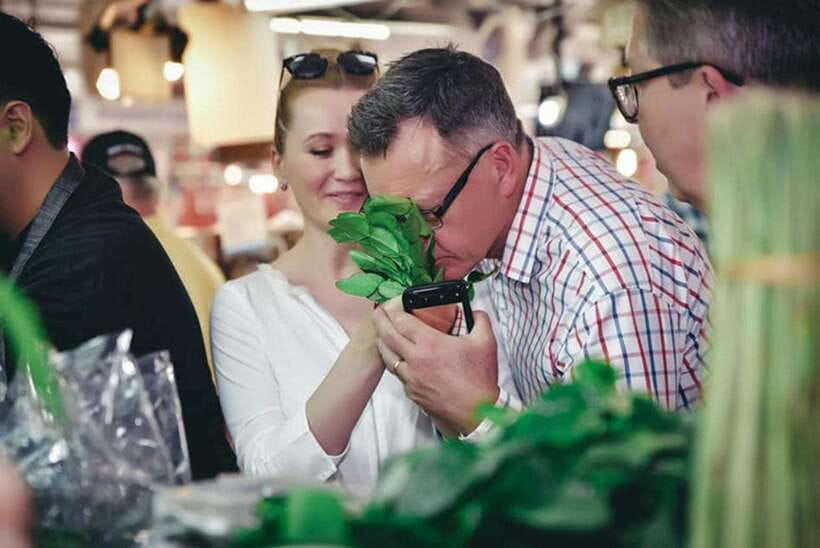
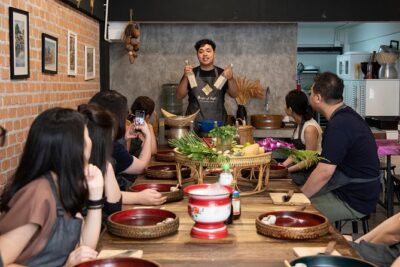
A small class makes a real difference here. Instructors can move around the workstations, answer questions, and adjust their explanations when someone falls behind. This is especially useful if one person in your group cooks often and another rarely touches a pan.
The strongest praise goes to the instructors’ patience, humor, and organization. April is described as lively and easy to follow, while Jay receives praise for one-on-one help and adapting ingredients. Pitch is noted for explaining cultural details around the food as well as the cooking steps.
The class can still feel busy. Four dishes in a 210-minute experience is a full schedule, and one assessment found parts of the session a little rushed. That is not a serious flaw, but you should expect an active lesson rather than a slow, leisurely workshop.
The school teaches in English and Thai. English explanations are a central part of the experience, and the instructors are prepared to answer questions about methods and ingredients.
Dietary needs and ingredient substitutions
You can request vegetarian, halal, kosher, and allergy-friendly substitutions, but tell the school in advance. This is not something to leave until the cooking begins.
The flexibility appears practical rather than cosmetic. Vegetarian versions have been prepared successfully, and substitutions have also been made for specific intolerances, including a low FODMAP diet. Still, you should explain your needs clearly when booking and remind the instructor at the start.
No MSG is used in the cooking. That may matter to you if you prefer to know exactly how the dishes are seasoned. You will still encounter strong Thai flavors from herbs, spices, curry paste, chilies, coconut milk, and fresh produce.
Practical details before you book
The full experience lasts 210 minutes, with roughly two hours devoted to making the dishes. Comfortable walking shoes are best for the morning class, since you will walk between the meeting point and the nearby market area.
For morning bookings, meet at street level at BTS Asoke Exit 3 or MRT Sukhumvit Exit 3. For afternoon and evening bookings, go directly to the school in Sukhumvit 4. Check the exact starting time when booking, since availability varies.
The experience allows free cancellation up to 24 hours ahead for a full refund. You can also reserve and pay later, which is useful if your Bangkok plans are still shifting.
At $45, I consider this good value if you plan to eat the full meal and use the recipes afterward. It is less compelling if you only want a market tour, since the morning shopping portion is relatively short. The real value is the combination of instruction, food, cultural context, and recipes you can take home.
Who should book this class?
I would recommend it to first-time Thai cooks, food-focused visitors, couples, families, and anyone who wants more than a guided tasting. You do not need to be confident in the kitchen. The teaching is designed to help beginners produce food they can actually eat and understand.
It is also a good rainy-day plan because the main activity takes place indoors. Families should note that the class includes knives, heat, and several active cooking steps, so adults will need to supervise younger children.
Choose the morning if the market matters most. Choose the afternoon or evening if you prefer a later start and mango carving. Check the day’s menu before booking, especially if tom yum, pad Thai, green curry, or panang curry is high on your list.
Should you book it?
Book this class if you want a hands-on meal, clear instruction, and recipes you can use after Bangkok. The food is the main event, but the small-group teaching and ingredient explanations give the experience more value than a simple cooking demonstration.
Skip it if you want a long market expedition or a slow, restaurant-style lunch. The nearby market visit is useful but not enormous, and the cooking schedule moves at a steady pace.
For most food lovers, I would book the morning for the market walk. If your schedule does not suit an early start, the afternoon or evening remains a strong choice, especially if mango carving appeals to you. At $45, four dishes and three-and-a-half hours of active instruction make this one of the better-value food activities near Asoke.
FAQ
How long does the Bangkok Thai cooking class last?
The experience lasts 210 minutes, or three and a half hours. About two hours are spent making the four dishes.
Where is the meeting point for the morning class?
Meet at street level at BTS Asoke Exit 3 and MRT Sukhumvit Exit 3. You can also use Hey! Coffee MRT Sukhumvit as the meeting-point reference.
Where do afternoon and evening classes meet?
Afternoon and evening classes meet at House of Taste Thai Cooking School in Sukhumvit 4.
Does every class include a market tour?
No. Only the 8:30 a.m. morning class includes the market visit. Afternoon and evening classes include mango carving instead.
Can dietary requirements be accommodated?
Vegetarian, halal, kosher, and allergy-related substitutions can be arranged with advance notice. Tell the school about your needs before the class.
What is included in the $45 price?
The price includes the cooking class, instructor, four-course meal, drinking water, ingredients, equipment, a personal locker, and recipes sent by email. Alcoholic drinks are not included but can be purchased.
More Thai Classes in Bangkok
- Bangkok: Tingly Thai Cooking School Half-Day Cooking Class
★ 4.9 · 1,191 reviews - Tingly Thai Cooking School Evening Class
★ 5.0 · 335 reviews - Tingly Thai Cooking School Afternoon Class
★ 5.0 · 291 reviews - Thai Cooking Class with Market Visit by Maliwan
★ 5.0 · 276 reviews
Newest classes around Bangkok
- Thai cooking class experience in Bangkok with Tingly Thai cooking school★ 5.0 · 59 reviews
- Thai Cooking Class in Bangkok★ 5.0 · 23 reviews
- Hands-On Thai Cooking Class Bangkok with Local Chef (Small Group)★ 5.0 · 119 reviews
- Bangkok Udomsuk Thai Cooking Class with local market tour★ 5.0 · 5 reviews
- Thai Cooking Class★ 5.0 · 25 reviews
- Baipai Thai Cooking School: Authentic Cooking Class Tour★ 5.0 · 3 reviews
- Sompong Thai Cooking School★ 5.0 · 92 reviews
- Sompong Thai Cooking School: Hands-On Culinary Experience★ 5.0 · 4 reviews
Bangkok Cooking Classes, compared.
Tingly Thai Cooking School Half-Day Cooking Class
Read our review →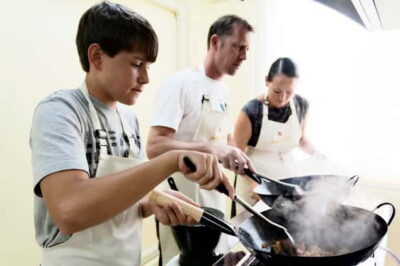
Tingly Thai Cooking Class with Morning Market Tour
Read our review →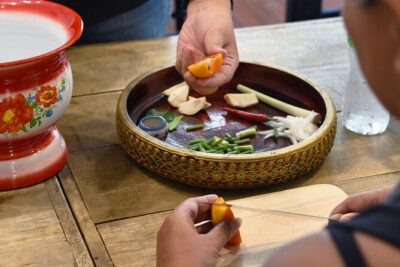
Hands-on Thai Cooking Class & Market Tour in Sukhumvit
Read our review →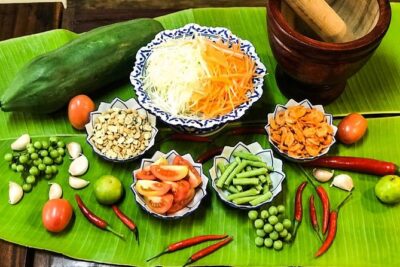
Pink Chili – Thai Cooking Class and Market Tour in Bangkok
Read our review →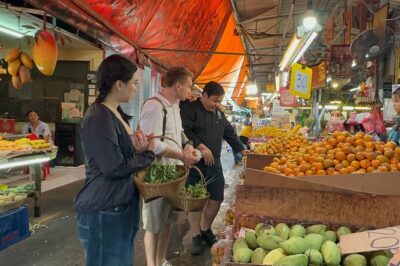
Authentic Thai Cooking with the Largest market visit &TukTuk ride
Read our review →