
Review · PHUKET COOKING CLASSES
Phuket – Blue Elephant Thai Cooking Class with Market Tour
The best part of this Phuket experience is that it starts with the ingredients, not just a recipe sheet. You visit a local morning market, learn what Thai herbs and produce are used for, then return to the handsome Governor’s Mansion to cook four dishes under close supervision. Chef Paul and Chef Molly have both received warm praise for their clear, good-humored instruction.
I like the small group of no more than 10, which gives you a real workstation and personal wok time. I also like the complete rhythm of the morning: market visit, short theory lesson, hands-on cooking, and lunch with the food you made. The main consideration is the price, $174 per person, and the fact that you must arrange your own way to Blue Elephant.
Key points to know before booking
- The market visit comes first: Learn about Thai fruits, vegetables, herbs, and spices before you cook with them.
- Four dishes are prepared: Your menu includes a starter, soup, main dish, and accompanying dish.
- The menu changes daily: Monday through Sunday each has a different set of Thai recipes.
- The setting is part of the appeal: Classes take place at Blue Elephant Phuket in the historic Governor’s Mansion, with its garden and restaurant.
- You eat what you cook: Lunch gives you the chance to taste the full result of your work.
- The group stays small: Up to 10 participants share the class, with English and Thai instruction available.
Starting at Phuket’s Governor’s Mansion
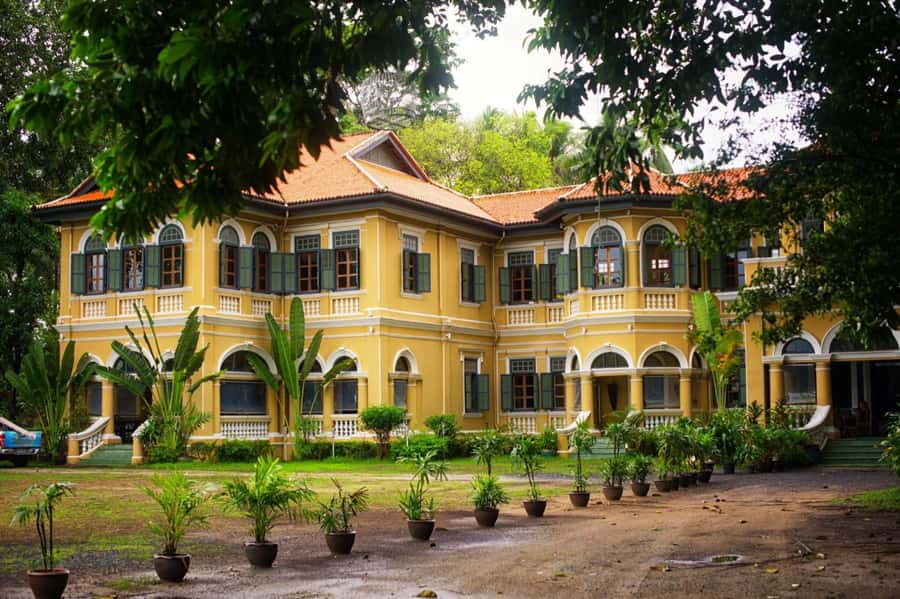
Your meeting point is Blue Elephant Phuket Restaurant & Cooking School in Phuket Town. You should arrive 15 minutes before the scheduled start, since the experience begins there rather than with hotel pickup.
The setting gives this cooking class a more polished feel than a basic workshop in a tourist shopping center. You begin at the Blue Elephant Bar with a refreshing drink, then head out to a local morning market with the chef. On returning to the school, you receive a Thai herbal drink and a cool towel before the cooking lesson starts.
That small pause matters in Phuket’s warm weather. It also creates a clear change of pace. First you are looking at food in its everyday setting. Then you are back in a formal cooking school, ready to turn those ingredients into lunch.
The Governor’s Mansion and its garden add visual interest, too. You are not simply moving between a market stall and a plain classroom. The surroundings make the morning feel like a special occasion, which helps explain part of the higher price.
More Cooking Classes with a Market Tour in Phuket
- Phuket Thai Cooking Class with Market Tour Option
★ 5.0 · 2,665 reviews - Hands-on Thai Cooking Class Phuket with Market Tour Option!
★ 5.0 · 808 reviews - Phuket: Half Day Easy Thai Cooking Class & Local Market Tour
★ 4.9 · 725 reviews
Seeing Thai ingredients at the morning market
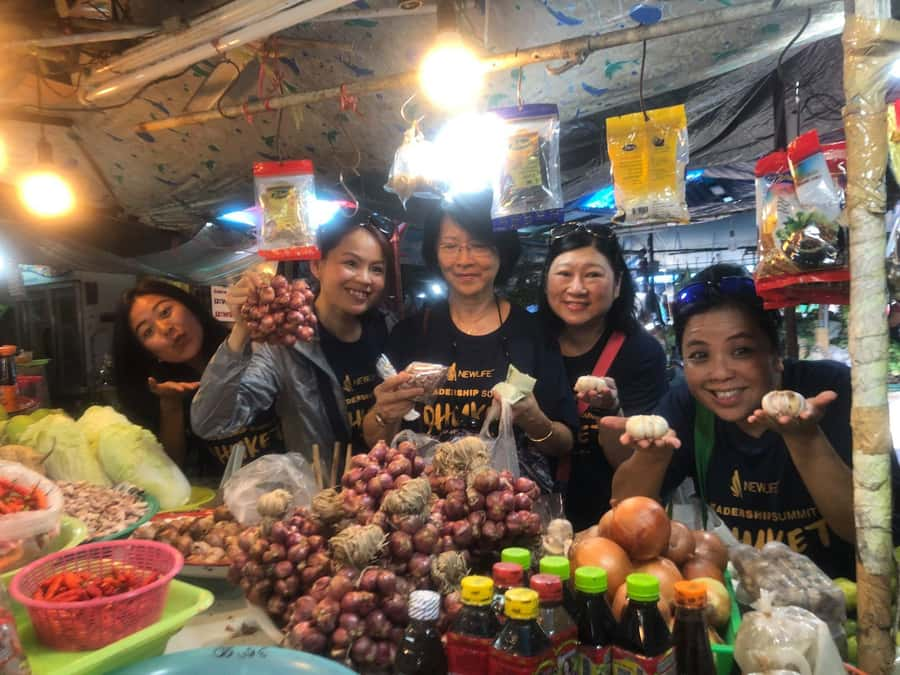
The market tour is the most useful feature for anyone who wants to understand Thai food beyond restaurant menus. Your chef points out fruits, vegetables, herbs, and spices, then explains their traditional uses. Ingredients that look unfamiliar on a market table start to make sense once you know what they do in a curry, soup, salad, or stir-fry.
I would pay close attention here, especially if you plan to cook Thai food at home. The class gives you recipe cards, but the market lesson helps with the harder part: recognizing ingredients and understanding their role. A recipe can tell you how much of something to add. It cannot always tell you what the ingredient should look or smell like when you buy it.
The market is also a more grounded introduction to Phuket than a restaurant-only class. You see food as part of ordinary local shopping, not just as a finished dish presented for visitors. The tour is described as a local morning market visit, so expect an active food market rather than a staged demonstration built only for the class.
The limitation is that the market stop is part of a four-hour schedule. It is an introduction, not a long food study. You will get useful explanations from the chef, but you should not expect a full market shopping expedition or a separate street-food tour.
Learning the logic behind a four-course Thai meal
Back at Blue Elephant, the class first covers the theory behind a four-course meal. This is an important step. Thai cooking depends on balance, and simply copying a list of ingredients does not always produce the right result.
The lesson prepares you to make a starter, soup, main dish, and accompanying dish. In practical terms, you learn how the different courses work together, rather than making one isolated pad Thai and calling it a morning.
The supplied details do not specify the exact length of the theory lesson, so you should expect it to be one part of the wider four-hour program. The chef and instructors then move you into the practice room, where your own workspace and wok are ready.
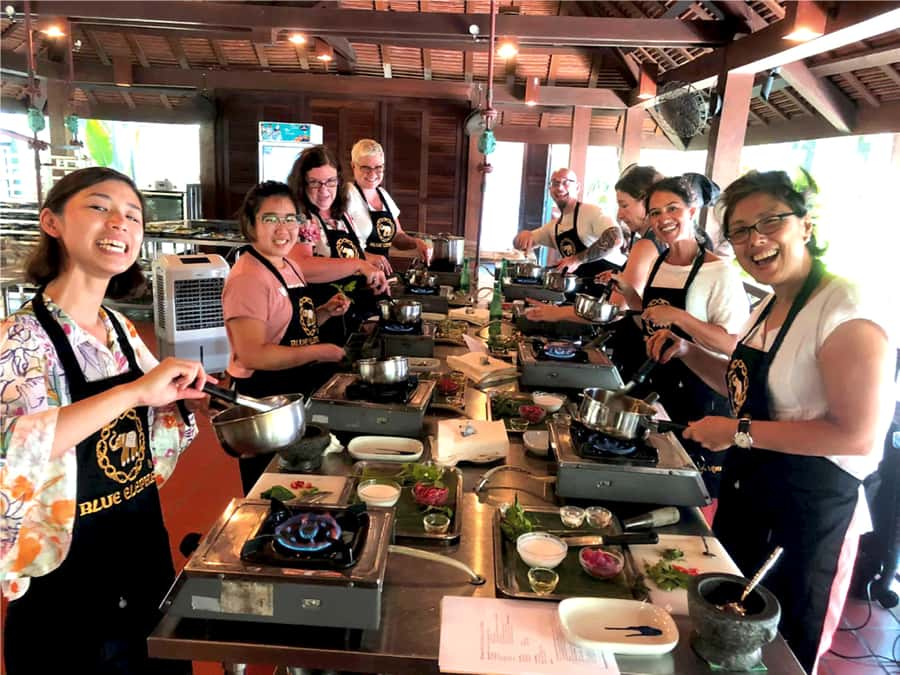
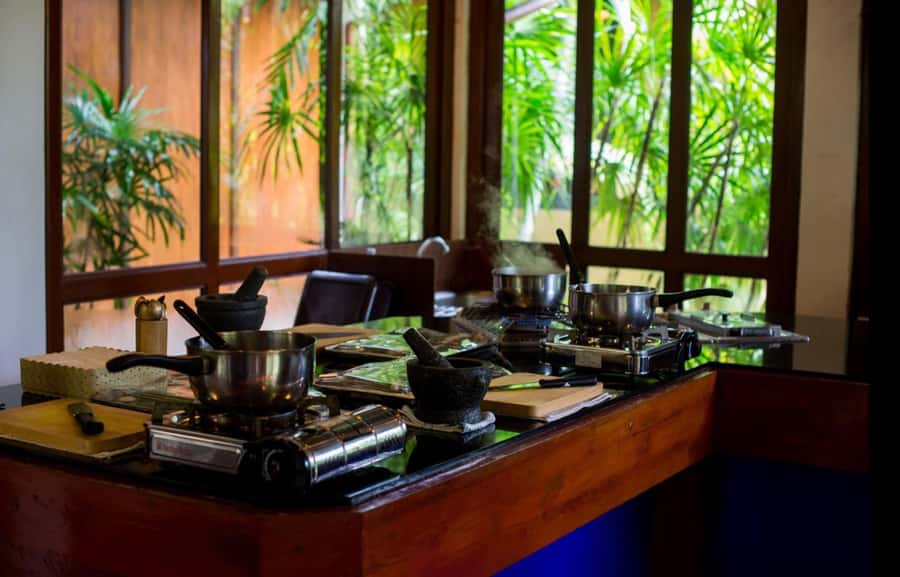
That setup is a strong point. You are not only watching a chef cook at the front of the room. You take part in the preparation, then receive help as you work. For a beginner, close supervision can prevent small mistakes from ruining a dish. For a more experienced cook, it gives you a chance to ask about Thai methods and flavor combinations.
One amusing practical truth is that you will eat the food you prepare. That makes your own technique matter. If your cutting, stirring, or seasoning is imperfect, the final lunch will reflect it. The instructors help, but this is still a hands-on class rather than a professional kitchen demonstration.
The changing daily menus
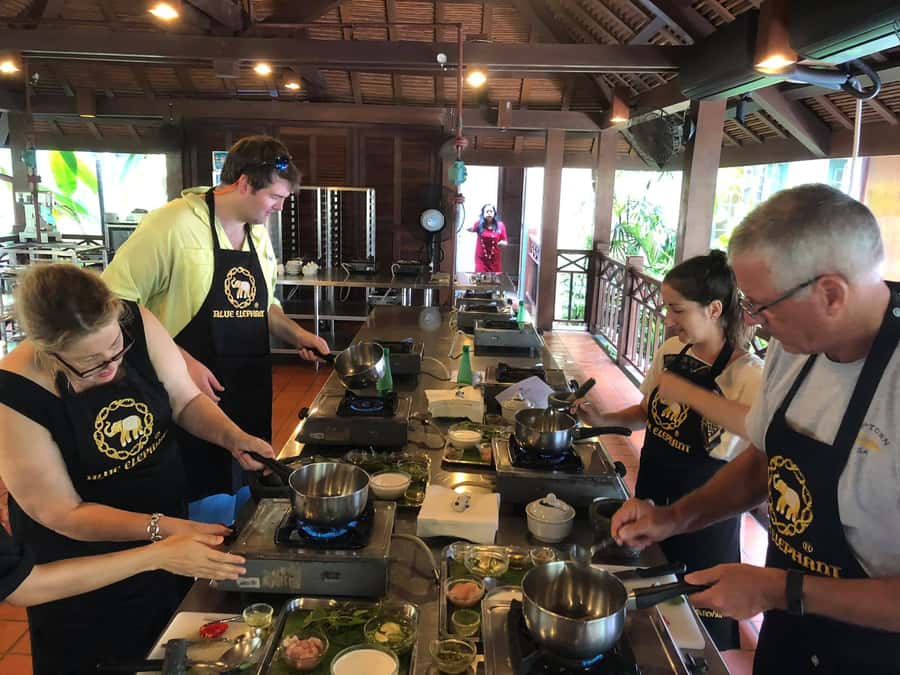
The daily menu is one of the most important details to check before you reserve. You do not get the same meal every day, and the dishes range from familiar Thai favorites to recipes that may be new to you.
Monday features papaya salad, spicy and sour soup with prawns, red curry with beef and pumpkin, and stir-fried rice noodles with prawns. This is a good day if you want a broad introduction to classic Thai flavor contrasts: sour, spicy, savory, sweet, and creamy.
Tuesday brings triangular spring rolls with spicy chicken filling, sea bass soup with turmeric, prawns with tamarind sauce, and Massaman curry with chicken. The tamarind dish and Massaman curry offer a gentler counterpoint to the sharper soup.
Wednesday includes crispy paper prawn, coconut milk soup with prawns, green curry with chicken, and grilled sea bass with Thai herbs. Seafood fans may want to choose this day, since prawns and sea bass appear in several forms.
Thursday serves grilled long eggplant salad with prawn, coconut milk soup with chicken, steamed red tilapia with red curry sauce, and stir-fried beef with holy basil leaves. This menu gives you a useful look at eggplant, holy basil, steaming, and curry sauce.
Friday offers a golden bag stuffed with green curry, soup with stuffed rambutan, baked glass noodles with prawns, and red rich curry with beef. This is perhaps the most unusual menu on the schedule, especially if you want to try fruit used in a savory soup.
Saturday includes crispy crab souffle, spicy sea bass soup, spicy beef with Southern curry paste, and red chicken curry with pineapple. The Southern curry paste gives this day a regional angle.
Sunday features duck spring roll, spicy ginger soup with chicken, duck breast salad with lychee, and yellow curry with prawn and Phuket pineapple. This menu has several sweet and savory combinations, including duck with lychee and prawn with local pineapple.
Check the day before booking if a particular dish matters to you. The menu is a genuine reason to choose one date over another, not a minor footnote.
More Cooking Classes with a Market Tour in Thailand
- Thai Cooking Class with Market & Garden Tour
★ 4.9 · 249 reviews - Half day Thai cooking Class + Market tour+Garden tour
★ 5.0 · 237 reviews - Phuket: Thai Cooking Class with 4 Dishes and Market Visit
★ 5.0 · 16 reviews - Phuket: Half Day Thai Cooking Experience with Market Tour
★ 5.0 · 11 reviews
Cooking with your own wok and workspace
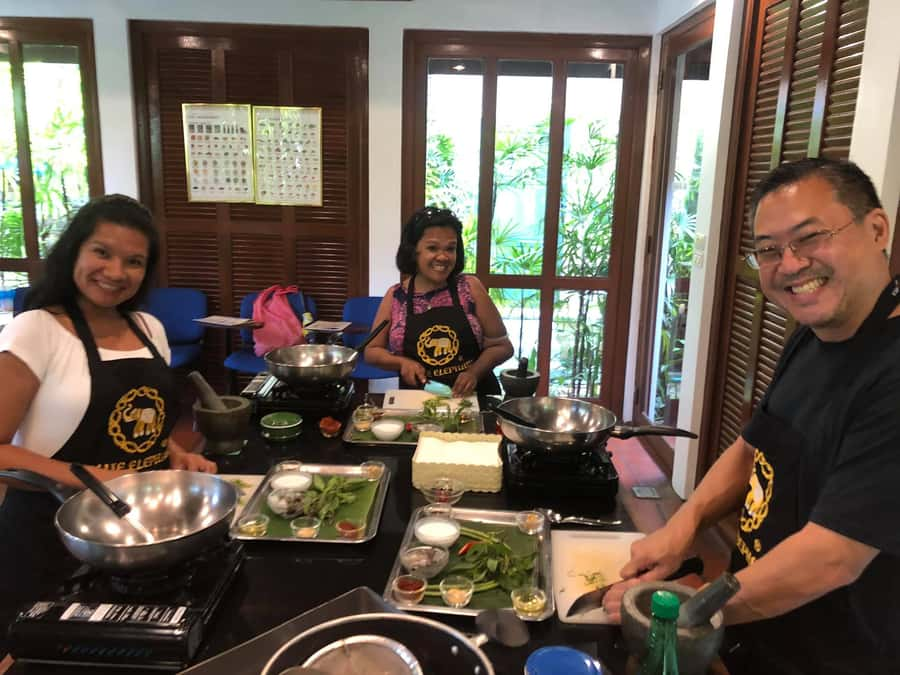
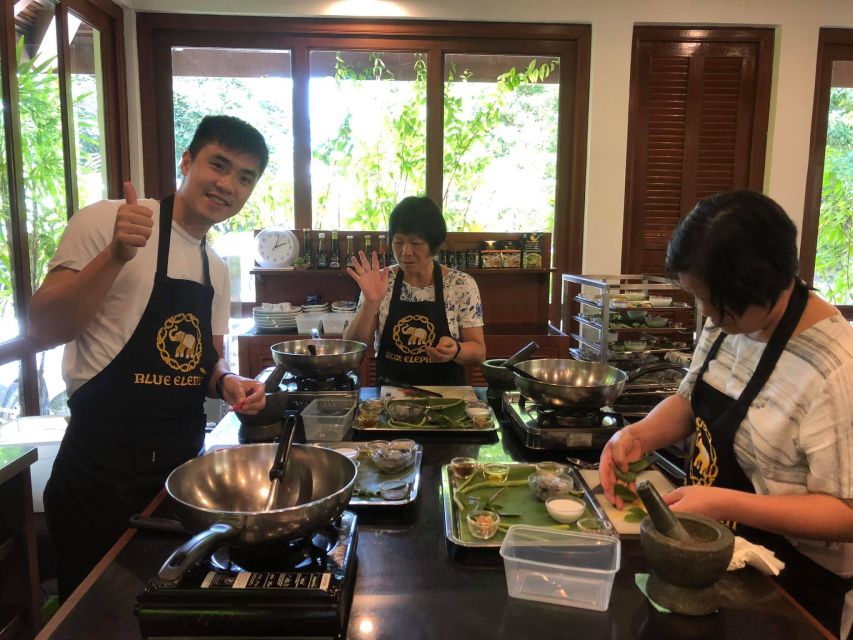
Once the theory portion ends, you move to the practice room. Your personal station and wok are prepared in advance, and all ingredients are included. That removes the need to shop, measure, or bring equipment.
The instructors guide you through four separate dishes. The format lets you practice several techniques rather than repeating one simple preparation. Depending on the day, you may be handling curry paste, coconut milk, seafood, noodles, herbs, salad ingredients, or a dessert-like fruit used in a savory recipe.
I like this format because it creates a clear sense of progress. You begin with the raw ingredients and finish with a full meal. The class also gives you a chance to see how Thai cooking changes from one dish to the next. A soup needs different handling from a curry. A salad needs a different balance from a stir-fry.
The practical experience will depend partly on your own confidence. One participant described enjoying the class even while noting that the person cooking did not really know what they were doing. That is a useful warning and a reassuring point at the same time. You do not need to be an accomplished cook, but you should be ready to participate rather than simply watch.
The instructors are there to help, and Chef Molly has been singled out for explaining unfamiliar ingredients clearly. Chef Paul has also received warm praise for his teaching and personality. Names and staffing may change, so do not book solely on the expectation of one particular chef, but the class is built around live instruction in English or Thai.
Lunch at Blue Elephant: the payoff of the morning
At the end, you sit down at the Blue Elephant Restaurant and eat the dishes you prepared. This is more satisfying than receiving a meal that appeared from the kitchen while you watched. You know how the food was assembled, and you can judge the result against what you learned.
The lunch also gives the four-course lesson a proper finish. You can taste how the dishes work as a meal, not only as separate cooking exercises. If one dish is too spicy for your taste or your curry needs more balance, you have learned something useful for your next attempt.
You receive a certificate and a souvenir after the class. The included Blue Elephant shopping bag, products, apron, recipe cards, and certificate add practical value, especially if you want to continue cooking after your holiday.
The recipe cards are especially useful. You do not have to write down every method while handling a wok, and you can try the dishes again at home. Keep in mind that the cards cannot replace every detail from the market and theory lessons. Make notes afterward if a chef explains a substitution or a technique you want to remember.
Is $174 a fair price?
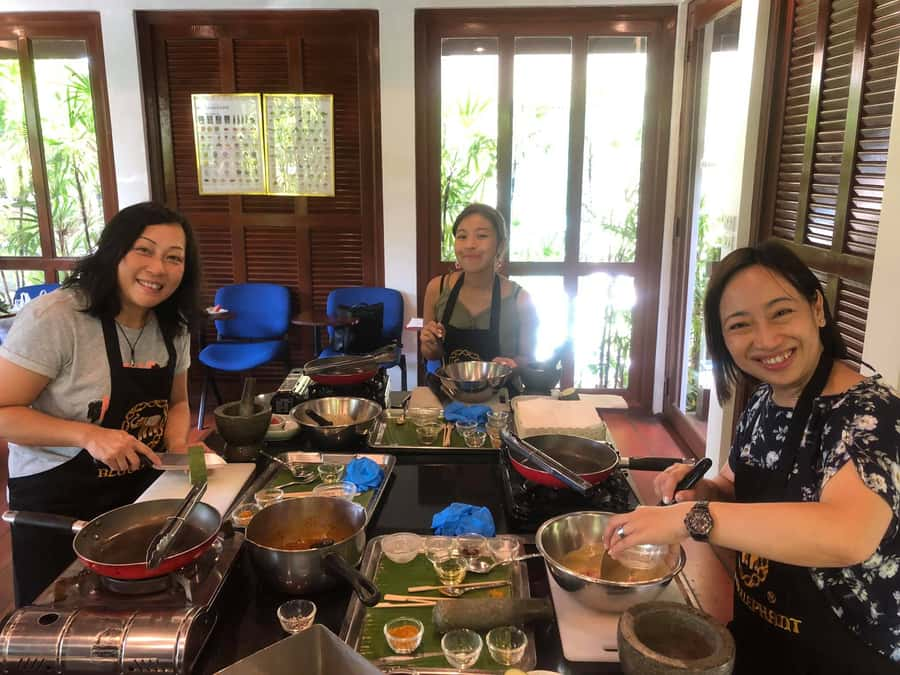
At $174 per person, this is not a budget cooking class. The price makes more sense when you count the full package: a market tour, four-course instruction, all ingredients, an individual cooking station, lunch at the Blue Elephant Restaurant, drinks, a cool towel, an apron, recipe cards, a certificate, and souvenirs.
The small group also matters. With a maximum of 10 participants, you have a better chance of receiving help than in a large demonstration class. Several cooking sessions are included rather than one quick recipe, and the location is part of the experience.
Still, value depends on what you want. If you mainly want a cheap lunch and one easy recipe, this costs more than necessary. If you care about the setting, want to learn several Thai dishes, and value the market visit and take-home materials, the price is easier to justify.
Hotel pickup and drop-off are not included. You need to get yourself to Blue Elephant Phuket in Phuket Town and arrive 15 minutes early. Add your transport costs and time when comparing this with classes that include transfers.
Free cancellation is available up to 24 hours in advance, and you can reserve now and pay later. Those terms give you some flexibility, though you should still confirm the starting time for your chosen date.
Who should book this cooking class?
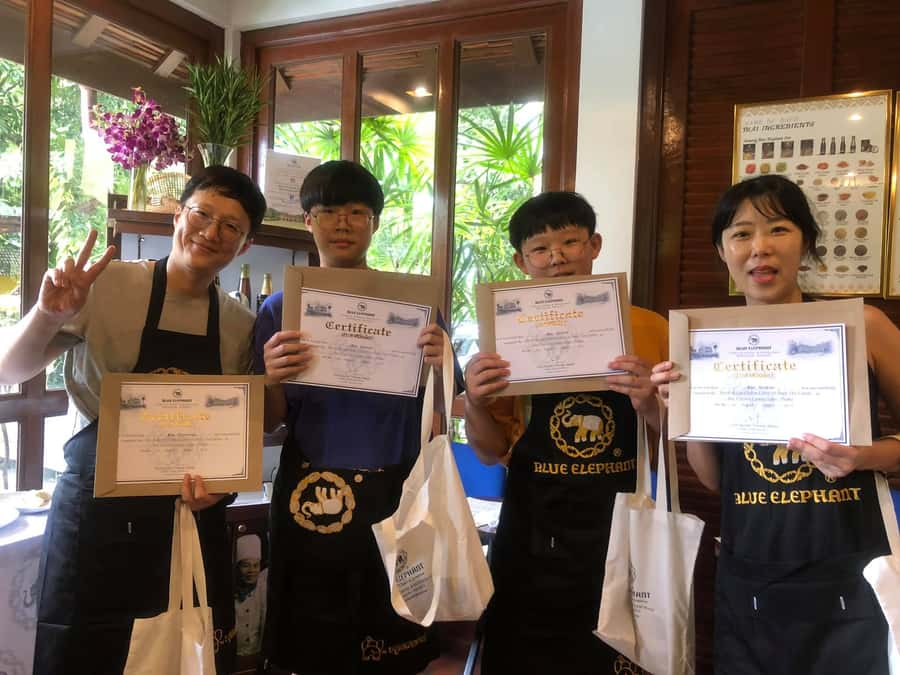
I would recommend it most strongly to food lovers who want more than a restaurant meal. It suits first-time cooks because the instructors guide you through the process, and it suits capable home cooks who want Thai techniques, ingredients, and recipe ideas.
The class also works well for couples, friends, and small groups who enjoy eating together after an activity. The shared format keeps the morning social, while the individual wok stations give you something real to do.
Families and less confident cooks should note that participation is part of the point. You will be preparing several dishes, not merely watching a chef. Anyone who dislikes heat, chopping, or unfamiliar ingredients may find the pace less relaxing.
Choose your day carefully. Monday offers a familiar spread of papaya salad, red curry, and rice noodles. Wednesday is strong for seafood. Friday and Sunday offer some of the more unusual combinations. The menu can shape the whole experience.
Should you book Blue Elephant Phuket?
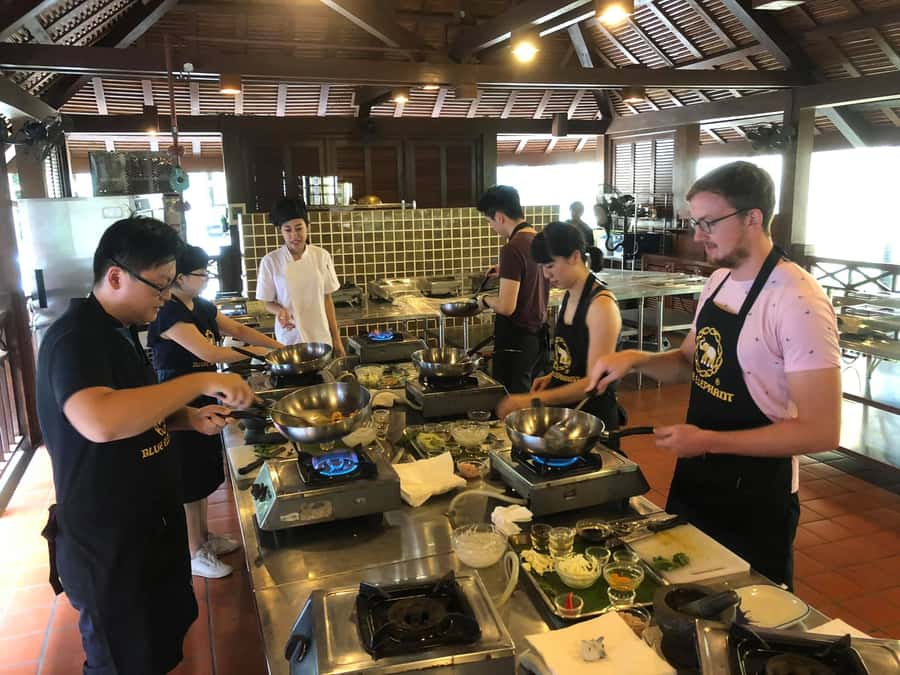
Book it if you want a polished, hands-on introduction to Thai food with a proper market visit and a meal at the end. The best features are the small class size, the changing menus, the chance to cook four dishes, and the clear link between market ingredients and the food on your plate.
Skip it if $174 feels too high for a cooking class, if you need hotel transfers, or if you prefer a quick local lesson with one inexpensive dish. For everyone else, this is a well-structured half-day with enough cooking to feel worthwhile and enough cultural context to make the recipes more memorable.
FAQ
Where does the Blue Elephant Thai Cooking Class meet?
You meet at Blue Elephant Phuket Restaurant & Cooking School in Phuket Town, located at the Governor’s Mansion.
How early should I arrive?
You should arrive 15 minutes before the scheduled departure time.
How long does the experience last?
The cooking class and market tour last four hours.
Is hotel pickup and drop-off included?
No. You must make your own way to Blue Elephant Phuket Restaurant & Cooking School.
What languages are available?
The live tour guide and instruction are available in English and Thai.
How many people are in the group?
The class is limited to 10 participants.
What is included in the price?
The price includes all ingredients, a Blue Elephant apron, certificate, shopping bag, products, cooking recipes, a refreshing towel, Thai herbal drinks on arrival, the market tour, cooking instruction, and lunch featuring the dishes you prepare.
Can I cancel or pay later?
You can cancel up to 24 hours in advance for a full refund. You can also reserve now and pay later, subject to the booking terms.
More Thai Classes in Phuket
- Thai Cooking Class in Phuket
★ 5.0 · 375 reviews - Thai Cooking Class in Phuket
★ 5.0 · 234 reviews - Phuket: Authentic Thai Cooking Class
★ 4.8 · 145 reviews - Half-Day Thai Cooking Class at Organic Farm in Chiang Mai
★ 5.0 · 19,087 reviews
Newest classes around Phuket
- Phuket: Thai Cooking Class with 4 Dishes and Market Visit★ 5.0 · 16 reviews
- Phuket: Half Day Thai Cooking Experience with Market Tour★ 5.0 · 11 reviews
- Phuket: Authentic Thai Cooking Class★ 4.8 · 145 reviews
- Dinner from cooking class & enjoy local night market★ 5.0 · 2 reviews
- Half day Thai cooking Class + Market tour+Garden tour★ 5.0 · 237 reviews
- Thai Cooking Class in Phuket★ 5.0 · 234 reviews
- Thai Cooking Class with Market & Garden Tour★ 4.9 · 249 reviews
- Thai Cooking Class in Phuket★ 5.0 · 375 reviews
Phuket Cooking Classes, compared.
Phuket Thai Cooking Class with Market Tour Option
Read our review →
Elephant Sanctuary Tour, Cooking Class & Lunch
Read our review →
Hands-on Thai Cooking Class Phuket with Market Tour Option!
Read our review →
Half Day Easy Thai Cooking Class & Local Market Tour
Read our review →
Half day Thai cooking Class + Market tour+Garden tour
Read our review →